

Volume 12, Issue 1 (2026)
Pharm Biomed Res 2026, 12(1): 9-26 |
Back to browse issues page



Download citation:
BibTeX | RIS | EndNote | Medlars | ProCite | Reference Manager | RefWorks
Send citation to:


BibTeX | RIS | EndNote | Medlars | ProCite | Reference Manager | RefWorks
Send citation to:
Anis A, Das A, Das Kirtania M, Das L, Roy Biswas G. Gastro-retentive Drug Delivery Systems Based on Pectin: An Overview. Pharm Biomed Res 2026; 12 (1) :9-26
URL: http://pbr.mazums.ac.ir/article-1-722-en.html
URL: http://pbr.mazums.ac.ir/article-1-722-en.html


1- School of Pharmacy, Techno India University, Kolkata, India.
2- BCDA College of Pharmacy and Technology, Kolkata, India.
2- BCDA College of Pharmacy and Technology, Kolkata, India.
Keywords: Gastro-retentive drug delivery systems (GRDDS), Controlled drug delivery, Pectin-based polymers, High-methoxylated pectin, Low-methoxylated pectin, Floating DDS, Mucoadhesive formulations
Full-Text [PDF 1541 kb]
(441 Downloads)
| Abstract (HTML) (1186 Views)
Full-Text: (93 Views)
Introduction
Drug delivery system (DDS) refers to the formulation and or device used to deliver an active pharmaceutical ingredient (API) to the body in a manner where the release of the API is accurately regulated and timed to overcome the limitations of biological barriers, such as poor solubility and or short half-life [1, 2]. Conventional DDS are traditional systems for delivering drugs into the systemic circulation via various routes of administration [3, 4]. Despite being widely accepted worldwide, this approach has several drawbacks and limitations. One such system is the delivery of drugs via oral administration, which has gained prominence in pharmaceutical research [3]. However, this system faces various challenges, including fluctuations in plasma drug concentrations due to frequent medication dosing, inadequate bioavailability due to poor drug absorption, decreased gastric residence time, low permeability across biological membranes, and varying pH levels [1, 3, 5]. Studies and research are continually conducted in this field to improve development and make modifications, mainly to overcome the physiological drawbacks of the conventional DDS.
Importance of gastro-retentive DDS (GRDDS)
A notable recent advancement in this area is the approach towards GRDDS, which are designed to extend the duration period of drugs in the gastric region, thereby enhancing drug absorption and bioavailability [6, 7].
The GRDDS are widely acknowledged for their prolonged gastric retention, sustained release, improved therapeutic effectiveness, and better site targeting in the stomach [8, 9]. GRDDS reduces dosing frequency, thereby improving patient adherence to the treatment regimen; this also helps maintain systemic drug concentrations [6]. Drugs with a narrow absorption window in the upper gastrointestinal (GI) region are more labile at alkaline pH, leading to decreased bioavailability [3, 10]. This issue can be addressed by extending the drug’s retention time and formulating it to allow it to remain in the gastric region and promote slow release over an extended period [13]. This allows time for proper absorption and drug dissolution in the gastric region [7, 11, 12]. Apart from its activity in the systemic circulation, GRDDS has also demonstrated local activity, thereby eradicating the Helicobacter pylori from the upper intestine (submucosal region), and is also helpful in the treatment of duodenal ulcers [3, 13].
Introduction to pectin and its properties
Pectin is a natural heteropolysaccharide, predominantly present in plant cell walls [14, 15]. It is widely accepted in the pharmaceutical industry because of its distinctive characteristics, such as biodegradability, biocompatibility, low toxicity, and pH sensitivity, making it safe and effective [16, 17]. Some studies suggest that pectin is more stable in acidic media, and thus provides sustained release when combined with gelatine in an encapsulated form [18]. Pectin readily undergoes esterification to produce a gel; this characteristic of pectin is an essential part of the design of regulated gastro-retentive formulations [19, 20]. In this review, apart from the various formulations widely adopted in GRDDS, pectin-based formulations are discussed.
In 1825, Henri Braconnot successfully isolated and evaluated pectin, thereby laying a vital foundation for the food industry [21]. Pectin holds a significant role in protecting a plant’s cell wall, providing structural support that serves as a protective shield against any mechanical stress [22, 23]. This plant-derived complex polysaccharide primarily consists of D-galacturonic acid (GalA) residues linked together by α−1, 4-glycosidic bonds in a chain [24, 25], where the carboxyl group is found to be in methyl ester form [22, 30]. Pectin exhibits a molecular weight of nearly 60,000–130,000 g/mol [26, 27]. There are a variety of sources available to extract pectin, but the only primary sources are citrus peel, apple pomace, or other higher plants [28].
Structural analysis
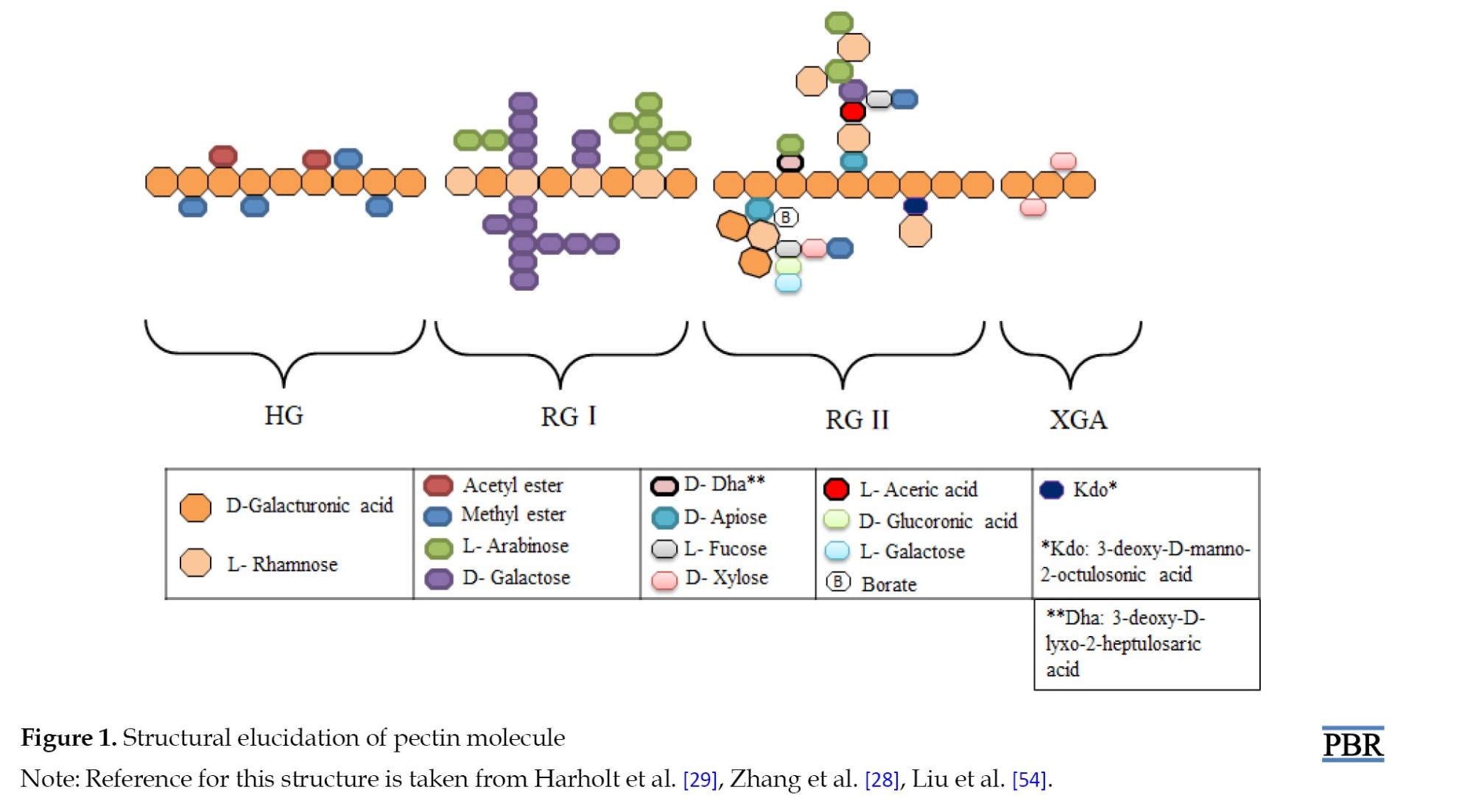
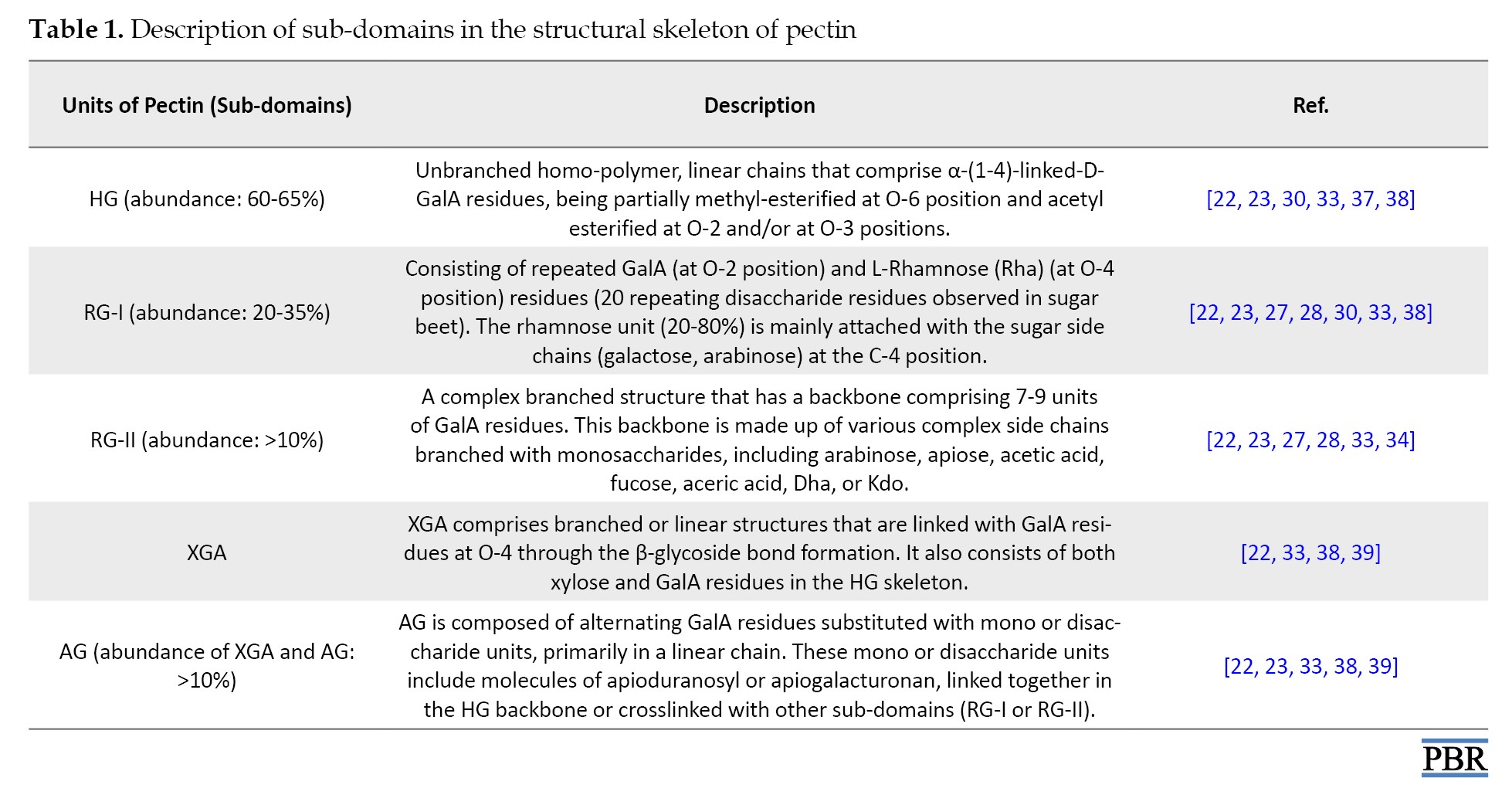
As a complex structure, it comprises several sub-domains that are covalently linked to each other [22, 28]. These domains include homogalacturon (HG), rhamnogalacturonan-I (RG-I), RG-II, and substituted galacturorans (xylogalacturonan [XGA] and apiogalacturonan [AG]) (Table 1) (Figure 1) [28-32].
Drug delivery system (DDS) refers to the formulation and or device used to deliver an active pharmaceutical ingredient (API) to the body in a manner where the release of the API is accurately regulated and timed to overcome the limitations of biological barriers, such as poor solubility and or short half-life [1, 2]. Conventional DDS are traditional systems for delivering drugs into the systemic circulation via various routes of administration [3, 4]. Despite being widely accepted worldwide, this approach has several drawbacks and limitations. One such system is the delivery of drugs via oral administration, which has gained prominence in pharmaceutical research [3]. However, this system faces various challenges, including fluctuations in plasma drug concentrations due to frequent medication dosing, inadequate bioavailability due to poor drug absorption, decreased gastric residence time, low permeability across biological membranes, and varying pH levels [1, 3, 5]. Studies and research are continually conducted in this field to improve development and make modifications, mainly to overcome the physiological drawbacks of the conventional DDS.
Importance of gastro-retentive DDS (GRDDS)
A notable recent advancement in this area is the approach towards GRDDS, which are designed to extend the duration period of drugs in the gastric region, thereby enhancing drug absorption and bioavailability [6, 7].
The GRDDS are widely acknowledged for their prolonged gastric retention, sustained release, improved therapeutic effectiveness, and better site targeting in the stomach [8, 9]. GRDDS reduces dosing frequency, thereby improving patient adherence to the treatment regimen; this also helps maintain systemic drug concentrations [6]. Drugs with a narrow absorption window in the upper gastrointestinal (GI) region are more labile at alkaline pH, leading to decreased bioavailability [3, 10]. This issue can be addressed by extending the drug’s retention time and formulating it to allow it to remain in the gastric region and promote slow release over an extended period [13]. This allows time for proper absorption and drug dissolution in the gastric region [7, 11, 12]. Apart from its activity in the systemic circulation, GRDDS has also demonstrated local activity, thereby eradicating the Helicobacter pylori from the upper intestine (submucosal region), and is also helpful in the treatment of duodenal ulcers [3, 13].
Introduction to pectin and its properties
Pectin is a natural heteropolysaccharide, predominantly present in plant cell walls [14, 15]. It is widely accepted in the pharmaceutical industry because of its distinctive characteristics, such as biodegradability, biocompatibility, low toxicity, and pH sensitivity, making it safe and effective [16, 17]. Some studies suggest that pectin is more stable in acidic media, and thus provides sustained release when combined with gelatine in an encapsulated form [18]. Pectin readily undergoes esterification to produce a gel; this characteristic of pectin is an essential part of the design of regulated gastro-retentive formulations [19, 20]. In this review, apart from the various formulations widely adopted in GRDDS, pectin-based formulations are discussed.
In 1825, Henri Braconnot successfully isolated and evaluated pectin, thereby laying a vital foundation for the food industry [21]. Pectin holds a significant role in protecting a plant’s cell wall, providing structural support that serves as a protective shield against any mechanical stress [22, 23]. This plant-derived complex polysaccharide primarily consists of D-galacturonic acid (GalA) residues linked together by α−1, 4-glycosidic bonds in a chain [24, 25], where the carboxyl group is found to be in methyl ester form [22, 30]. Pectin exhibits a molecular weight of nearly 60,000–130,000 g/mol [26, 27]. There are a variety of sources available to extract pectin, but the only primary sources are citrus peel, apple pomace, or other higher plants [28].
Structural analysis
As a complex structure, it comprises several sub-domains that are covalently linked to each other [22, 28]. These domains include homogalacturon (HG), rhamnogalacturonan-I (RG-I), RG-II, and substituted galacturorans (xylogalacturonan [XGA] and apiogalacturonan [AG]) (Table 1) (Figure 1) [28-32].
HG region, being the most abundant polysaccharide, acts as the main backbone for other sub-domains and constitutes approximately 60-65% of the whole pectin [22, 23]. It can be described as the unbranched homo-polymer, linear chains that comprise units of α-(1-4)-linked D-GalA [29, 32]. Based on structure, pectin can be divided into two sections or regions, namely the linear ‘smooth region’ and the ‘hairy region’ [33-35]. The smooth linear region is mainly dominated by the partially esterified (methylated or acetylated) GalA residues of the HG skeleton [31, 34]. The hairy region consists of branched RG (I and II) domains, along with galacturonan substitutes (XGA and AG) in smaller portions [34, 36].
Gelling property of pectin due to its structural domains
HG, being the most abundant domain in the pectin structure, plays a very significant role in pectin’s gelling ability [31, 40]. A higher percentage of HG domains consistently yields stable gel formation [41, 42]. The interaction of divalent cations with the HG units forms ‘three-dimensional gel networks’, which increases the strength of gelling [43]. This gelling ability is also influenced by the length of RG-I structural sub-domains [41, 44].
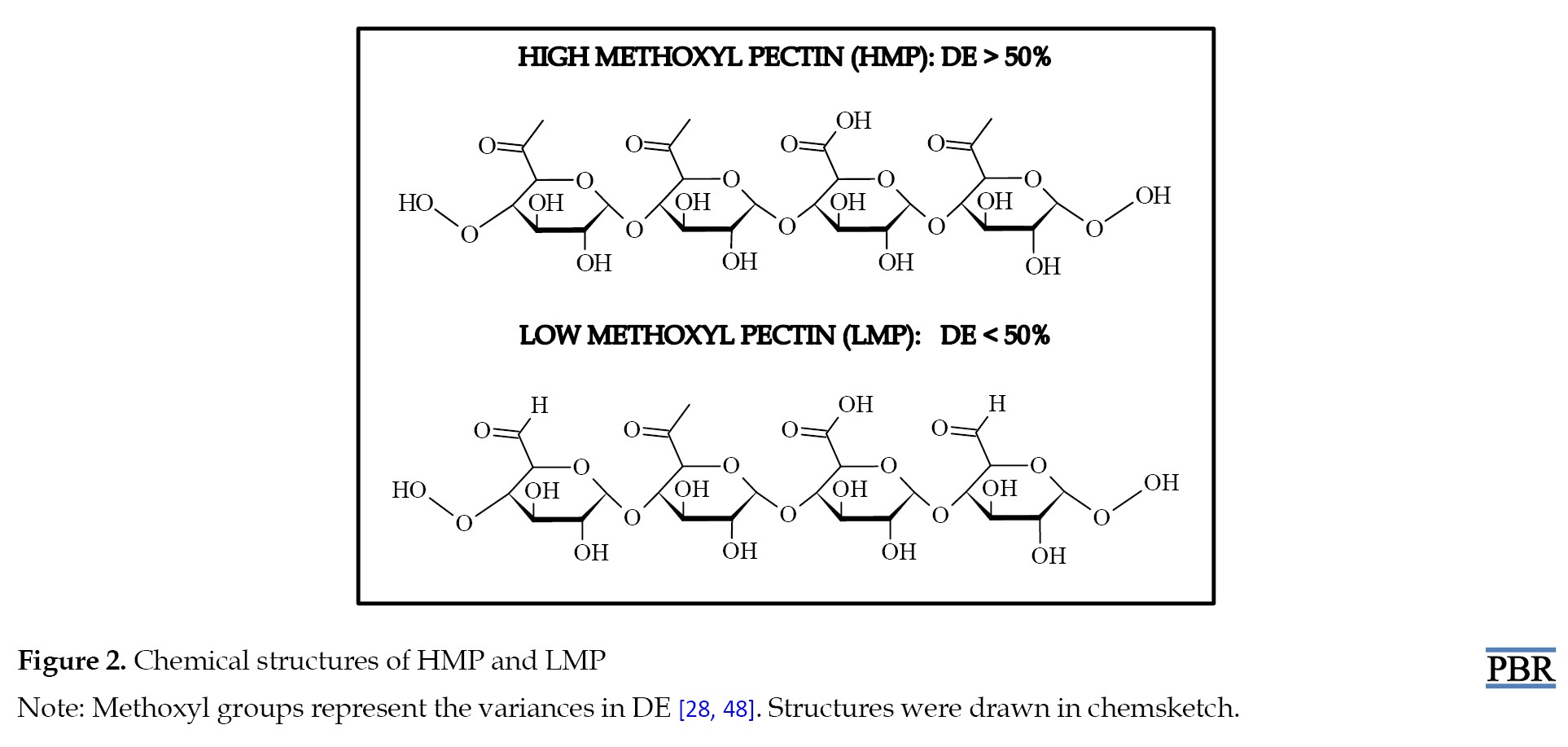
Characterization: Pectin molecules comprise both hydrophilic and hydrophobic functional groups [41]. Hydroxyl and carboxyl moieties (of GalA residues) serve as hydrophilic units, while amide groups and carboxylic esters serve as hydrophobic units [45]. The abundant groups in the pectin skeleton are acetyl and methoxyl groups. The degree of acetylation (DA) is indicated by the acetyl groups, which are mostly joined to the hydroxyl moiety [37, 42] (Figure 2).
Gelling property of pectin due to its structural domains
HG, being the most abundant domain in the pectin structure, plays a very significant role in pectin’s gelling ability [31, 40]. A higher percentage of HG domains consistently yields stable gel formation [41, 42]. The interaction of divalent cations with the HG units forms ‘three-dimensional gel networks’, which increases the strength of gelling [43]. This gelling ability is also influenced by the length of RG-I structural sub-domains [41, 44].
Characterization: Pectin molecules comprise both hydrophilic and hydrophobic functional groups [41]. Hydroxyl and carboxyl moieties (of GalA residues) serve as hydrophilic units, while amide groups and carboxylic esters serve as hydrophobic units [45]. The abundant groups in the pectin skeleton are acetyl and methoxyl groups. The degree of acetylation (DA) is indicated by the acetyl groups, which are mostly joined to the hydroxyl moiety [37, 42] (Figure 2).
Lower acetylation (DA) indicates a greater gelling property of pectin, due to stronger interactions. At the same time, the carboxyl moieties esterified with the methyl groups represent the degree of methoxylation (DM). Higher DM greatly impacts the solubility. However, the polymer size increases with a decrease in DM [32, 40, 41]. The prevalence of divalent cations (Ca2+) interactions also affects the gelling property [43].
Classification of pectin
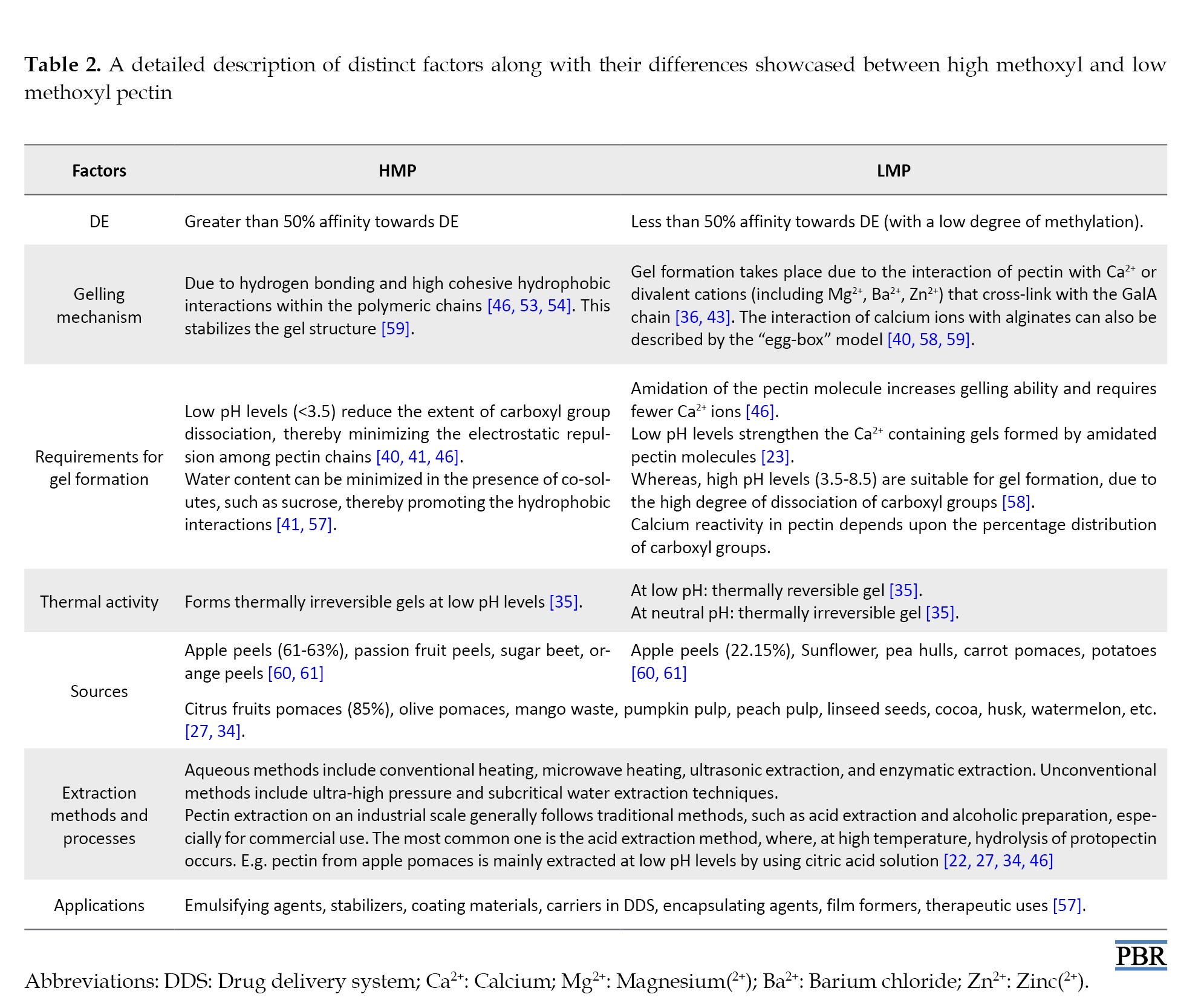
Pectin’s chief characteristic is to form a gel upon esterification. The degree of esterification (DE) (as explained in previous sections) varies with different sources and processing and isolation conditions [46, 47]. The DE can be calculated by comparing the number of partly methyl esterified GalA units with the present number of complete GalA units [23, 48]. Classification of pectin mainly depends upon this DE or the substitution of carboxylic acid moiety with increased quantities of methoxyl groups in GalA skeleton [36, 55].
Pectin comes in two primary varieties: “high methoxyl pectin,” which has a DE of more than 50%, and “low methoxyl pectin (LMP),” which has a DE of less than 50% [14, 23, 56]. High methoxyl pectin (HMP) has hydrogen bonding and high hydrophobic interactions within its chains, which, in turn, form a gel at low pH (acid- and heat-sensitive) [36, 57]. It also requires large quantities of sugar, along with a high concentration of soluble particles (e.g. sucrose) for the gelation process [23, 55].
In contrast, LMP can form a rigid gel, requiring only a specific number of divalent cations (Ca2+ ions), which crosslink with the galacturonic chains [23, 38, 58]. The gel-forming mechanisms of HMP and LMP greatly depend on their degree of DM, pH variations, and addition of co-solutes [27]. Also, based on molecular weight and polymeric concentration, HM and LM pectin can be distinguished (Table 2).
Methods of producing GRDDS
Formulating a system can also be challenging due to the factors that must be considered during the formulation process. First and foremost, the GRDDS vehicles need to be able to efficiently hold the medication in the stomach area for a long time [50]. Second, it should also withstand the stomach wall’s intense peristaltic movements [13]. Lastly, to achieve optimal therapeutic efficacy, the integrated medicine must be released gradually and under control [3]. To meet these requirements, several polymers have shown variability in characteristics, enabling the creation of a gastro-retentive drug delivery system [19, 51]. However, various factors like the type of polymer (cationic, anionic, and non-ionic), its respective composition and molecular weight, may affect the quality of GRDDS [52]. There are a variety of formulation designs for GRDDS, including swellable hydrogels, mucoadhesives, raft formation, magnetic systems, systems with low and high densities, and ion-exchange [19, 53].
Various production techniques
Floating system/Low-density system
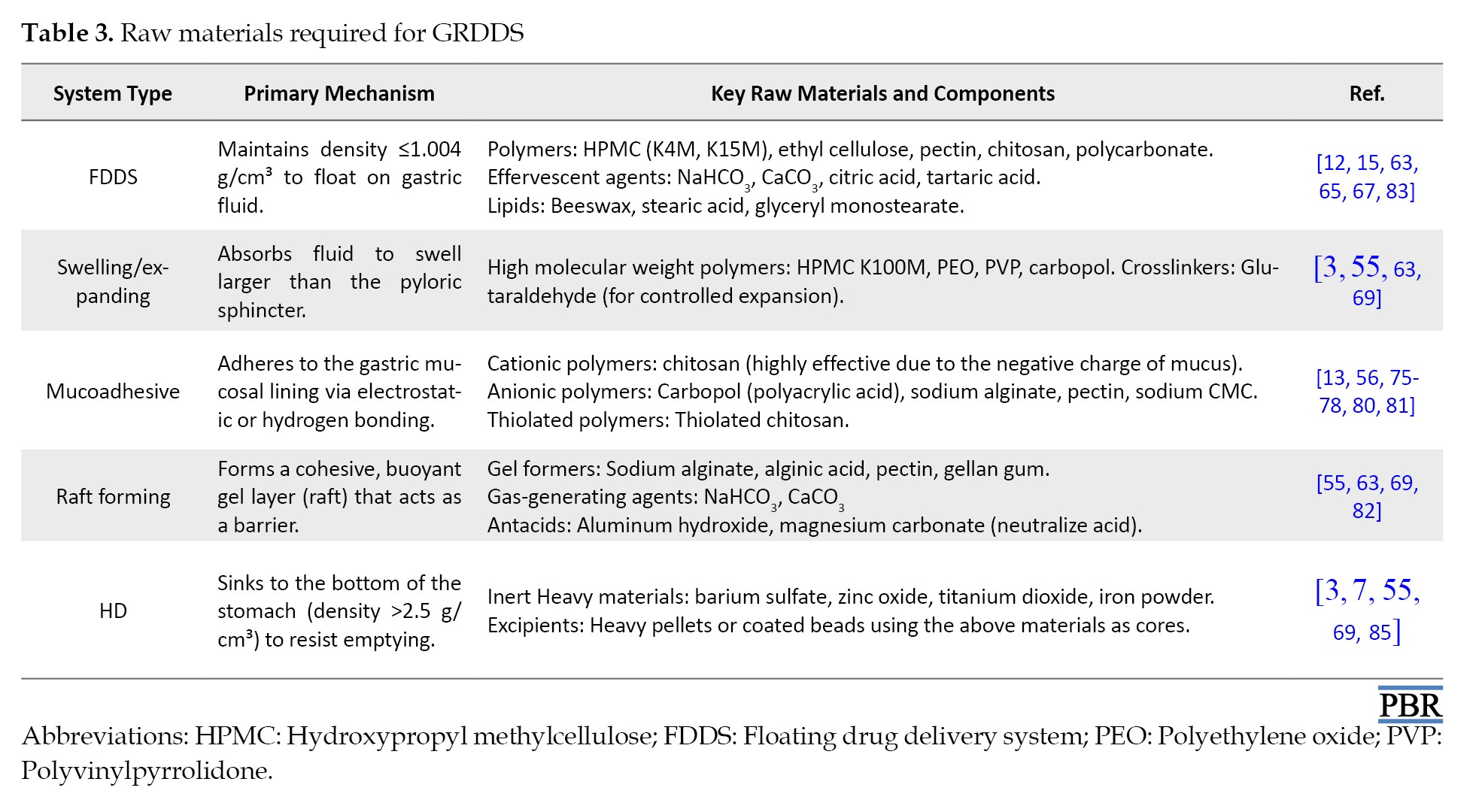
A system based on the concept of low-density floating technique where the differences in densities between the dosages form and the gastric fluid are controlled [13, 63]. In this case, the prepared formulations should be less dense than the gastric fluid (1.004 g/cm3) so that they stay buoyant or remain in the stomach longer [3]. It allows the gradual release of the drug at a controlled rate, thereby increasing gastric residence time [7, 64]. This system was first discovered by Davis in 1968 [65]. Formulations for floating systems include gel-forming hydrocolloids, floating gel beads, microspheres, microballoons, and intragastric formulations that enable floating in stomach fluid. Based on these formulations, floating delivery systems are divided into single-unit and multi-unit systems [51, 66]. Multiple-unit floating systems provide a more sustained release profile, while ensuring controlled performance [67]. Pectin-based beads have received extensive investigation and are mostly implemented as multiple-unit floating systems, due to their gel-forming and thickening properties [66, 67].
Multiple-unit floating systems: Multi-unit floating systems provide a more enhanced sustained release profile, while ensuring a controlled performance [12, 67]. Different strategies may improve the floating mechanism of multi-unit dosage forms, including both effervescent and non-effervescent systems [68]. For instance, Kamble et al. prepared floating beads comprising a pectin-hydroxypropyl methylcellulose (HPMC) coating to study and analyse the stable release of piroxicam [68]. Meanwhile, Gadad et al. developed a floating system by preparing hollow beads loaded with captopril, mainly using LMP and gellan gum [69]. Pectin-based floating gel beads have received extensive investigation and are mostly implemented as multi-unit floating systems. Other approaches also include the development of microballoons and intragastric floating formulations.
Effervescent system: A system that generates gas and enables a floating mechanism [19]. Mainly comprised of substances, such as sodium bicarbonate (NaHCO3), calcium carbonate (CaCO3), tartaric acid, or citric acid, which produce effervescence and are mainly formulated in a combination [7, 63]. These agents, together, can produce carbon dioxide gas (CO2) in gastric fluid [70]. This CO2 gas enables swelling of hydrocolloids and provides buoyancy to the formulation, hence making it floatable [20]. This system also comprises volatile liquids, such as ether and cyclopentane [3]. When incorporated inside an inflatable chamber, the volatility of the liquid makes the chamber inflate in the stomach [71].
Floating beads [12]: Multiple-unit dosage forms exhibit reduced intersubject and intrasubject variability in transit compared to other monolithic dosage forms. This is observed due to the all-or-none nature of the emptying process. Beads, also known as microbeads, are solid particles in the micro range, consisting of drug materials encapsulated within polymeric coatings. The coating material should be biocompatible and dissolve at various pH levels in the GI tract (GIT). This enables site-specific drug delivery and also prolonged drug release at a controlled rate. Advancements made in pectin-based floating beads include (Table 3).
Microballoons/hollow microspheres-microballoons come under low-density non-effervescent systems [72]. These formulations are structurally hollow spherical particles without a core [62]. These free-flowing particles are less than 200 micrometers in size [65, 67, 73]. The polymers used in the preparation of microballoons tend to float in stomach fluid for an extended period due to their gel-forming ability [74]. Agar, calcium alginate, cellulose acetate, polycarbonate, Eudragit S, and low-methoxylated pectin are the typical polymers used [52, 70]. These polymeric materials often absorb water upon contact with gastric fluid, forming a colloidal gel shield that controls the fluid’s rate of penetration into the device and the release of the drug [65, 74]. Once the dose form has dissolved, a gel layer forms on its outer surface, facilitated by moisture from the surrounding hydrocolloid layer [65]. Air trapped within the swollen polymer reduces the hollow microspheres’ density, enhancing their floatability and improving effectiveness [51, 74].
Swelling and expandable systems
Swellable and expandable systems are novel oral DDS intended to prolong the residence time of drugs in the stomach, which in turn increases gastric retention. These systems can expand or swell when taken, which enhances drug absorption and activity, especially for drugs with a narrow absorption window. Swellable systems absorb gastric fluids in the presence of polymers, such as HPMC or other polymers. In contrast, the expandable or unfoldable systems are capable of expanding their size when they enter the stomach to prevent their premature passage from the stomach over the pyloric sphincter. This gastro-retentive drug delivery device can also be termed a “plug-type” system, as it has the potential to temporarily obstruct the pyloric sphincter. The swelling of this device in the gastric compartment occurs in two stages: swelling, which increases volume, and unfolding, which changes the shape from a smaller to a larger form. The release of the drug from this swelling matrix is dominated by a diffusional mechanism. After drug delivery, they can gradually reduce in size or biodegrade [3, 7, 55, 63, 69].
Mucoadhesive system
Park and Robinson first presented the novel mucoadhesive or bioadhesive technology in 1984 [3], marking a significant advancement in drug delivery technology. This system is designed to effectively adhere to the gastric epithelial cell surface, thereby increasing the gastric residence time of various drug compounds [13]. By utilizing mucoadhesive polymers, we can strategically immobilize drug delivery devices at specific locations [75], enabling targeted release and enhanced drug delivery efficacy through intimate contact and prolonged adhesion [75-78].
Mechanism- Polymeric materials that are hydrophilic in nature, with abundant hydrogen bonds, aid in the interactions with the mucus membrane. These interactions result from secondary bonding and physical entanglement, particularly through hydrogen bonds and van der Waals forces, which greatly improve adhesion [75, 78]. Pectin is a particularly interesting polymer because it interacts with the functional groups in mucus layers and is an anionic polysaccharide rich in carboxylic groups [80]. Various factors should be considered before formulating mucoadhesives. These include hydration levels, ionic strength of the medium, and specific molecular structures [56, 81].
Raft- forming systems
Raft-forming DDS are a class of gastric-retentive systems that create a buoyant, gel-like barrier, or “raft,” on the gastric fluid surface. Such a raft separates as a distinct mass from the surrounding gastric fluids, remaining buoyant at the surface. Rafts can provide localized treatment for gastric disorders, such as GERD, due to their floating nature above gastric fluids. Raft-forming DDS consist of gel-forming substances such as alginic acid, along with bicarbonates as reaction precursors in gastric fluids, which form CO2 gas. The gas pocket traps the gel, making it buoyant. Low density of this system enables buoyancy, ensuring a stable formulation and maintaining sustained drug release [55, 63, 69, 82].
High-density systems
High density (HD)-GRDDS have specialized designs with a higher bulk density than gastric fluids (>1.004 g/mL); thus, the dosage sinks quickly into the antrum, where it stays longer. In contrast to traditional buoyancy-driven flotation systems, where a higher density (<1 g/cm³) is desirable, the former systems focus on utilizing the force of gravity for targeted localization within the gastric cavity, especially for substances for which absorption is mostly confined to the proximal stomach. HD-GRDDS help improve the bioavailability of agents with a narrow absorption window while promoting controlled drug release. Higher densities utilize inert, high molecular weight materials like barium sulfate, zinc oxide, and iron, constituting up to 20-50% of the dosage, although the difficulties here include erosion resistance while maintaining mechanical strength. More recent literature highlights the use of hybrid HD-swelling matrices to achieve maximum retention times (>6-8 hours) [3, 7, 55, 69, 85].
Raw materials and components used
Production processes
Floating systems
1) Direct compression: Mix drug, gas-releasing agents (NaHCO₃ and citric acid), and low-density materials (HPMC and pectin), compressed to form tablets, and gas release causes a decrease in density to <1 g/cm3 [84].
2) Wet granulation: Add volatile oils (such as peppermint) or foam stabilizers to the granules, dry them, and press to create a hollow matrix to trap CO2.
3) Extrusion: An encapsulator with a nozzle is used, in which the solution passes through and is deposited into a bath of gelling solution [39].
4) Microspheres: through the development of bio-polymeric microspheres, it is possible to achieve drug delivery via a smart delivery system, ensuring controlled, gradual release of drugs for a prolonged period [39].
Production processes include:
1. Ionotropic gelation: Employs the concept of electrostatic interactions; the bio-polymers interact with oppositely charged crosslinkers [39]. In the case of pectin, crosslinking agents, such as calcium chloride, are used, where electrostatic interactions occur between the positively charged crosslinker and the negatively charged carboxyl moieties of pectin [41, 81]. This also depends on the pH and polymeric concentrations [39].
2. Spray drying: Based on the principle of converting liquid product into dry powders or microspheres [88, 89]. Here, an aqueous solution is dispersed into tiny droplets using an atomizer, and the droplets are then mixed with a drying gas [39]. The solvent component of the solution evaporates due to the presence of this drying gas, allowing the powder to separate out [39, 88].
3. Emulsion: Dispersion of two immiscible liquid phases, where droplets of one liquid phase are dispersed in another liquid medium along with added emulsifying agents [40]. The process involves developing a stable emulsion by dispersing active substances in a polymeric solution. When this stable emulsion is mixed with a non-solvent, the polymer component precipitates, leaving behind microspheres. Evaporation of solvent enables the formation of encapsulated microspheres containing active substances [88].
4. Coacervation: development of microspheres by the coacervation technique occurs due to the formation of a coacervate phase. Types: Simple and complex coacervation [39].
Swelling/expansion systems
Hydrogel matrix tableting: Hydrogel is a “three-dimensional polymeric network” mainly prepared by chemical crosslinking methods [42]. They possess a remarkable ability to assimilate and preserve substantial quantities of water, all while maintaining their structural integrity [33, 90]. Pectin hydrogels have proven to be a potential medium for controlled delivery systems. Production comprises mixing swellable polymers (polyacrylate, pectin) with the drug via high-shear granulation; compression yields tablets that expand >2x in volume to resist pyloric passage [3, 42]. E.g. calcium pectinate (CaP) hydrogels: Maintained at low pH levels. Approaches showcase the use of CaP in various controlled delivery systems. It is also utilized in the preparation of gel beads at concentrations of 1-5% [51, 86, 91].
Mucoadhesives
1) Spray-drying: Atomize drug-polymer (chitosan, pectin) solutions into mucoadhesive microspheres; optimizes particle size (50-200 μm) for gastric adhesion [39, 84, 88, 89].
2) Emulsion solvent evaporation: Disperse polymer in oil-water emulsion, evaporate solvent to form mucoadhesive microparticles [41, 88].
Raft-forming system
1) Ionotropic gelation: Drop pectin/alginate solution into a CaCl2 bath; crosslink into floating gel beads or matrices; ideal for pectin-based rafts [93].
2) Multiple-unit extrusion: Extrude polymer-drug melt into pellets, cure for cohesive rafts on gastric contact [92].
High-density systems [3, 7, 55, 69, 85]
1) Pelletization: The drug is coated over heavy “seeds” or “cores”, such as barium sulfate or titanium dioxide.
2) Extrusion-Spheronization: The drug mixed with a wet mass and heavy diluents is extruded into strands of “spaghetti” that are subsequently shattered in a spheronizer into dense spherical bodies called pellets [39].
3) Encapsulation: The dense pellets are filled in capsules.
Mechanism of action of GRDDS:
How drugs are retained in the stomach
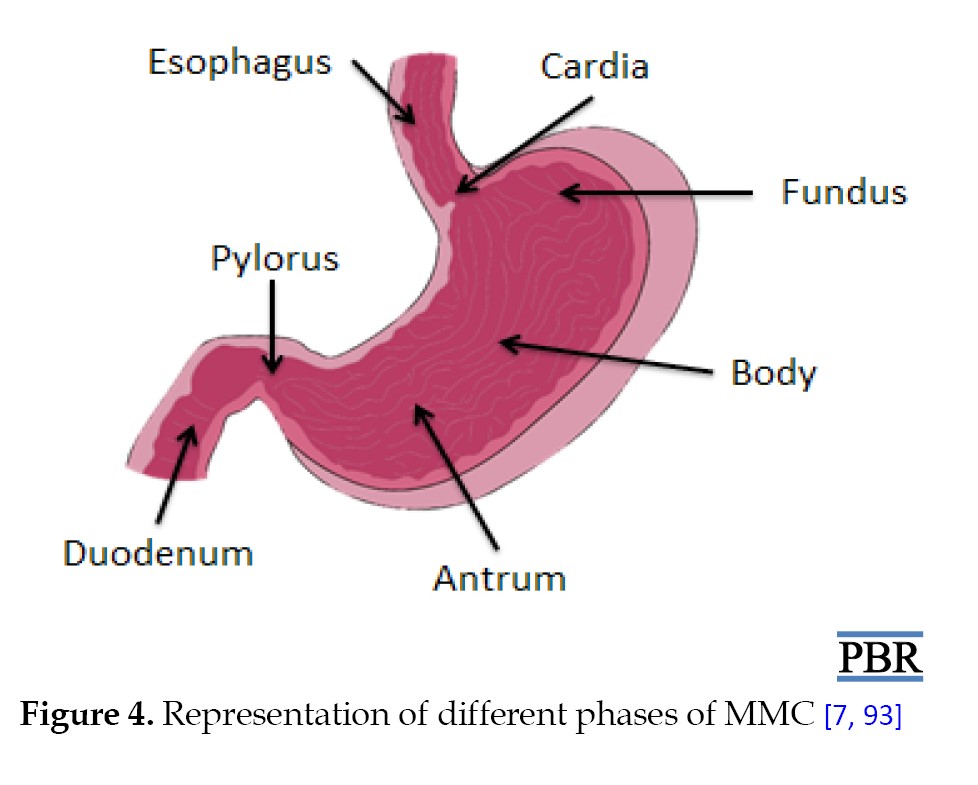
Before formulating any system, a thorough understanding of the various dependent physiological factors is essential. A successful formulation of GRDDS relies on the stomach’s physiology, particularly regarding the gastric emptying process and understanding its anatomical parts [3]. Anatomically, the stomach is divided into proximal and distal sections. The proximal portion includes the fundus and the body, while the distal portion consists of the antrum and the pylorus (illustrated in Figure 3) [7, 93].
Classification of pectin
Pectin’s chief characteristic is to form a gel upon esterification. The degree of esterification (DE) (as explained in previous sections) varies with different sources and processing and isolation conditions [46, 47]. The DE can be calculated by comparing the number of partly methyl esterified GalA units with the present number of complete GalA units [23, 48]. Classification of pectin mainly depends upon this DE or the substitution of carboxylic acid moiety with increased quantities of methoxyl groups in GalA skeleton [36, 55].
Pectin comes in two primary varieties: “high methoxyl pectin,” which has a DE of more than 50%, and “low methoxyl pectin (LMP),” which has a DE of less than 50% [14, 23, 56]. High methoxyl pectin (HMP) has hydrogen bonding and high hydrophobic interactions within its chains, which, in turn, form a gel at low pH (acid- and heat-sensitive) [36, 57]. It also requires large quantities of sugar, along with a high concentration of soluble particles (e.g. sucrose) for the gelation process [23, 55].
In contrast, LMP can form a rigid gel, requiring only a specific number of divalent cations (Ca2+ ions), which crosslink with the galacturonic chains [23, 38, 58]. The gel-forming mechanisms of HMP and LMP greatly depend on their degree of DM, pH variations, and addition of co-solutes [27]. Also, based on molecular weight and polymeric concentration, HM and LM pectin can be distinguished (Table 2).
Methods of producing GRDDS
Formulating a system can also be challenging due to the factors that must be considered during the formulation process. First and foremost, the GRDDS vehicles need to be able to efficiently hold the medication in the stomach area for a long time [50]. Second, it should also withstand the stomach wall’s intense peristaltic movements [13]. Lastly, to achieve optimal therapeutic efficacy, the integrated medicine must be released gradually and under control [3]. To meet these requirements, several polymers have shown variability in characteristics, enabling the creation of a gastro-retentive drug delivery system [19, 51]. However, various factors like the type of polymer (cationic, anionic, and non-ionic), its respective composition and molecular weight, may affect the quality of GRDDS [52]. There are a variety of formulation designs for GRDDS, including swellable hydrogels, mucoadhesives, raft formation, magnetic systems, systems with low and high densities, and ion-exchange [19, 53].
Various production techniques
Floating system/Low-density system
A system based on the concept of low-density floating technique where the differences in densities between the dosages form and the gastric fluid are controlled [13, 63]. In this case, the prepared formulations should be less dense than the gastric fluid (1.004 g/cm3) so that they stay buoyant or remain in the stomach longer [3]. It allows the gradual release of the drug at a controlled rate, thereby increasing gastric residence time [7, 64]. This system was first discovered by Davis in 1968 [65]. Formulations for floating systems include gel-forming hydrocolloids, floating gel beads, microspheres, microballoons, and intragastric formulations that enable floating in stomach fluid. Based on these formulations, floating delivery systems are divided into single-unit and multi-unit systems [51, 66]. Multiple-unit floating systems provide a more sustained release profile, while ensuring controlled performance [67]. Pectin-based beads have received extensive investigation and are mostly implemented as multiple-unit floating systems, due to their gel-forming and thickening properties [66, 67].
Multiple-unit floating systems: Multi-unit floating systems provide a more enhanced sustained release profile, while ensuring a controlled performance [12, 67]. Different strategies may improve the floating mechanism of multi-unit dosage forms, including both effervescent and non-effervescent systems [68]. For instance, Kamble et al. prepared floating beads comprising a pectin-hydroxypropyl methylcellulose (HPMC) coating to study and analyse the stable release of piroxicam [68]. Meanwhile, Gadad et al. developed a floating system by preparing hollow beads loaded with captopril, mainly using LMP and gellan gum [69]. Pectin-based floating gel beads have received extensive investigation and are mostly implemented as multi-unit floating systems. Other approaches also include the development of microballoons and intragastric floating formulations.
Effervescent system: A system that generates gas and enables a floating mechanism [19]. Mainly comprised of substances, such as sodium bicarbonate (NaHCO3), calcium carbonate (CaCO3), tartaric acid, or citric acid, which produce effervescence and are mainly formulated in a combination [7, 63]. These agents, together, can produce carbon dioxide gas (CO2) in gastric fluid [70]. This CO2 gas enables swelling of hydrocolloids and provides buoyancy to the formulation, hence making it floatable [20]. This system also comprises volatile liquids, such as ether and cyclopentane [3]. When incorporated inside an inflatable chamber, the volatility of the liquid makes the chamber inflate in the stomach [71].
Floating beads [12]: Multiple-unit dosage forms exhibit reduced intersubject and intrasubject variability in transit compared to other monolithic dosage forms. This is observed due to the all-or-none nature of the emptying process. Beads, also known as microbeads, are solid particles in the micro range, consisting of drug materials encapsulated within polymeric coatings. The coating material should be biocompatible and dissolve at various pH levels in the GI tract (GIT). This enables site-specific drug delivery and also prolonged drug release at a controlled rate. Advancements made in pectin-based floating beads include (Table 3).
Microballoons/hollow microspheres-microballoons come under low-density non-effervescent systems [72]. These formulations are structurally hollow spherical particles without a core [62]. These free-flowing particles are less than 200 micrometers in size [65, 67, 73]. The polymers used in the preparation of microballoons tend to float in stomach fluid for an extended period due to their gel-forming ability [74]. Agar, calcium alginate, cellulose acetate, polycarbonate, Eudragit S, and low-methoxylated pectin are the typical polymers used [52, 70]. These polymeric materials often absorb water upon contact with gastric fluid, forming a colloidal gel shield that controls the fluid’s rate of penetration into the device and the release of the drug [65, 74]. Once the dose form has dissolved, a gel layer forms on its outer surface, facilitated by moisture from the surrounding hydrocolloid layer [65]. Air trapped within the swollen polymer reduces the hollow microspheres’ density, enhancing their floatability and improving effectiveness [51, 74].
Swelling and expandable systems
Swellable and expandable systems are novel oral DDS intended to prolong the residence time of drugs in the stomach, which in turn increases gastric retention. These systems can expand or swell when taken, which enhances drug absorption and activity, especially for drugs with a narrow absorption window. Swellable systems absorb gastric fluids in the presence of polymers, such as HPMC or other polymers. In contrast, the expandable or unfoldable systems are capable of expanding their size when they enter the stomach to prevent their premature passage from the stomach over the pyloric sphincter. This gastro-retentive drug delivery device can also be termed a “plug-type” system, as it has the potential to temporarily obstruct the pyloric sphincter. The swelling of this device in the gastric compartment occurs in two stages: swelling, which increases volume, and unfolding, which changes the shape from a smaller to a larger form. The release of the drug from this swelling matrix is dominated by a diffusional mechanism. After drug delivery, they can gradually reduce in size or biodegrade [3, 7, 55, 63, 69].
Mucoadhesive system
Park and Robinson first presented the novel mucoadhesive or bioadhesive technology in 1984 [3], marking a significant advancement in drug delivery technology. This system is designed to effectively adhere to the gastric epithelial cell surface, thereby increasing the gastric residence time of various drug compounds [13]. By utilizing mucoadhesive polymers, we can strategically immobilize drug delivery devices at specific locations [75], enabling targeted release and enhanced drug delivery efficacy through intimate contact and prolonged adhesion [75-78].
Mechanism- Polymeric materials that are hydrophilic in nature, with abundant hydrogen bonds, aid in the interactions with the mucus membrane. These interactions result from secondary bonding and physical entanglement, particularly through hydrogen bonds and van der Waals forces, which greatly improve adhesion [75, 78]. Pectin is a particularly interesting polymer because it interacts with the functional groups in mucus layers and is an anionic polysaccharide rich in carboxylic groups [80]. Various factors should be considered before formulating mucoadhesives. These include hydration levels, ionic strength of the medium, and specific molecular structures [56, 81].
Raft- forming systems
Raft-forming DDS are a class of gastric-retentive systems that create a buoyant, gel-like barrier, or “raft,” on the gastric fluid surface. Such a raft separates as a distinct mass from the surrounding gastric fluids, remaining buoyant at the surface. Rafts can provide localized treatment for gastric disorders, such as GERD, due to their floating nature above gastric fluids. Raft-forming DDS consist of gel-forming substances such as alginic acid, along with bicarbonates as reaction precursors in gastric fluids, which form CO2 gas. The gas pocket traps the gel, making it buoyant. Low density of this system enables buoyancy, ensuring a stable formulation and maintaining sustained drug release [55, 63, 69, 82].
High-density systems
High density (HD)-GRDDS have specialized designs with a higher bulk density than gastric fluids (>1.004 g/mL); thus, the dosage sinks quickly into the antrum, where it stays longer. In contrast to traditional buoyancy-driven flotation systems, where a higher density (<1 g/cm³) is desirable, the former systems focus on utilizing the force of gravity for targeted localization within the gastric cavity, especially for substances for which absorption is mostly confined to the proximal stomach. HD-GRDDS help improve the bioavailability of agents with a narrow absorption window while promoting controlled drug release. Higher densities utilize inert, high molecular weight materials like barium sulfate, zinc oxide, and iron, constituting up to 20-50% of the dosage, although the difficulties here include erosion resistance while maintaining mechanical strength. More recent literature highlights the use of hybrid HD-swelling matrices to achieve maximum retention times (>6-8 hours) [3, 7, 55, 69, 85].
Raw materials and components used
Production processes
Floating systems
1) Direct compression: Mix drug, gas-releasing agents (NaHCO₃ and citric acid), and low-density materials (HPMC and pectin), compressed to form tablets, and gas release causes a decrease in density to <1 g/cm3 [84].
2) Wet granulation: Add volatile oils (such as peppermint) or foam stabilizers to the granules, dry them, and press to create a hollow matrix to trap CO2.
3) Extrusion: An encapsulator with a nozzle is used, in which the solution passes through and is deposited into a bath of gelling solution [39].
4) Microspheres: through the development of bio-polymeric microspheres, it is possible to achieve drug delivery via a smart delivery system, ensuring controlled, gradual release of drugs for a prolonged period [39].
Production processes include:
1. Ionotropic gelation: Employs the concept of electrostatic interactions; the bio-polymers interact with oppositely charged crosslinkers [39]. In the case of pectin, crosslinking agents, such as calcium chloride, are used, where electrostatic interactions occur between the positively charged crosslinker and the negatively charged carboxyl moieties of pectin [41, 81]. This also depends on the pH and polymeric concentrations [39].
2. Spray drying: Based on the principle of converting liquid product into dry powders or microspheres [88, 89]. Here, an aqueous solution is dispersed into tiny droplets using an atomizer, and the droplets are then mixed with a drying gas [39]. The solvent component of the solution evaporates due to the presence of this drying gas, allowing the powder to separate out [39, 88].
3. Emulsion: Dispersion of two immiscible liquid phases, where droplets of one liquid phase are dispersed in another liquid medium along with added emulsifying agents [40]. The process involves developing a stable emulsion by dispersing active substances in a polymeric solution. When this stable emulsion is mixed with a non-solvent, the polymer component precipitates, leaving behind microspheres. Evaporation of solvent enables the formation of encapsulated microspheres containing active substances [88].
4. Coacervation: development of microspheres by the coacervation technique occurs due to the formation of a coacervate phase. Types: Simple and complex coacervation [39].
Swelling/expansion systems
Hydrogel matrix tableting: Hydrogel is a “three-dimensional polymeric network” mainly prepared by chemical crosslinking methods [42]. They possess a remarkable ability to assimilate and preserve substantial quantities of water, all while maintaining their structural integrity [33, 90]. Pectin hydrogels have proven to be a potential medium for controlled delivery systems. Production comprises mixing swellable polymers (polyacrylate, pectin) with the drug via high-shear granulation; compression yields tablets that expand >2x in volume to resist pyloric passage [3, 42]. E.g. calcium pectinate (CaP) hydrogels: Maintained at low pH levels. Approaches showcase the use of CaP in various controlled delivery systems. It is also utilized in the preparation of gel beads at concentrations of 1-5% [51, 86, 91].
Mucoadhesives
1) Spray-drying: Atomize drug-polymer (chitosan, pectin) solutions into mucoadhesive microspheres; optimizes particle size (50-200 μm) for gastric adhesion [39, 84, 88, 89].
2) Emulsion solvent evaporation: Disperse polymer in oil-water emulsion, evaporate solvent to form mucoadhesive microparticles [41, 88].
Raft-forming system
1) Ionotropic gelation: Drop pectin/alginate solution into a CaCl2 bath; crosslink into floating gel beads or matrices; ideal for pectin-based rafts [93].
2) Multiple-unit extrusion: Extrude polymer-drug melt into pellets, cure for cohesive rafts on gastric contact [92].
High-density systems [3, 7, 55, 69, 85]
1) Pelletization: The drug is coated over heavy “seeds” or “cores”, such as barium sulfate or titanium dioxide.
2) Extrusion-Spheronization: The drug mixed with a wet mass and heavy diluents is extruded into strands of “spaghetti” that are subsequently shattered in a spheronizer into dense spherical bodies called pellets [39].
3) Encapsulation: The dense pellets are filled in capsules.
Mechanism of action of GRDDS:
How drugs are retained in the stomach
Before formulating any system, a thorough understanding of the various dependent physiological factors is essential. A successful formulation of GRDDS relies on the stomach’s physiology, particularly regarding the gastric emptying process and understanding its anatomical parts [3]. Anatomically, the stomach is divided into proximal and distal sections. The proximal portion includes the fundus and the body, while the distal portion consists of the antrum and the pylorus (illustrated in Figure 3) [7, 93].
The function of the proximal part is to act as a temporary storage space for consumed food. At the distal end, the antrum serves as the main site for churning food and also helps gastric emptying by propelling food via a pumping action. The pylorus, located in the lower region, acts as a barrier between the stomach and the duodenum. It allows the regulation of gastric residence time for ingested food [10, 12, 13].
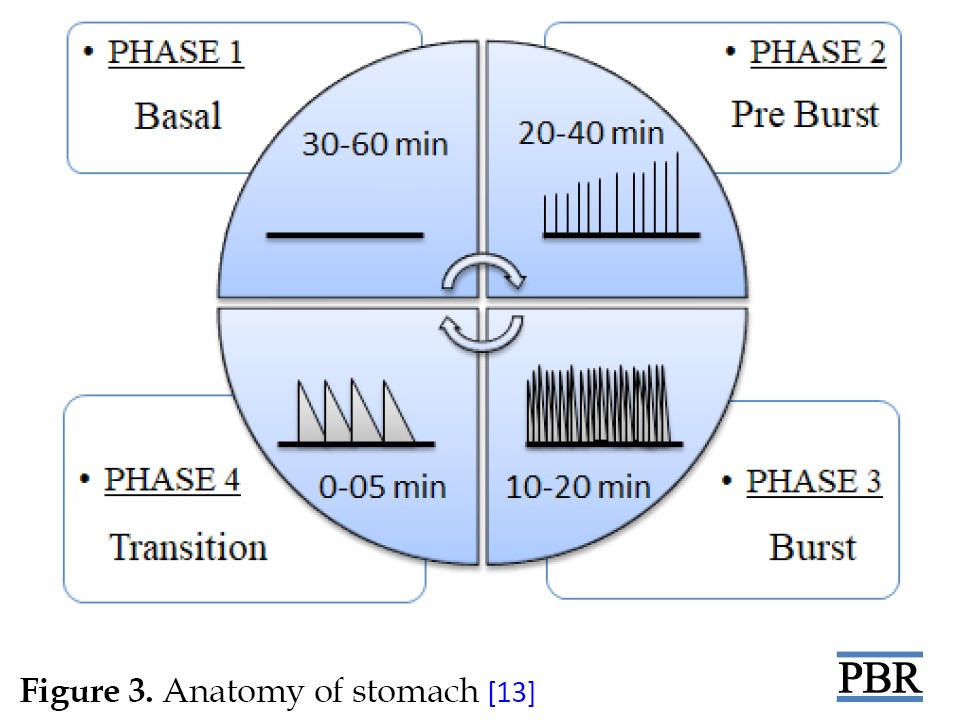
The stomach has a mobility pattern called migrating myoelectric complex (MMC) [93]. This pattern follows a systemic cycle comprising four phases, each lasting about 90-120 minutes (described in Table 4).
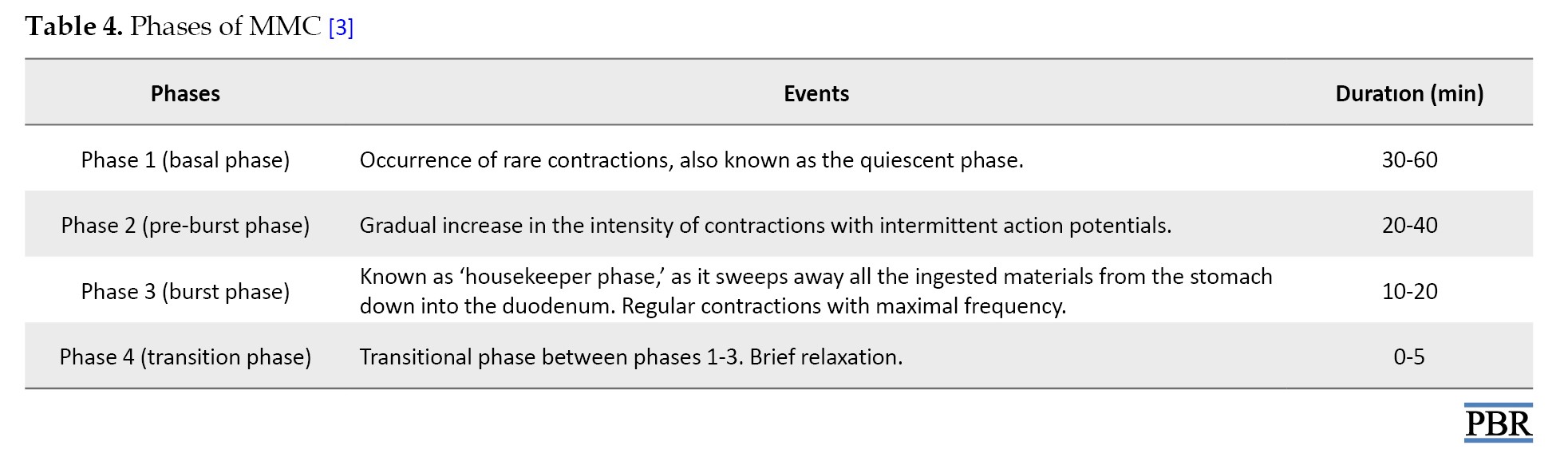
Here, the gastric emptying processes for the ingested materials occur. However, this gastric mobility pattern differs between the fasting and fed states [94]. During fasting, sequences of a cyclic pattern, followed by electrical events, occur every 90-120 minutes [95] (Figure 4).
The stomach has a mobility pattern called migrating myoelectric complex (MMC) [93]. This pattern follows a systemic cycle comprising four phases, each lasting about 90-120 minutes (described in Table 4).
Here, the gastric emptying processes for the ingested materials occur. However, this gastric mobility pattern differs between the fasting and fed states [94]. During fasting, sequences of a cyclic pattern, followed by electrical events, occur every 90-120 minutes [95] (Figure 4).
The pylorus increases in diameter, thereby allowing smaller particles to evacuate easily through the duodenal pyloric sphincter. In a fully fed state, motor activity continues to occur every 5-10 minutes as long as the food contents remain in the stomach, thereby delaying gastric emptying [3, 7, 13, 64].
Factors affecting the performance of gastro-retentive systems [3, 7, 11, 12, 64, 70, 106]
The extent to which a gastroretentive drug delivery system works well can be accurately predicted by one key characteristic: Gastric retention time. This gastric retention time can be affected by various conditions.
Physiological factors
1) Gastric motility (MMC): In the fasting state, the MMC rhythmically cycles every 1.5 to 2 hours, with some periods of intense contraction in phase III, often called the “housekeeping wave,” which propels nondigestible matter out of the stomach and could effectively empty GRDDS if it happens coincidentally.
2) Gastric pH and volume: The pH of the stomach varies from 1.5 to 2.0 in a fasted state and from 2.0 to 6.0 in a fed state, whereas increased gastric volume and water intake lead to a faster gastric emptying rate.
Formulation and physicochemical factors
1) Density, length, and geometry: Density should be less than gastric fluid (<1.004 g/cm³) in floating systems, whereas in the case of a heavy-density system (>2.5 g/cm³), the design should facilitate lodging in the gastric folds; the system takes long if its size exceeds 7.5 mm, whereas a geometry that is not a sphere (ring, tetrahedral) takes long.
2) Single versus multiple units: Multiple-unit systems, such as beads or microspheres, are generally more reproducible than single units, such as tablets or capsules, regarding GRT and are less prone to all-or-nothing emptying phenomena.
Patient-related factors
1) Fed/fasted state and nature of the meal: GRT is usually prolonged in the fed state, as food inhibits the onset of the MMC cycle and slows gastric emptying; high-calorie meals, specifically high-fat meals, further delay GRT in the GRDDS.
2) Age, Gender, Posture, and Disease: Elderly individuals generally exhibit slower gastric emptying and longer GRT, and females often have slower gastric emptying than males; posture can modulate the behavior of floating systems (upright posture favors floating in the fundus), while conditions such as diabetic gastroparesis delay emptying, and hyperthyroidism or stress may accelerate it.
Advantages and disadvantages of pectin-based GRDDS
Pectin is a naturally occurring polysaccharide (derived from citrus fruits or apples) that has gained significant attention in GRDDS. Its performance is largely dictated by its DE, which categorizes it into high methoxylated (HM) or low methoxylated (LM) pectin (from section: Introduction to pectin and its properties).
Advantages of pectin-based GRDDS
1) Acid-induced gel stability: Pectin forms a stable gel under acidic conditions comparable to the gastric environment, helping the oral dosage form retain its structural integrity after ingestion [80, 86].
2) Mucoadhesive interaction with gastric tissue: HM pectin exhibits strong mucoadhesive behavior by forming intermolecular hydrogen bonds, thereby enhancing adhesion to the gastric mucosal surface and prolonging residence time [46, 75].
3) Controlled and adjustable drug release: The drug release rate can be precisely regulated by altering the HM: LM pectin ratio or by introducing calcium ions to induce polymer crosslinking, enabling controlled diffusion from the matrix [11, 23, 36, 43, 46, 85].
4) Biocompatibility and regulatory acceptance: As a naturally occurring polysaccharide, pectin is biodegradable, non-toxic, and well tolerated, with established acceptance for use in pharmaceutical formulations [16, 17].
5) Manufacturing and economic advantages: Pectin is an economical excipient derived from fruit-processing byproducts and is easily incorporated into conventional pharmaceutical manufacturing processes [85].
6) GI pH-dependent behavior: Pectin remains stable in acidic gastric conditions. However, it undergoes degradation in the colon, making it particularly suitable for formulations designed to exert their therapeutic effect in the stomach [18, 15].
7) pH/Ion responsive gelation: LM pectin (DE<50%) forms strong calcium (Ca²⁺)-crosslinked “egg-box” rafts in acidic gastric pH (1.2-3.0), achieving flotation >12 h and sustained release without gas generators [18, 35, 46, 40, 58, 59].
Disadvantages of pectin-based GRDDS of pectin-based GRDDS
1) Limited suitability for highly water: Soluble drugs- Pectin is inherently hydrophilic, and formulations containing highly water-soluble drugs may exhibit rapid drug diffusion or premature release in the gastric environment. This can compromise sustained drug delivery unless additional formulation strategies, such as polymer blending or cross-linking, are employed [41, 96].
2) Unsuitability for acid-labile drugs: Since pectin-based GRDDS are designed to retain the dosage form in the stomach for prolonged periods, drugs that are unstable or degrade under acidic conditions may not be appropriate candidates for such systems. Extended gastric exposure can lead to reduced drug potency and therapeutic failure [15, 18, 35].
3) Reduced effectiveness for drugs with narrow absorption windows beyond the stomach- although pectin: Based GRDDS are effective for drugs absorbed in the stomach or proximal small intestine, they may not be suitable for drugs requiring absorption further along the GIT. Prolonged gastric retention could delay drug availability at the intended absorption site [15, 35].
4) Rapid aqueous dissolution: Unmodified pectin exhibits high water solubility, which can lead to premature dissolution or surface erosion unless it is cross-linked or combined with complementary polymers such as HPMC or ethyl cellulose [75, 85].
5) Inherent batch-to-batch variability: As a material derived from natural sources, pectin may show variations in molecular weight and esterification levels between production batches, potentially resulting in fluctuations in drug release behavior [3, 13].
6) Dependence on divalent ions: The gel-forming capability of LM pectin relies strongly on the presence of calcium ions, and differences in dietary intake or gastric fluid composition may influence its in vivo performance [19, 36, 46].
7) Limited swelling capacity: Although pectin can form gels effectively, its swelling rate and expansion magnitude are generally lower than those of synthetic polymers such as polyethylene oxide, which may limit its suitability for rapidly expanding delivery systems [55].
Evaluation parameters of pectin-based formulations [96, 97]
Evaluation of pectin-based formulations is essential to ensure their physicochemical stability, gastro-retentive performance, and controlled drug release behavior. The following parameters are commonly employed to characterize and optimize such formulations.
Physical appearance and organoleptic properties
Formulations are visually inspected for color, shape, surface texture, and presence of defects, such as cracks or aggregation, which may indicate formulation instability or processing issues.
Particle size and size distribution
Particle size analysis is performed to ensure uniformity, which directly influences drug release rate, swelling behavior, and gastric retention efficiency, especially in multiparticulate systems.
Flow properties
Flow characteristics such as angle of repose, bulk density, tapped density, Carr’s index, and Hausner ratio are evaluated to assess powder handling and compressibility during manufacturing.
Drug content and content uniformity
Drug content analysis ensures accurate dosing and uniform drug distribution within the pectin matrix. This parameter is critical for maintaining consistent therapeutic efficacy.
Swelling index
The swelling behavior of pectin-based formulations is evaluated in simulated gastric fluid to determine their ability to absorb fluid, expand, and maintain gastric retention.
Gel strength and mechanical integrity
Gel strength and matrix integrity are assessed to evaluate the formulation’s ability to withstand gastric motility without disintegration, particularly for cross-linked pectin systems.
In vitro buoyancy studies
Floating lag time and total floating duration are measured to assess the gastro-retentive capability of floating pectin-based formulations in simulated gastric conditions.
Mucoadhesive strength
Mucoadhesive force is evaluated using ex vivo or in vitro methods to determine the adhesion of the formulation to gastric mucosa, particularly for HM pectin systems.
In vitro drug release studies
Drug release profiles are studied using dissolution testing in simulated gastric media to evaluate release kinetics and the mechanism of drug diffusion from the pectin matrix.
Release kinetic modeling
Drug release data are fitted to kinetic models, such as zero-order, first-order, Higuchi, and Korsmeyer–Peppas models to understand the release mechanism.
pH sensitivity and stability studies
Formulations are evaluated under different pH conditions to assess the stability and performance of pectin in gastric versus intestinal environments.
In vivo gastro-retention studies
Imaging techniques such as X-ray radiography or gamma scintigraphy are used to confirm gastric retention time and in vivo performance of pectin-based GRDDS.
Stability studies
Accelerated and long-term stability studies are conducted according to International Council for Harmonization guidelines to evaluate changes in drug content, release profile, and physical properties over time.
Applications
Specific drugs that can benefit from GRDDS
GRDDS are designed to prolong the residence time of dosage forms in the stomach, thereby improving therapeutic performance for drugs that show site-specific absorption or enhanced stability in the upper GIT. Drug candidates that exhibit favorable physicochemical and pharmacokinetic properties can particularly benefit from this delivery approach [12, 35].
1) Drugs with restricted absorption regions: Certain drugs are absorbed predominantly in the stomach or the upper portion of the small intestine, limiting their overall bioavailability when administered through conventional dosage forms. GRDDS help overcome this limitation by ensuring prolonged drug localization at its primary absorption site. Representative examples include levodopa, riboflavin, and furosemide [12, 35].
2) Drugs intended for gastric site: Specific action-for drugs formulated to exert therapeutic effects directly within the stomach, prolonged gastric retention is highly advantageous. Maintaining the drug in proximity to the gastric mucosa enhances local drug availability and therapeutic efficacy. Such drugs include antacids, H₂-receptor antagonists, and proton pump inhibitors such as ranitidine and omeprazole [109].
3) Drugs with pH: Dependent solubility: Drugs that dissolve readily in acidic environments but show reduced solubility at higher intestinal pH levels are suitable candidates for GRDDS. By retaining the dosage form in the stomach, GRDDS promote improved dissolution and absorption of these compounds. Examples include ketoconazole, itraconazole, and diazepam.
4) Drugs susceptible to intestinal degradation: Some therapeutic agents are unstable in the alkaline conditions of the intestine or are prone to enzymatic degradation. Prolonged gastric retention through GRDDS can help preserve drug stability and enhance bioavailability. Captopril and metformin are commonly cited examples [93, 107].
5) Drugs requiring prolonged therapeutic levels: GRDDS are also beneficial for drugs that require sustained plasma concentrations to achieve optimal therapeutic outcomes. Controlled drug release from gastro-retentive systems can reduce dosing frequency and improve patient adherence. Typical examples include theophylline and propranolol [101].
Results
Years of research conducted on pectin as a polymer have showcased the benefits of its being formulated as a potential drug carrier of various delivery systems, one such system being the GRDDS [55]. Pectin is considered a water-soluble dietary fiber with distinct functions in the GI regions [22, 26, 35]. This includes prolonged gastric retention time, a slow emptying rate, and decreased transit time, mainly in the gastric region [34].
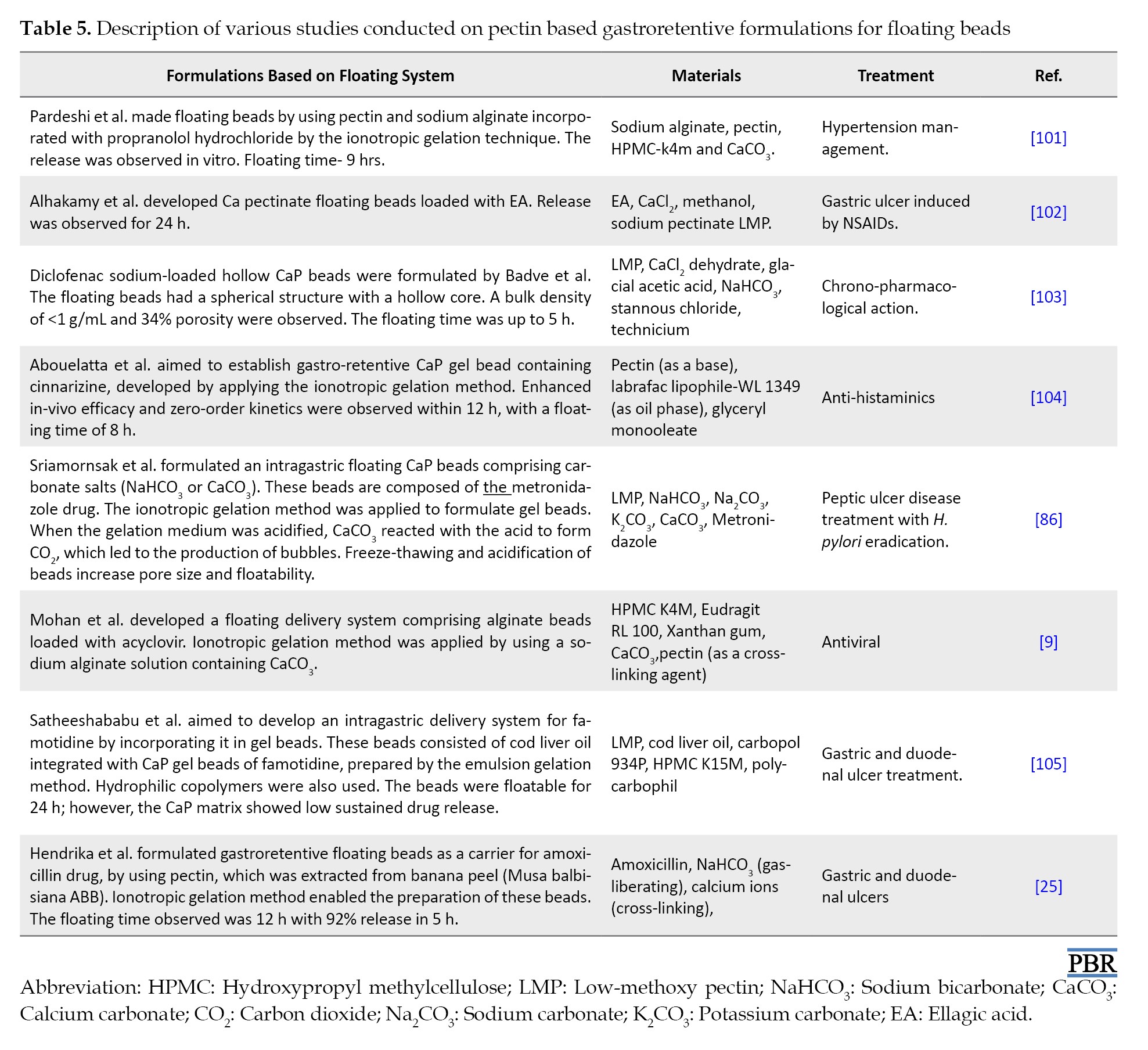
The application of pectin in controlled release systems within the gastric region is widely being evaluated and employed as pectin-based matrices and pectin-based gel beads [20]. Pectin, having bioadhesive properties, can also be used in targeted drug delivery as a carrier material. One such pectin formulation is CaP beads, which can retain even at acidic or low pH levels. Further investigations have been conducted and are still ongoing to determine its effectiveness in different controlled release systems [15, 20]. Different approaches have been established to develop pectin-based formulations as carriers for active ingredients to the gastric site via oral administration [85]. In this review, pectin-based techniques applied in formulating a GRDDS are covered and discussed. These techniques include pectin-based floating systems and mucoadhesive systems.
Review of conducted studies
Floating system
Presented in Table 5.
Mucoadhesives
Studies conducted:
1) Thirawong et al. [106] studied mucoadhesive properties of various pectin types, characterized by differing DE and molecular weights. Analysis of porcine GI mucosa was conducted using a texture analyzer with a specialized mucoadhesive platform. Their findings revealed that pectin’s mucoadhesive performance on gastric mucosa is notably affected by the pH of the medium. Characteristics, such as higher DE and greater molecular weight, correlate strongly with enhanced mucoadhesion. Notably, amidated LMP demonstrated strong mucoadhesion, with a work of adhesion value comparable to that of HMP [75].
2) Thirawong et al. studied the rheological properties of aqueous dispersions of four distinct pectin types and their mixtures with mucin using a Brookfield viscometer. The results were compared to those of known mucoadhesive substances, such as chitosan and Carbomer 934P. The study found that higher molecular weight pectins resulted in greater viscosity enhancement. Notably, HMP exhibited a stronger interaction with mucin, resulting in a greater bioadhesive force than low-methoxyl pectin. This highlights the potential of pectin in effective mucoadhesive applications [106].
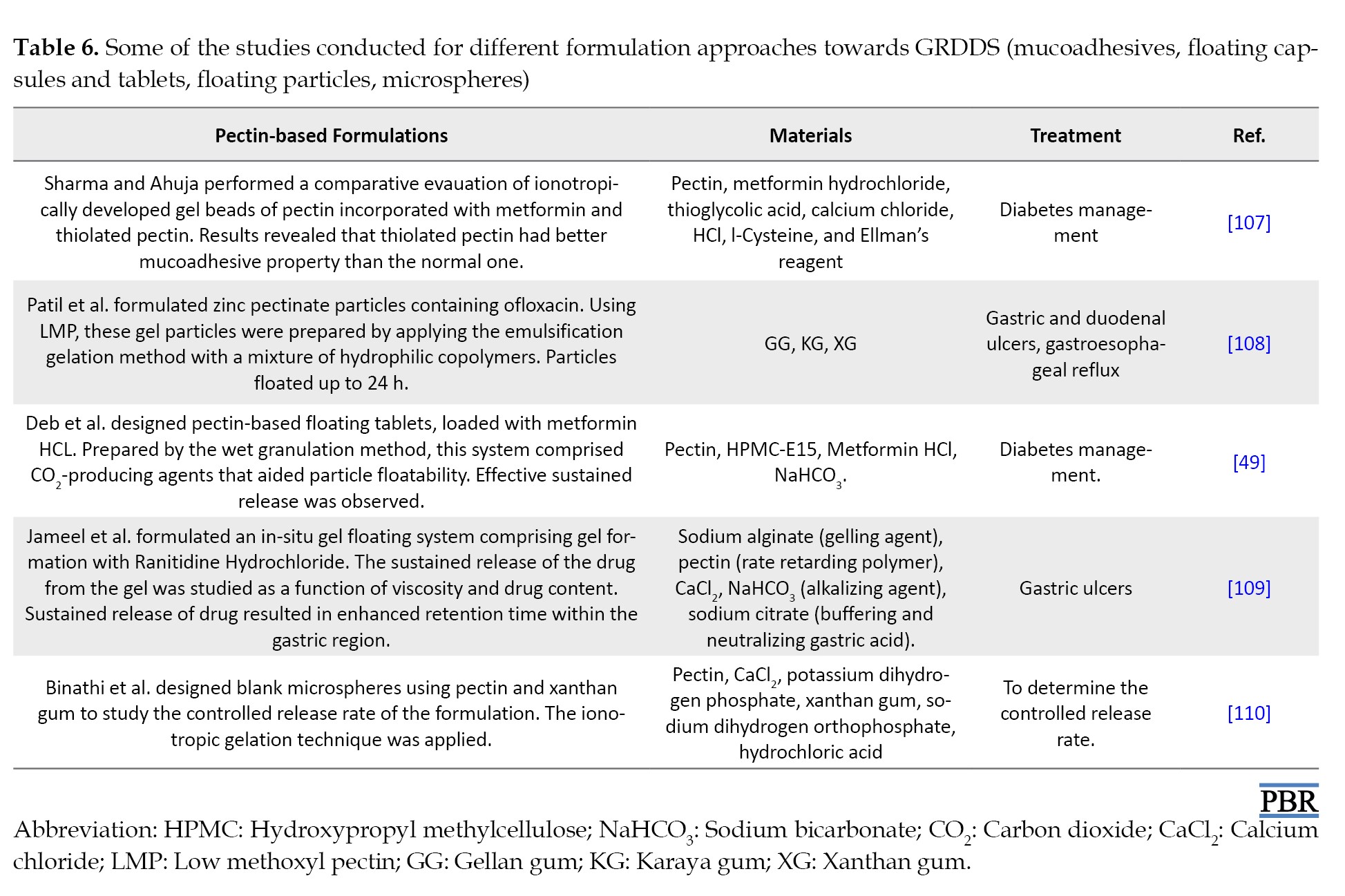
Other approaches in pectin based GRDDS include
1) Pectin-based particles, 2) floating tablets, 3) floating capsules, 4) in-situ gels (Table 6).
Discussion
Analysis and interpretation of results
Pectin-based GRDDS to enhance drug bioavailability by prolonging the time the formulated drug remains in the stomach. Pectin has several advantages, including adhesion to mucosal tissues, biodegradability, and tolerance in biological systems, but it also presents multiple challenges and future opportunities that require attention.
Challenges and opportunities in developing GRDDS
Insufficient mechanical strength: Pectin-based formulations often lack sufficient mechanical strength, risking premature disintegration in gastric conditions [33]. Release control of drugs: Managing the release rate of medications is complex due to the hydrophilic characteristic of pectin, which expands and could release the drug too quickly in liquid environments [16]. Floating capacity limitations: Attaining adequate buoyancy and sustained floating duration is vital for gastroretention, and pectin alone may not reliably provide these properties; other excipients are required to develop a stable GRDDS [55]. Complex formulation challenges: The need to combine pectin with other polymers or additives to enhance efficacy increases the complexity and expense of production [23].
Conclusion
GRDDS are an effective approach to improving the pharmaceutical efficacy of drugs, as they benefit from gastric residence. Among various polymer materials studied, pectin is one of the most attractive natural excipients, owing to its biodegradable, biocompatible, non-toxic, and advantageous physical property of gel formation. The additional advantage of classifying pectin into HM and LM materials enhances formulation flexibility, based on their differing properties, which is beneficial for gastro-retentive systems.
Summary of findings
LM pectin has demonstrated significant potential for floating DDS owing to its calcium-mediated gelation, which supports controlled drug release and gastric retention. In contrast, HM pectin is particularly suitable for mucoadhesive formulations due to its strong adhesive interactions with the gastric mucosa. Studies comparing pectin with other natural polymers further emphasize its adaptability and effectiveness in diverse gastro-retentive formulation approaches.
Ethical Considerations
Compliance with ethical guidelines
There were no ethical considerations to be considered in this research.
Funding
This research did not receive any grant from funding agencies in the public, commercial, or non-profit sectors.
Authors' contributions
All authors contributed equally to the conception and design of the study, data collection and analysis, interception of the results and drafting of the manuscript. Each author approved the final version of the manuscript for submission.
Conflict of interest
The authors declared no conflict of interest.
Factors affecting the performance of gastro-retentive systems [3, 7, 11, 12, 64, 70, 106]
The extent to which a gastroretentive drug delivery system works well can be accurately predicted by one key characteristic: Gastric retention time. This gastric retention time can be affected by various conditions.
Physiological factors
1) Gastric motility (MMC): In the fasting state, the MMC rhythmically cycles every 1.5 to 2 hours, with some periods of intense contraction in phase III, often called the “housekeeping wave,” which propels nondigestible matter out of the stomach and could effectively empty GRDDS if it happens coincidentally.
2) Gastric pH and volume: The pH of the stomach varies from 1.5 to 2.0 in a fasted state and from 2.0 to 6.0 in a fed state, whereas increased gastric volume and water intake lead to a faster gastric emptying rate.
Formulation and physicochemical factors
1) Density, length, and geometry: Density should be less than gastric fluid (<1.004 g/cm³) in floating systems, whereas in the case of a heavy-density system (>2.5 g/cm³), the design should facilitate lodging in the gastric folds; the system takes long if its size exceeds 7.5 mm, whereas a geometry that is not a sphere (ring, tetrahedral) takes long.
2) Single versus multiple units: Multiple-unit systems, such as beads or microspheres, are generally more reproducible than single units, such as tablets or capsules, regarding GRT and are less prone to all-or-nothing emptying phenomena.
Patient-related factors
1) Fed/fasted state and nature of the meal: GRT is usually prolonged in the fed state, as food inhibits the onset of the MMC cycle and slows gastric emptying; high-calorie meals, specifically high-fat meals, further delay GRT in the GRDDS.
2) Age, Gender, Posture, and Disease: Elderly individuals generally exhibit slower gastric emptying and longer GRT, and females often have slower gastric emptying than males; posture can modulate the behavior of floating systems (upright posture favors floating in the fundus), while conditions such as diabetic gastroparesis delay emptying, and hyperthyroidism or stress may accelerate it.
Advantages and disadvantages of pectin-based GRDDS
Pectin is a naturally occurring polysaccharide (derived from citrus fruits or apples) that has gained significant attention in GRDDS. Its performance is largely dictated by its DE, which categorizes it into high methoxylated (HM) or low methoxylated (LM) pectin (from section: Introduction to pectin and its properties).
Advantages of pectin-based GRDDS
1) Acid-induced gel stability: Pectin forms a stable gel under acidic conditions comparable to the gastric environment, helping the oral dosage form retain its structural integrity after ingestion [80, 86].
2) Mucoadhesive interaction with gastric tissue: HM pectin exhibits strong mucoadhesive behavior by forming intermolecular hydrogen bonds, thereby enhancing adhesion to the gastric mucosal surface and prolonging residence time [46, 75].
3) Controlled and adjustable drug release: The drug release rate can be precisely regulated by altering the HM: LM pectin ratio or by introducing calcium ions to induce polymer crosslinking, enabling controlled diffusion from the matrix [11, 23, 36, 43, 46, 85].
4) Biocompatibility and regulatory acceptance: As a naturally occurring polysaccharide, pectin is biodegradable, non-toxic, and well tolerated, with established acceptance for use in pharmaceutical formulations [16, 17].
5) Manufacturing and economic advantages: Pectin is an economical excipient derived from fruit-processing byproducts and is easily incorporated into conventional pharmaceutical manufacturing processes [85].
6) GI pH-dependent behavior: Pectin remains stable in acidic gastric conditions. However, it undergoes degradation in the colon, making it particularly suitable for formulations designed to exert their therapeutic effect in the stomach [18, 15].
7) pH/Ion responsive gelation: LM pectin (DE<50%) forms strong calcium (Ca²⁺)-crosslinked “egg-box” rafts in acidic gastric pH (1.2-3.0), achieving flotation >12 h and sustained release without gas generators [18, 35, 46, 40, 58, 59].
Disadvantages of pectin-based GRDDS of pectin-based GRDDS
1) Limited suitability for highly water: Soluble drugs- Pectin is inherently hydrophilic, and formulations containing highly water-soluble drugs may exhibit rapid drug diffusion or premature release in the gastric environment. This can compromise sustained drug delivery unless additional formulation strategies, such as polymer blending or cross-linking, are employed [41, 96].
2) Unsuitability for acid-labile drugs: Since pectin-based GRDDS are designed to retain the dosage form in the stomach for prolonged periods, drugs that are unstable or degrade under acidic conditions may not be appropriate candidates for such systems. Extended gastric exposure can lead to reduced drug potency and therapeutic failure [15, 18, 35].
3) Reduced effectiveness for drugs with narrow absorption windows beyond the stomach- although pectin: Based GRDDS are effective for drugs absorbed in the stomach or proximal small intestine, they may not be suitable for drugs requiring absorption further along the GIT. Prolonged gastric retention could delay drug availability at the intended absorption site [15, 35].
4) Rapid aqueous dissolution: Unmodified pectin exhibits high water solubility, which can lead to premature dissolution or surface erosion unless it is cross-linked or combined with complementary polymers such as HPMC or ethyl cellulose [75, 85].
5) Inherent batch-to-batch variability: As a material derived from natural sources, pectin may show variations in molecular weight and esterification levels between production batches, potentially resulting in fluctuations in drug release behavior [3, 13].
6) Dependence on divalent ions: The gel-forming capability of LM pectin relies strongly on the presence of calcium ions, and differences in dietary intake or gastric fluid composition may influence its in vivo performance [19, 36, 46].
7) Limited swelling capacity: Although pectin can form gels effectively, its swelling rate and expansion magnitude are generally lower than those of synthetic polymers such as polyethylene oxide, which may limit its suitability for rapidly expanding delivery systems [55].
Evaluation parameters of pectin-based formulations [96, 97]
Evaluation of pectin-based formulations is essential to ensure their physicochemical stability, gastro-retentive performance, and controlled drug release behavior. The following parameters are commonly employed to characterize and optimize such formulations.
Physical appearance and organoleptic properties
Formulations are visually inspected for color, shape, surface texture, and presence of defects, such as cracks or aggregation, which may indicate formulation instability or processing issues.
Particle size and size distribution
Particle size analysis is performed to ensure uniformity, which directly influences drug release rate, swelling behavior, and gastric retention efficiency, especially in multiparticulate systems.
Flow properties
Flow characteristics such as angle of repose, bulk density, tapped density, Carr’s index, and Hausner ratio are evaluated to assess powder handling and compressibility during manufacturing.
Drug content and content uniformity
Drug content analysis ensures accurate dosing and uniform drug distribution within the pectin matrix. This parameter is critical for maintaining consistent therapeutic efficacy.
Swelling index
The swelling behavior of pectin-based formulations is evaluated in simulated gastric fluid to determine their ability to absorb fluid, expand, and maintain gastric retention.
Gel strength and mechanical integrity
Gel strength and matrix integrity are assessed to evaluate the formulation’s ability to withstand gastric motility without disintegration, particularly for cross-linked pectin systems.
In vitro buoyancy studies
Floating lag time and total floating duration are measured to assess the gastro-retentive capability of floating pectin-based formulations in simulated gastric conditions.
Mucoadhesive strength
Mucoadhesive force is evaluated using ex vivo or in vitro methods to determine the adhesion of the formulation to gastric mucosa, particularly for HM pectin systems.
In vitro drug release studies
Drug release profiles are studied using dissolution testing in simulated gastric media to evaluate release kinetics and the mechanism of drug diffusion from the pectin matrix.
Release kinetic modeling
Drug release data are fitted to kinetic models, such as zero-order, first-order, Higuchi, and Korsmeyer–Peppas models to understand the release mechanism.
pH sensitivity and stability studies
Formulations are evaluated under different pH conditions to assess the stability and performance of pectin in gastric versus intestinal environments.
In vivo gastro-retention studies
Imaging techniques such as X-ray radiography or gamma scintigraphy are used to confirm gastric retention time and in vivo performance of pectin-based GRDDS.
Stability studies
Accelerated and long-term stability studies are conducted according to International Council for Harmonization guidelines to evaluate changes in drug content, release profile, and physical properties over time.
Applications
Specific drugs that can benefit from GRDDS
GRDDS are designed to prolong the residence time of dosage forms in the stomach, thereby improving therapeutic performance for drugs that show site-specific absorption or enhanced stability in the upper GIT. Drug candidates that exhibit favorable physicochemical and pharmacokinetic properties can particularly benefit from this delivery approach [12, 35].
1) Drugs with restricted absorption regions: Certain drugs are absorbed predominantly in the stomach or the upper portion of the small intestine, limiting their overall bioavailability when administered through conventional dosage forms. GRDDS help overcome this limitation by ensuring prolonged drug localization at its primary absorption site. Representative examples include levodopa, riboflavin, and furosemide [12, 35].
2) Drugs intended for gastric site: Specific action-for drugs formulated to exert therapeutic effects directly within the stomach, prolonged gastric retention is highly advantageous. Maintaining the drug in proximity to the gastric mucosa enhances local drug availability and therapeutic efficacy. Such drugs include antacids, H₂-receptor antagonists, and proton pump inhibitors such as ranitidine and omeprazole [109].
3) Drugs with pH: Dependent solubility: Drugs that dissolve readily in acidic environments but show reduced solubility at higher intestinal pH levels are suitable candidates for GRDDS. By retaining the dosage form in the stomach, GRDDS promote improved dissolution and absorption of these compounds. Examples include ketoconazole, itraconazole, and diazepam.
4) Drugs susceptible to intestinal degradation: Some therapeutic agents are unstable in the alkaline conditions of the intestine or are prone to enzymatic degradation. Prolonged gastric retention through GRDDS can help preserve drug stability and enhance bioavailability. Captopril and metformin are commonly cited examples [93, 107].
5) Drugs requiring prolonged therapeutic levels: GRDDS are also beneficial for drugs that require sustained plasma concentrations to achieve optimal therapeutic outcomes. Controlled drug release from gastro-retentive systems can reduce dosing frequency and improve patient adherence. Typical examples include theophylline and propranolol [101].
Results
Years of research conducted on pectin as a polymer have showcased the benefits of its being formulated as a potential drug carrier of various delivery systems, one such system being the GRDDS [55]. Pectin is considered a water-soluble dietary fiber with distinct functions in the GI regions [22, 26, 35]. This includes prolonged gastric retention time, a slow emptying rate, and decreased transit time, mainly in the gastric region [34].
The application of pectin in controlled release systems within the gastric region is widely being evaluated and employed as pectin-based matrices and pectin-based gel beads [20]. Pectin, having bioadhesive properties, can also be used in targeted drug delivery as a carrier material. One such pectin formulation is CaP beads, which can retain even at acidic or low pH levels. Further investigations have been conducted and are still ongoing to determine its effectiveness in different controlled release systems [15, 20]. Different approaches have been established to develop pectin-based formulations as carriers for active ingredients to the gastric site via oral administration [85]. In this review, pectin-based techniques applied in formulating a GRDDS are covered and discussed. These techniques include pectin-based floating systems and mucoadhesive systems.
Review of conducted studies
Floating system
Presented in Table 5.
Mucoadhesives
Studies conducted:
1) Thirawong et al. [106] studied mucoadhesive properties of various pectin types, characterized by differing DE and molecular weights. Analysis of porcine GI mucosa was conducted using a texture analyzer with a specialized mucoadhesive platform. Their findings revealed that pectin’s mucoadhesive performance on gastric mucosa is notably affected by the pH of the medium. Characteristics, such as higher DE and greater molecular weight, correlate strongly with enhanced mucoadhesion. Notably, amidated LMP demonstrated strong mucoadhesion, with a work of adhesion value comparable to that of HMP [75].
2) Thirawong et al. studied the rheological properties of aqueous dispersions of four distinct pectin types and their mixtures with mucin using a Brookfield viscometer. The results were compared to those of known mucoadhesive substances, such as chitosan and Carbomer 934P. The study found that higher molecular weight pectins resulted in greater viscosity enhancement. Notably, HMP exhibited a stronger interaction with mucin, resulting in a greater bioadhesive force than low-methoxyl pectin. This highlights the potential of pectin in effective mucoadhesive applications [106].
Other approaches in pectin based GRDDS include
1) Pectin-based particles, 2) floating tablets, 3) floating capsules, 4) in-situ gels (Table 6).
Discussion
Analysis and interpretation of results
Pectin-based GRDDS to enhance drug bioavailability by prolonging the time the formulated drug remains in the stomach. Pectin has several advantages, including adhesion to mucosal tissues, biodegradability, and tolerance in biological systems, but it also presents multiple challenges and future opportunities that require attention.
Challenges and opportunities in developing GRDDS
Insufficient mechanical strength: Pectin-based formulations often lack sufficient mechanical strength, risking premature disintegration in gastric conditions [33]. Release control of drugs: Managing the release rate of medications is complex due to the hydrophilic characteristic of pectin, which expands and could release the drug too quickly in liquid environments [16]. Floating capacity limitations: Attaining adequate buoyancy and sustained floating duration is vital for gastroretention, and pectin alone may not reliably provide these properties; other excipients are required to develop a stable GRDDS [55]. Complex formulation challenges: The need to combine pectin with other polymers or additives to enhance efficacy increases the complexity and expense of production [23].
Conclusion
GRDDS are an effective approach to improving the pharmaceutical efficacy of drugs, as they benefit from gastric residence. Among various polymer materials studied, pectin is one of the most attractive natural excipients, owing to its biodegradable, biocompatible, non-toxic, and advantageous physical property of gel formation. The additional advantage of classifying pectin into HM and LM materials enhances formulation flexibility, based on their differing properties, which is beneficial for gastro-retentive systems.
Summary of findings
LM pectin has demonstrated significant potential for floating DDS owing to its calcium-mediated gelation, which supports controlled drug release and gastric retention. In contrast, HM pectin is particularly suitable for mucoadhesive formulations due to its strong adhesive interactions with the gastric mucosa. Studies comparing pectin with other natural polymers further emphasize its adaptability and effectiveness in diverse gastro-retentive formulation approaches.
Ethical Considerations
Compliance with ethical guidelines
There were no ethical considerations to be considered in this research.
Funding
This research did not receive any grant from funding agencies in the public, commercial, or non-profit sectors.
Authors' contributions
All authors contributed equally to the conception and design of the study, data collection and analysis, interception of the results and drafting of the manuscript. Each author approved the final version of the manuscript for submission.
Conflict of interest
The authors declared no conflict of interest.
References
- Adepu S, Ramakrishna S. Controlled drug delivery systems: Current status and future directions. Molecules. 2021; 26(19):5905. [DOI:10.3390/molecules26195905] [PMID]
- Raj RM, Raj V. Polymers in drug delivery and targeting. In: Mozafari M, Singh Chauhan NP, editors. Handbook of polymers in medicine. Delhi: Woodhead Publishing; 2023. [DOI:10.1016/B978-0-12-823797-7.00022-8]
- Tripathi J, Thapa P, Maharjan R, Jeong SH. Current state and future perspectives on gastroretentive drug delivery systems. Pharmaceutics. 2019; 11(4):193. [DOI:10.3390/pharmaceutics11040193] [PMID]
- Lou J, Duan H, Qin Q, Teng Z, Gan F, Zhou X, et al. Advances in oral drug delivery systems: Challenges and opportunities. Pharmaceutics. 2023; 15(2):484-4. [DOI:10.3390/pharmaceutics15020484] [PMID]
- Siepmann J, Peppas NA. Modeling of drug release from delivery systems based on hydroxypropyl methylcellulose (HPMC). Adv Drug Deliv Rev. 2012; 64:163-74. [DOI:10.1016/j.addr.2012.09.028]
- Lopes CM, Bettencourt C, Rossi A, Buttini F, Barata P. Overview on gastroretentive drug delivery systems for improving drug bioavailability. Int J Pharm. 2016; 510(1):144-58. [DOI:10.1016/j.ijpharm.2016.05.016] [PMID]
- Vinchurkar K, Sainy J, Khan MA, Mane S, Mishra DK, Dixit P. Features and facts of a gastroretentive drug delivery system-A review. Turk J Pharm Sci. 2022; 19(4):476-87. [DOI:10.4274/tjps.galenos.2021.44959] [PMID]
- Mora-Castaño G, Domínguez-Robles J, Himawan A, Millán-Jiménez M, Caraballo I. Current trends in 3D printed gastroretentive floating drug delivery systems: A comprehensive review. Int J Pharm. 2024; 663:124543. [DOI:10.1016/j.ijpharm.2024.124543] [PMID]
- Mohan T, Sunny M, Mathews MM, Badmanaban R. Preparation and evaluation of floating drug delivery system (fdds) containing an antiviral drug. J Innov Appl Pharm Sci. 2023; 8(3-S):105-9. [DOI:10.37022/jiaps.v8i3-s.534]
- Mehmood Y, Bashir I, Majeed I, Siddiqui A, Aslam R. Swelling system of GRDDs: A novel move towards gastroretentive drug delivery system. World J Pharm Pharm Sci. 2014; 3(12):97-110. [Link]
- Hua S. Advances in oral drug delivery for regional targeting in the gastrointestinal tract-Influence of physiological, pathophysiological and pharmaceutical factors. Front Pharmacol. 2020; 11:524. [DOI:10.3389/fphar.2020.00524] [PMID]
- Fateh MV, Kumar V, Chaudhary R, Ujjwal V. Gastro-retentive drug delivery system for treatment of ulcer. Int J Agricult Invent. 2019; 3(2):203-10. [DOI:10.46492/ijai/2018.3.2.18]
- Mandal UK, Chatterjee B, Senjoti FG. Gastro-retentive drug delivery systems and their in vivo success: A recent update. Asian J Pharmaceutical Sci. 2016; 11(5):575-84. [DOI:10.1016/j.ajps.2016.04.007]
- Sopyan I, Gozalı D, Sunan K, Guntına RK. Overvıew of pectın as an excıpıent and ıts use ın the pharmaceutıcal dosage form. Int J Appl Pharm. 2022; 14(4):64-70. [DOI:10.22159/ijap.2022v14i4.45091]
- Liu L, Fishman ML, Kost J, Hicks KB. Pectin-based systems for colon-specific drug delivery via oral route. Biomaterial. 2003; 24(19):3333-43. [DOI:10.1016/S0142-9612(03)00213-8] [PMID]
- Kedir WM, Deresa EM, Diriba TF. Pharmaceutical and drug delivery applications of pectin and its modified nanocomposites. Heliyon. 2022; 8(9):e10654. [DOI:10.1016/j.heliyon.2022.e10654] [PMID]
- Han SS, Ji SM, Park MJ, Suneetha M, Uthappa UT. Pectin based hydrogels for drug delivery applications: A mini review. Gels. 2022; 8(12):834. [DOI:10.3390/gels8120834] [PMID]
- M LD, M V. Natural polymers employed in designing of gastro retentive drug delivery systems. Int J Pharm Sci Rev Res 2023; 78(1):1-8. [DOI:10.47583/ijpsrr.2023.v78i01.001]
- Gayakwad BP, Bavaskar SR, Fulzele S, Yadav R, Gauttam V, Sawale J. Natural polymers in the development of gastroretentive systems: A review. Nat Volatiles Essent Oils. 2021; 8(5):2895-906. [Link]
- Panda S, Sailada NS, Devi B. Design of floating drug delivery systems: An update on polymeric advancements with special reference from natural origin. Int J Pharm Sci Rev Res. 2016; 39(1):125-32. [Link]
- Banerjee P, Deb J, Roy A, Ghosh A, Chakraborty P. Fabrication and development of pectin microsphere of metformin hydrochloride. ISRN Pharm. 2012; 2012:230621. [DOI:10.5402/2012/230621] [PMID]
- Tang X, de Vos P. Structure-function effects of different pectin chemistries and its impact on the gastrointestinal immune barrier system. Crit Rev Food Sci Nutr. 2025; 65(7):1201-15. [DOI:10.1080/10408398.2023.2290230] [PMID]
- Freitas CMP, Coimbra JSR, Souza VGL, Sousa RCS. Structure and applications of pectin in food, biomedical, and pharmaceutical industry: A review. Coatings. 2021; 11(8):922. [DOI:10.3390/coatings11080922]
- Blynskaya EV, Tishkov SV, Vinogradov VP, Alekseev KV, Marakhova AI, Vetcher AA. Polymeric excipients in the technology of floating drug delivery systems. Pharmaceutics. 2022; 14(12):2779. [DOI:10.3390/pharmaceutics14122779] [PMID]
- Hendrika Y, Reveny J, Sumaiyah S. Formulation and in vitro evaluation of gastroretentive floating beads of amoxicillin using pectin from banana peel (Musa balbisiana ABB). Asian J Pharm Clin Res. 2018; 11(4):72-7. [DOI:10.22159/ajpcr.2018.v11i4.23511]
- Ganjoo R, Sharma S, Verma C, Quraishi MA, Kumar A. Heteropolysaccharides in sustainable corrosion inhibition: 4E (energy, economy, ecology, and effectivity) dimensions. Int J Biol Macromol. 2023; 235:123571. [DOI:10.1016/j.ijbiomac.2023.123571] [PMID]
- Riyamol, Gada Chengaiyan J, Rana SS, Ahmad F, Haque S, Capanoglu E. Recent advances in the extraction of pectin from various sources and industrial applications. ACS Omega. 2023; 8(49):46309-24. [DOI:10.1021/acsomega.3c04010] [PMID]
- Zhang W, Xu P, Zhang H. Pectin in cancer therapy: A review. Trend Food Sci Technol. 2015; 44(2):258-71. [DOI:10.1016/j.tifs.2015.04.001]
- Harholt J, Suttangkakul A, Vibe Scheller H. Biosynthesis of pectin. Plant Physiol. 2010; 153(2):384-95. [DOI:10.1104/pp.110.156588] [PMID]
- Yue Y, Wang B, Xi W, Liu X, Tang S, Tan X, et al. Modification methods, biological activities and applications of pectin: A review. Int J Biol Macromol. 2023; 253(Pt 8):127523. [DOI:10.1016/j.ijbiomac.2023.127523] [PMID]
- Zdunek A, Pieczywek PM, Cybulska J. The primary, secondary, and structures of higher levels of pectin polysaccharides. Compr Rev Food Sci Food Saf. 2021; 20(1):1101-17. [DOI:10.1111/1541-4337.12689] [PMID]
- Feng S, Yi J, Ma Y, Bi J. The role of amide groups in the mechanism of acid-induced pectin gelation: A potential pH-sensitive hydrogel based on hydrogen bond interactions. Food Hydrocolloids. 2023; 141:108741-1. [DOI:10.1016/j.foodhyd.2023.108741]
- Kapoor DU, Garg R, Gaur M, Pareek A, Prajapati BG, Castro GR, et al. Pectin hydrogels for controlled drug release: Recent developments and future prospects. Saudi Pharm J. 2024; 32(4):102002. [DOI:10.1016/j.jsps.2024.102002] [PMID]
- Roman-Benn A, Contador CA, Li MW, Lam HM, Ah-Hen K, Ulloa PE, et al. Pectin: An overview of sources, extraction and applications in food products, biomedical, pharmaceutical and environmental issues. Food Chem Adv. 2023; 2:100192. [DOI:10.1016/j.focha.2023.100192]
- Izydorczyk M, Cui SW, Wang Q. Polysaccharide gums: structures, functional properties, and applications. In: Cui SW, editor. Food carbohydrates. Milton Park: Taylor & Francis; 2005. [Link]
- Morris G, Kök S, Harding S, Adams G. Polysaccharide drug delivery systems based on pectin and chitosan. Biotechnol Genet Eng Rev. 2010; 27:257-84. [DOI:10.1080/02648725.2010.10648153] [PMID]
- Yadav K, Yadav S, Anand G, Yadav PK, Yadav D. Hydrolysis of complex pectin structures: Biocatalysis and bioproducts. In: Goldbeck R, Poletto P, editors. Polysaccharide-degrading biocatalysts. Cambridge: Academic Press; 2023.[DOI:10.1016/B978-0-323-99986-1.00011-9]
- Lara-Espinoza C, Carvajal-Millán E, Balandrán-Quintana R, López-Franco Y, Rascón-Chu A. Pectin and pectin-based composite materials: Beyond food texture. Molecules. 2018; 23(4):942. [DOI:10.3390/molecules23040942] [PMID]
- Gutierrez-Alvarado K, Chacón-Cerdas R, Starbird-Perez R. Pectin microspheres: Synthesis methods, properties, and their multidisciplinary applications. Chemistry. 2022; 4(1):121-36. [DOI:10.3390/chemistry4010011]
- Gawkowska D, Cybulska J, Zdunek A. Structure-related gelling of pectins and linking with other natural compounds: A review. Polymers. 2018; 10(7):762. [DOI:10.3390/polym10070762] [PMID]
- Said NS, Olawuyi IF, Lee WY. Pectin hydrogels: Gel-forming behaviors, mechanisms, and food applications. Gels. 2023; 9(9):732-2. [DOI:10.3390/gels9090732] [PMID]
- Bu K, Wu S, Zhu C, Wei M. Comparative study of HG-type low-ester hawthorn pectin as a promising material for the preparation of hydrogel. Carbohydr Polym. 2022; 296:119941-94. [DOI:10.1016/j.carbpol.2022.119941] [PMID]
- Celus M, Kyomugasho C, Van Loey AM, Grauwet T, Hendrickx ME. Influence of pectin structural properties on interactions with divalent cations and its associated functionalities. Compr Rev Food Sci Food Saf. 2018; 17(6):1576-94. [DOI:10.1111/1541-4337.12394] [PMID]
- Kaczmarska A, Pieczywek PM, Cybulska J, Zdunek A. Structure and functionality of rhamnogalacturonan I in the cell wall and in solution: A review. Carbohydr Polym. 2022; 278:118909. [DOI:10.1016/j.carbpol.2021.118909] [PMID]
- Ngouémazong ED, Christiaens S, Shpigelman A, Van Loey A, Hendrickx M. The emulsifying and emulsion-stabilizing properties of pectin: A review. Comprehens Rev Food Sci Food Saf. 2015; 14(6):705-18. [DOI:10.1111/1541-4337.12160]
- Chandel V, Biswas D, Roy S, Vaidya D, Verma A, Gupta A. Current advancements in pectin: Extraction, properties and multifunctional applications. Foods. 2022; 11(17):2683. [DOI:10.3390/foods11172683] [PMID]
- Qi T, Ren J, Li X, An Q, Zhang N, Jia X, et al. Structural characteristics and gel properties of pectin from citrus physiological premature fruit drop. Carbohydr Polym. 2023; 309:120682. [DOI:10.1016/j.carbpol.2023.120682] [PMID]
- Steigerwald H, Blanco-Perez F, Albrecht M, Bender C, Wangorsch A, Endreß HU, et al. Does the food ingredient pectin provide a risk for patients allergic to non-specific lipid-transfer proteins? Foods. 2021; 11(1):13. [DOI:10.3390/foods11010013] [PMID]
- Deb J, Amitava G, Kalyan SK, Choudhury A, Paul P. Formulation and evaluation of metformin hcl floating tablet using pectin as a natural polymer. Int Res J Pharm Sci. 2010; 01(01):0022-6. [Link]
- Gupta R, Tripathi P, Bhardwaj P, Mahor A. Recent advances in gastro retentive drug delivery systems and its application on treatment of H. Pylori infections. J Anal Pharm Res. 2018; 7(4):404-10. [DOI:10.15406/japlr.2018.07.00258]
- Kaushik AY, Tiwari AK, Gaur A. Role of excipients and polymeric advancements in preparation of floating drug delivery systems. Int J Pharm Invest. 2015; 5(1):1-12. [DOI:10.4103/2230-973x.147219] [PMID]
- Sen O, Manna S, Nandi G, Jana S, Jana S. Recent advances in alginate based gastroretentive technologies for drug delivery applications. Med Novel Technol Devices. 2023; 18:100236-6. [DOI:10.1016/j.medntd.2023.100236]
- Turac IR, Porfire A, Iurian S, Crisan AG, Casian T, Iovanov R, Tomută I. Expanding the manufacturing approaches for gastroretentive drug delivery systems with 3d printing technology. Pharmaceutics. 2024; 16(6):790. [DOI:10.3390/pharmaceutics16060790] [PMID]
- Liu J, Bi J, McClements DJ, Liu X, Yi J, Lyu J, et al. Impacts of thermal and non-thermal processing on structure and functionality of pectin in fruit- and vegetable- based products: A review. Carbohydr Polym. 2020; 250:116890. [DOI:10.1016/j.carbpol.2020.116890] [PMID]
- Akin-Ajani OD, Okunlola A. Pharmaceutical applications of pectin. London: IntechOpen; 2022. [DOI:10.5772/intechopen.100152]
- Szekalska M, Czajkowska-Kośnik A, Maciejewski B, Misztalewska-Turkowicz I, Wilczewska AZ, Bernatoniene J, et al. Mucoadhesive alginate/pectin films crosslinked by calcium carbonate as carriers of a model antifungal drug-posaconazole. Pharmaceutics. 2023; 15(10):2415. [DOI:10.3390/pharmaceutics15102415] [PMID]
- Abboud KY, Iacomini M, Simas FF, Cordeiro LMC. High methoxyl pectin from the soluble dietary fiber of passion fruit peel forms weak gel without the requirement of sugar addition. Carbohydr Polym. 2020; 246:116616. [DOI:10.1016/j.carbpol.2020.116616] [PMID]
- Gutöhrlein F, Drusch S, Schalow S. Extraction of low methoxylated pectin from pea hulls via RSM. Food Hydrocoll. 2020; 102:105609. [DOI:10.1016/j.foodhyd.2019.105609]
- Jung J, Arnold RD, Wicker L. Pectin and charge modified pectin hydrogel beads as a colon-targeted drug delivery carrier. Colloids Surf B Biointerfaces. 2013; 104:116-21. [DOI:10.1016/j.colsurfb.2012.11.042] [PMID]
- Nasrollahzadeh M, Nezafat Z, Shafiei N, Soleimani F. Polysaccharides in food industry. In: Nasrollahzadeh M, editor. Biopolymer-based metal nanoparticle chemistry for sustainable applications. Edinburgh: Elsevier; 2021. [DOI:10.1016/B978-0-323-89970-3.00002-0]
- Sundar Raj A, Rubila S, Jayabalan R, Ranganathan T. A review on pectin: Chemistry due to general properties of pectin and its pharmaceutical uses. Sci Rep. 2012; 1(12):1-4. [DOI:10.4172/SCIENTIFICREPORTS.550]
- Kaur M, Wadhwa A, Kumar V. Pectin-based nanomaterials: Synthesis, toxicity and applications. Asian J Chem. 2021; 33(11):2579-88. [DOI:10.14233/ajchem.2021.23382]
- Razavi F, Kouchak M, Veysi M, Feizoleslam F. An overview on floating drug delivery systems (FDDS); conventional and new approaches for preparation and in vitro -in vivo evaluation. FABAD J Pharm Sci. 2021; 46(3):345-62. [Link]
- Sayeed A, Kinagi M, Mohiuddin M, Gada S, Md Noorulla S. Gastro retentive drug delivery systems: A review. Sch Res Library. 2011; 3(1):121-37. [Link]
- Sachin Kothawade, Pande V, Bole S, Kalyani Autade, Rajashri Sumbe, Shubhangi Albhar, et al. A floating system for drug delivery using microballoons. Preprints. 2022; 1-9 [Unpublished]. [DOI:10.20944/preprints202212.0112.v1]
- Meenakshi B, Santosh K, Annapurna O. Floating drug delivery system: A review. J Drug Deliv Ther. 2014; 4(2):130-34. [DOI:10.22270/jddt.v4i2.777]
- Iglesias N, Galbis E, Romero-Azogil L, Benito E, Lucas R, García-Martín MG, et al. In-depth study into polymeric materials in low-density gastroretentive formulations. Pharmaceutics. 2020; 12(7):636. [DOI:10.3390/pharmaceutics12070636] [PMID]
- Kamble D, Singhavi D, Tapadia S, Khan S. Investigation of pectin-hydroxypropyl methylcellulose-coated floating beads for pulsatile release of piroxicam. Turk J Pharm Sci. 2020; 17(5):542-8. [DOI:10.4274/tjps.galenos.2019.99896] [PMID]
- Gadad AP, Reddy A, Dandagi PM, Masthiholimath VS. Design and characterization of hollow/porous floating beads of captopril for pulsatile drug delivery. Asian J Pharm. 2012; 6(2):137-7. [DOI:10.4103/0973-8398.102938]
- Vrettos NN, Roberts CJ, Zhu Z. Gastroretentive technologies in tandem with controlled-release strategies: A potent answer to oral drug bioavailability and patient compliance implications. Pharmaceutics. 2021; 13(10):1591. [DOI:10.3390/pharmaceutics13101591] [PMID]
- Bhondve R, Kakade S, Bhosale A. Bilayer floating tablet- An emerging trend: A review. Int J Pharm Sci and Res. 2023; 14(8):3673-85. [DOI:10.13040/IJPSR.0975-8232.14(8).3673-85]
- Prathibha C, Mutta S, Sheeba F, Vasanth KP. A review on multiple unit hallow microspheres (Microballoons). Int J Pharm Res Appl. 2021; 6(3):950-64. [Link]
- Gorde NK, Kale M. Microballoons as a Gastro-retentive Floating Drug Delivery System: An Overview. Inte J Pharm Phytopharmacol Res. 2013; 2(4):230-9. [Link]
- Chavan PB, Malpure PS, Talele GS, Kadam AR. The latest advancements: A comprehensive review of microballoons for enhanced gastroretention. Asian J Pharm Res and Dev. 2024; 12(3):222-9. [DOI:10.22270/ajprd.v11i3.1425]
- Thirawong N, Nunthanid J, Puttipipatkhachorn S, Sriamornsak P. Mucoadhesive properties of various pectins on gastrointestinal mucosa: An in vitro evaluation using texture analyzer. Eur J Pharm Biopharm. 2007; 67(1):132-40. [DOI:10.1016/j.ejpb.2007.01.010] [PMID]
- Yermak IM, Davydova VN, Volod'ko AV. Mucoadhesive marine polysaccharides. Mar Drugs. 2022; 20(8):522. [DOI:10.3390/md20080522] [PMID]
- Boddupalli BM, Mohammed ZN, Nath RA, Banji D. Mucoadhesive drug delivery system: An overview. J Adv Pharm Technol Res. 2010; 1(4):381-7. [DOI:10.4103/0110-5558.76436] [PMID]
- Vasquez-Martínez N, Guillen D, Moreno-Mendieta SA, Sanchez S, Rodríguez-Sanoja R. The role of mucoadhesion and mucopenetration in the immune response induced by polymer-based mucosal adjuvants. Polymers. 2023; 15(7):1615. [DOI:10.3390/polym15071615] [PMID]
- Shaikh R, Raj Singh TR, Garland MJ, Woolfson AD, Donnelly RF. Mucoadhesive drug delivery systems. J Pharm Bioallied Sci. 2011; 3(1):89-100. [DOI:10.4103/0975-7406.76478] [PMID]
- Chatterjee B, Amalina N, Sengupta P, Mandal UK. Mucoadhesive polymers and their mode of action: A recent update. J Appl Pharm Sci. 2017; 7(5):195-203. [DOI:10.7324/japs.2017.70533]
- Sriamornsak P, Wattanakorn N, Takeuchi H. Study on the mucoadhesion mechanism of pectin by atomic force microscopy and mucin-particle method. Carbohydr Polym. 2010; 79(1):54-9. [DOI:10.1016/j.carbpol.2009.07.018]
- Baran E, Kulinowski P, Król M, Dorożyński P. NMR/MRI techniques to characterize alginate-based gel rafts for the treatment of gastroesophageal reflux disease. Gels. 2025; 11(9):749. [DOI:10.3390/gels11090749] [PMID]
- Garg R, Gupta G. Progress in controlled gastroretentive delivery systems. Trop J Pharm Res. 2008; 7(3):1055-66. [DOI:10.4314/tjpr.v7i3.14691]
- Gadge G, Sabale V, Khade A. Current approaches on gastro retentive drug delivery system: An overview. Int J Pharm Res Technol. 2019; 9(2):16-28. [DOI:10.31838/ijprt/09.02.04]
- Liu L, Fishman ML, Hicks KB. Pectin in controlled drug delivery-A review. Cellulose. 2006; 14(1):15-24. [DOI:10.1007/s10570-006-9095-7]
- Sriamornsak P, Sungthongjeen S, Puttipipatkhachorn S. Use of pectin as a carrier for intragastric floating drug delivery: Carbonate salt contained beads. Carbohydr Polym. 2007; 67(3):436-45. [DOI:10.1016/j.carbpol.2006.06.013]
- Sriamornsak P, Konthong S, Nunthanid J. Fabrication of calcium pectinate microparticles from pomelo pectin by ionotropic gelation. J Asian Assoc Sch Pharm. 2012; 1(4):203-9. [Link]
- Vishwakarma R, Tare H, Jain SK. Regulating drug release with microspheres: Formulation, mechanisms, and challenges. Int J Drug Deliv Technol. 2024; 14(01):487-95. [DOI:10.25258/ijddt.14.1.68]
- Malamatari M, Charisi A, Malamataris S, Kachrimanis K, Nikolakakis I. Spray drying for the preparation of nanoparticle-based drug formulations as dry powders for inhalation. Processes. 2020; 8(7):788. [DOI:10.3390/pr8070788]
- Mishra RK, Banthia AK, Majeed AB. Pectin based formulations for biomedical applications: A review. Asian J Pharm Clin Res. 2012; 5(4):1-7. [Link]
- Günter EA, Popeyko OV, Markov PA, Martinson EA, Litvinets SG, Durnev EA, et al. Swelling and morphology of calcium pectinate gel beads obtained from Silene vulgaris callus modified pectins. Carbohydr Polym. 2014; 103:550-7. [DOI:10.1016/j.carbpol.2013.12.071] [PMID]
- Dziadek M, Dziadek K, Salagierski S, Drozdowska M, Serafim A, Stancu IC, et al. Newly crosslinked chitosan- and chitosan-pectin-based hydrogels with high antioxidant and potential anticancer activity. Carbohydr Polym. 2022; 290:119486. [DOI:10.1016/j.carbpol.2022.119486] [PMID]
- Jyotirmoy D, Amitava G, Kalyan SK, Paul P, Choudhury A. Formulation and evaluation of metformin HCl floating tablet using pectin as a natural polymer. Int Res J Pharm Sci. 2010; 1(1):0022-6. [Link]
- Rumsey D. Small intestıne structure and function. encyclopedia of human nutrition (second edition). Edinburgh: Elsevier; 2005. [DOI:10.1016/B0-12-226694-3/02255-9]
- McQuilken S. Gut motility and its control. Anaesth Intens Care Med. 2021; 22(5):339-42. [DOI:10.1016/j.mpaic.2021.04.002]
- Sharaby MR, Soliman EA, Abdel-Rahman AB, Osman A, Khalil R. Novel pectin-based nanocomposite film for active food packaging applications. Sci Rep. 2022; 12(1):20673. [DOI:10.1038/s41598-022-25192-4] [PMID]
- Ali KA, Chakraborty R, Roy SK, Ghosal K. Design and development of ondansetron-loaded polysaccharide-based buoyant formulation for improved gastric retention and drug release, using both natural and semi-synthetic polymers. Int J Biol Macromol. 2025; 305(Pt 1):141105. [DOI:10.1016/j.ijbiomac.2025.141105] [PMID]
- Jana A, Basu S, Ali KA, Bandyopadhyay AK. Development and physicochemical evaluation of bilayered floating tablet of diltiazem hydrochloride prepared from Plantago ovata seed husk. Lat Am J Pharm. 2010; 29(7):1221-5. [Link]
- Byun C, Zheng Y, Pierce A, Wagner WL, Scheller HV, Mohnen D, et al. The effect of calcium on the cohesive strength and flexural properties of low-methoxyl pectin biopolymers. Molecules. 2019; 25(1):75. [DOI:10.3390/molecules25010075] [PMID]
- Ochoa-Villarreal M, Aispuro-Hernández E, Vargas-Arispuro I, Martínez-Téllez MÁ. Plant cell wall polymers: Function, structure and biological activity of their derivatives. In: Gomes ADS, editor. Polymerization. London: IntechOpen; 2012. [DOI:10.5772/46094]
- Pardeshi M, Barhate S, Bari M, Samir S. Formulation development and evaluation of floating beads of propranolol hydrochloride. Res J Pharm Dosage Forms Technol. 2024; 16(2):137-43. [DOI:10.52711/0975-4377.2024.00022]
- Alhakamy NA, Badr-Eldin SM, Ahmed OAA, Halwani AA, Aldawsari HM, A El-Moselhy M, et al. Optimized ellagic acid-ca pectinate floating beads for gastroprotection against indomethacin-induced gastric injury in rats. Biomolecules. 2020; 10(7):1006. [DOI:10.3390/biom10071006] [PMID]
- Badve SS, Sher P, Korde A, Pawar AP. Development of hollow/porous calcium pectinate beads for floating-pulsatile drug delivery. Eur J Pharm Biopharm. 2007; 65(1):85-93. [DOI:10.1016/j.ejpb.2006.07.010] [PMID]
- Abouelatta SM, Aboelwafa AA, Khalil RM, El-Gazayerly ON. Utilization of ionotropic gelation technique for bioavailability enhancement of cinnarizine: In-vitro optimization and in-vivo performance in human. Drug Deliv. 2016; 23(8):2736-46. [DOI:10.3109/10717544.2015.1064187] [PMID]
- Satheeshababu BK, Sarvaiya GL. Gastroretentive drug delivery system of famotidine: Formulation and in vitro evaluation of oil entrapped calcium pectinate gel beads. Ind J Pharm Sci. 2016; 78(2):203-9. [DOI:10.4172/pharmaceutical-sciences.1000104]
- Thirawong N, Kennedy RA, Sriamornsak P. Viscometric study of pectin-mucin interaction and its mucoadhesive bond strength. Carbohydr Polym. 2008; 71(2):170-9. [DOI:10.1016/j.carbpol.2007.05.026]
- Sharma R, Ahuja M. Thiolated pectin: Synthesis, characterization and evaluation as a mucoadhesive polymer. Carbohydr Polym. 2011; 85(3):658-63. [DOI:10.1016/j.carbpol.2011.03.034]
- Patil JR, Mandage UR, Rathod TP, Chaudhari PM, Beldar SM. Design and evolution of floating drug delivery system for antimicrobial drugs. Int J Pharm Res Appl. 2023; 8(5):2249-7781. [DOI:10.35629/7781-0805686740]
- Jameel N, Kiran C, Kuchana V. Formulation and evaluation of floating oral in-situ gel of ranitidine hydrochloride. Int J Res Pharm Chem. 2016; 6(1):75-81. [Link]
- Binathi B, Manubolu K, Baba KH. Preparatıon and evaluatıon of prelımınary mıcrospheres usıng pectın and xanthan gum polymers. World J Pharm Res. 2023; 12(16):985-95. [DOI:10.20959/wjpr202316-29689]
Type of Study: Review article |
Subject:
Natural products
| Rights and permissions | |
 |
This work is licensed under a Creative Commons Attribution-NonCommercial 4.0 International License. |


This is an open access article distributed under the terms of the Creative Commons Attribution License (CC-By-NC), which permits use, distribution, and reproduction in any medium, provided the original work is properly cited and is not used for commercial purposes.
Contact Information