

Volume 12, Issue 2 (2026)
Pharm Biomed Res 2026, 12(2): 73-86 |
Back to browse issues page



Download citation:
BibTeX | RIS | EndNote | Medlars | ProCite | Reference Manager | RefWorks
Send citation to:


BibTeX | RIS | EndNote | Medlars | ProCite | Reference Manager | RefWorks
Send citation to:
Ahmadi S, Sahraei Z. Vitamin D and Pneumonia in Children: Immunological Mechanisms, Clinical Outcomes, and Current Evidence. Pharm Biomed Res 2026; 12 (2) :73-86
URL: http://pbr.mazums.ac.ir/article-1-736-en.html
URL: http://pbr.mazums.ac.ir/article-1-736-en.html


1- Department of Clinical Pharmacy, School of Pharmacy, Shahed Beheshti University of Medical Science, Tehran, Iran.
Full-Text [PDF 1255 kb]
(275 Downloads)
| Abstract (HTML) (608 Views)
Full-Text: (124 Views)
Introduction
Despite major advances in vaccination and antimicrobial therapy, pneumonia remains a leading cause of childhood illness and death. In the United States, the annual incidence reaches 15.7 per 10,000 children, rising to over 60 per 10,000 among those under two years of age, emphasizing its persistent clinical and public-health burden even in high-income settings [1]. Pneumonia persists due to its multifactorial etiology, involving interactions among pathogens, host immune responses, and nutritional status. In pediatric populations, deficiencies in micronutrients, such as zinc, selenium, iron, and vitamin D compromise immune function and prolong recovery. Integrating micronutrient-focused interventions into standard pneumonia care may represent a practical and cost-effective approach to reducing severity, recurrence, and post-infectious complications alongside antimicrobial and immunization efforts [2]. Among the micronutrients, zinc, selenium, iron, and vitamins A, C, E, and D work together to maintain mucosal integrity, provide antioxidant protection, and support immune function. For example, zinc deficiency can disrupt the epithelial barrier and impair the activity of neutrophils and natural killer (NK) cells [3]. In parallel, selenium supports the function of glutathione peroxidase, which is essential for maintaining redox balance [4]. Additionally, iron availability has a significant impact on both microbial virulence and the responses of host macrophages [5]. Of all the micronutrients, vitamin D stands out as the most studied and most mechanistically complex.
Vitamin D is a fat-soluble secosteroid that acts more like a hormone than a vitamin. Its two major forms, D₂ (ergocalciferol) and D₃ (cholecalciferol), are biologically inactive until hydroxylated in the liver and kidney to calcitriol, the active metabolite. It regulates calcium-phosphate balance, supports immune function, and is stored mainly in adipose and liver tissues. Evidence from various clinical contexts suggests that vitamin D deficiency is a contributing factor to immune dysregulation and an increased risk of disease. However, it is not a singular causal factor. Epidemiological and interventional studies demonstrate that sufficient vitamin D status is associated with lower incidence and severity of respiratory and gastrointestinal infections, improved immune regulation in autoimmune conditions, such as rheumatoid arthritis [6] and multiple sclerosis [7], as well as reduced inflammatory activity in disorders like inflammatory bowel disease and periodontitis [8, 9]. However, the evidence remains inconsistent, while several studies support a protective or modulatory role, others report minimal or no clinical benefit from supplementation [10]. These discrepancies likely reflect differences in baseline deficiency, population characteristics, and dosing strategies, underscoring the complexity of vitamin D’s role across inflammatory and infectious diseases.
Beyond its endocrine role in calcium-phosphate regulation, vitamin D functions as a potent immunoregulatory hormone. Its active metabolite, 1,25-dihydroxyvitamin D (calcitriol), acts via the vitamin D receptor (VDR) expressed in nearly all immune cells [11]. Within innate immunity, calcitriol promotes antimicrobial peptide production—cathelicidin and β-defensin-2—enhances macrophage chemotaxis and phagocytosis, and restricts excessive inflammation through suppression of NF-κB signaling [12-14]. In adaptive immunity, it down-modulates Th1/Th17 polarization while enhancing Th2 and regulatory T-cell responses, thus fostering a balanced immune profile that supports pathogen clearance yet prevents immunopathology [15]. These mechanisms are particularly relevant in pulmonary infections, where uncontrolled inflammation often contributes more to tissue injury than to microbial persistence.
Vitamin D is known to influence immune function, but its exact role in childhood pneumonia remains uncertain. Observational studies often report lower serum vitamin D levels in children with community-acquired pneumonia (CAP) compared with healthy peers, however the strength of this association varies by region, demographic characteristics, and study design. Intervention trials testing vitamin D supplementation during acute pneumonia have produced mixed and sometimes contradictory results. Some studies suggest modest benefits, such as slightly faster clinical improvement or reduced recurrence, while others show no significant effect on recovery. Because of these conflicts, it is still unclear to what extent vitamin D deficiency contributes to the risk or severity of pneumonia in children and whether supplements reliably improve outcomes. This uncertainty has important clinical and public-health implications. Vitamin D is inexpensive, safe, and widely accessible. If it is truly effective, it could become a simple adjunctive treatment for respiratory infections in children. However, If the deficiency is not consistently associated with severe illness, or if supplements provide only modest benefits, routine screening and treatment may be unnecessary, and this could reduce many treatment costs. By synthesizing current evidence, this narrative review seeks to clarify the true relationship between vitamin D and pediatric pneumonia and determine which children might benefit most from targeted supplementation.
Materials and Methods
Search strategy
A comprehensive literature search was conducted in PubMed, Scopus, and Google Scholar for studies published between 2000 and 2025. The search combined medical subject headings (MeSH) and free-text terms, including “vitamin D,” “25-hydroxyvitamin D,” “children,” “pediatric,” “pneumonia,” “community-acquired pneumonia,” “respiratory infection,” “acute lower respiratory infection,” “supplementation,” “immunity,” and “immune mechanisms.”
Inclusion criteria
Studies were included if they met all the following conditions: 1) population: Children aged 0–18 years; 2) study type: Observational (cross-sectional, case–control, cohort), interventional (randomized or non-randomized trials), or mechanistic studies related to respiratory immunity; 3) outcomes: Reported serum 25(OH)D levels or vitamin D supplementation effects in relation to pneumonia; 4) setting: Community-acquired or hospital acquired pneumonia; 5) publication language: English; and 6) availability of full text with extractable data.
Exclusion criteria
Studies were excluded if they 1) were case reports, editorials, letters, conference abstracts, or narrative commentaries; 2) did not include pediatric participants; 3) did not measure vitamin D status or supplementation focused on infections other than pneumonia or acute lower respiratory infection (ALRI); 4) lacked original clinical or mechanistic data; and (5) were non-English publications.
Study selection
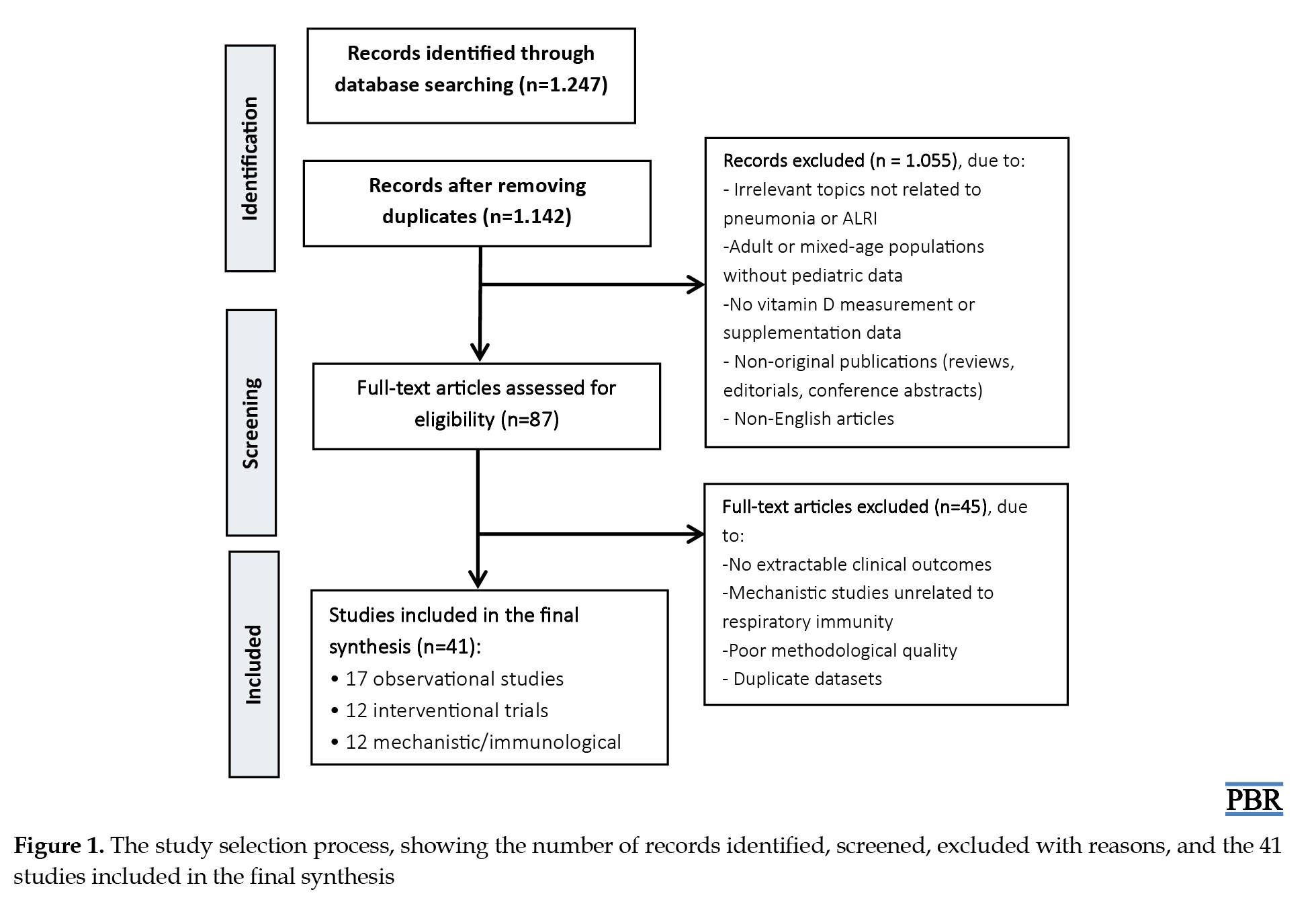
The initial search identified 1247 records. After removing duplicates and screening titles and abstracts, 87 articles underwent full-text review. Following application of inclusion and exclusion criteria, 41 studies were included in the final synthesis, comprising 1) 17 observational studies (cross-sectional, case–control, cohort), 2) 12 randomized or quasi-experimental trials, and 3) 12 mechanistic or immunological studies. Figure 1 illustrates the study selection process, including identification, screening, eligibility assessment, and final inclusion, along with detailed reasons for excluding records at each stage.
Data extraction
Key variables extracted from each study included 1) study design and country; 2) sample size and age range; 3) definitions of vitamin D deficiency/insufficiency; 4) serum 25(OH)D levels (ng/mL or nmol/L); 5) pneumonia severity markers (hypoxemia, oxygen requirement, hospitalization duration, sepsis, mortality); 6) supplementation regimen (dose, frequency, baseline status); 7) primary outcomes: Disease severity, clinical recovery, recurrence; and 8) secondary outcomes: inflammatory markers, mechanistic endpoints.
Age stratification considerations
Although studies spanning the full 0–18 years age range were included, we did not perform a formal age-stratified subgroup analysis due to inconsistent reporting of age-specific outcome data in the original studies. Most observational studies and trials reported mean or median ages for the entire cohort without providing separate outcome data for infants (0–12 months), young children (1–5 years), and older children/adolescents (6–18 years). Where age-specific data were available in individual studies, they are noted in the results. However, the absence of systematic age stratification across the literature represents a significant gap, as immune system maturity, vitamin D metabolism, and pneumonia pathophysiology differ substantially across these developmental stages.
Vitamin D and Immune Regulation
Vitamin D metabolism
Vitamin D is synthesized in the skin upon UVB exposure and converted in the liver to 25-hydroxyvitamin D [25(OH)D], the circulating form used to assess status. Renal 1α-hydroxylation produces active 1,25-dihydroxyvitamin D (calcitriol), which binds the VDR expressed in immune cells [16-18]. Critically, immune cells such as monocytes and macrophages also express the enzymes needed for local calcitriol synthesis, enabling on-site immunomodulation independent of renal production [19-21].
Innate immune system enhancement
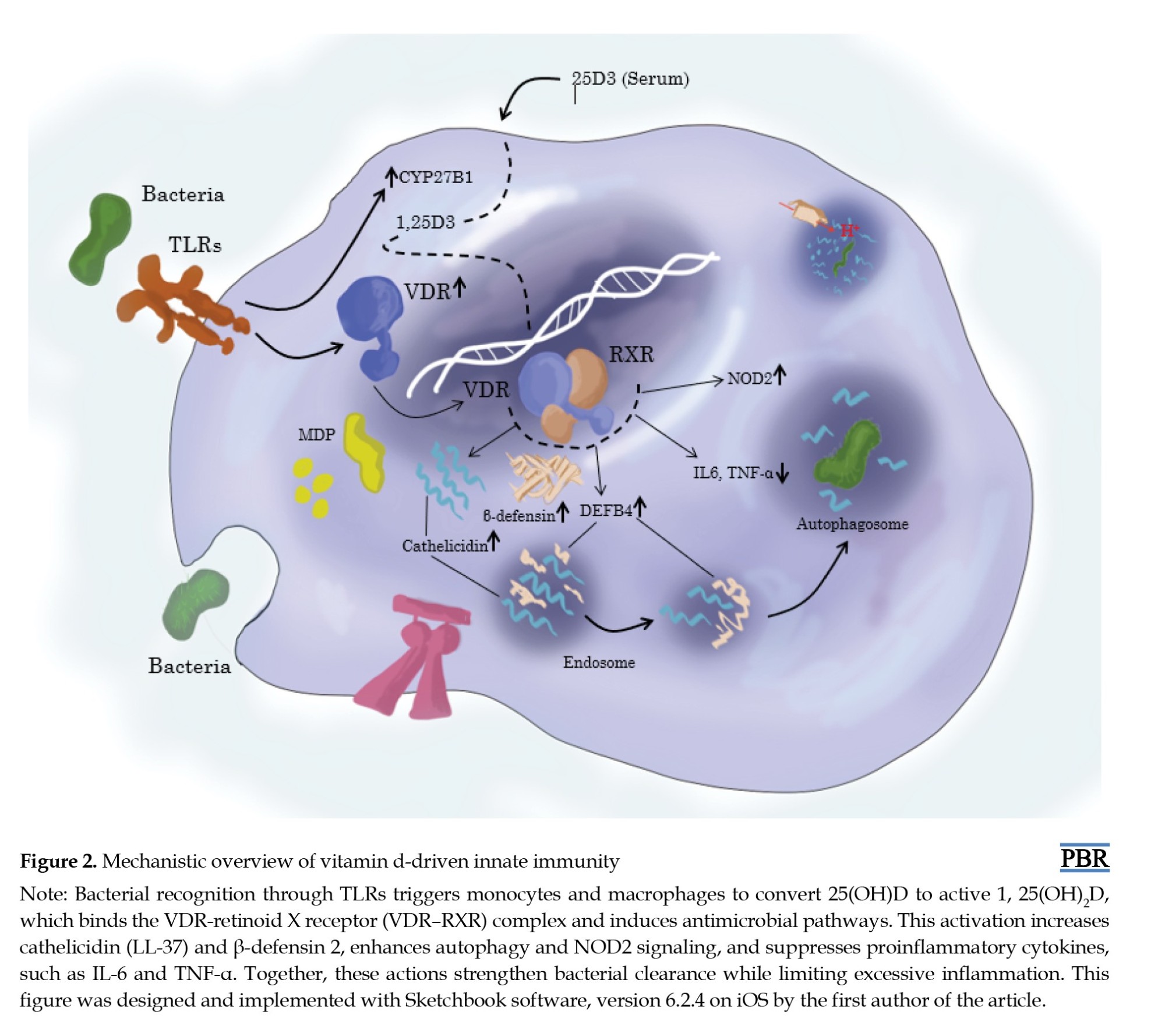
When respiratory pathogens trigger toll-like receptors (TLRs) on pulmonary macrophages, local calcitriol production increases, inducing antimicrobial peptides — particularly cathelicidin (LL-37) and β-defensin-2 — which disrupt bacterial and viral membranes [12, 24-26]. In human studies, children with lower vitamin D levels have reduced cathelicidin expression in respiratory epithelial cells, correlating with impaired pathogen clearance [24]. Vitamin D also enhances macrophage phagocytosis and chemotaxis [27].
A major anti-inflammatory function relevant to pneumonia is the suppression of NF-κB signaling. Excessive NF-κB activation drives potentially harmful levels of tumor necrosis factor (TNF)-α, interleukin (IL)-1β, and IL-6, which can cause pulmonary tissue injury. Calcitriol limits this response by increasing IκBα (an NF-κB inhibitor) and modulating anti-inflammatory microRNAs, such as miR-146a [28-33]. This dual action—promoting pathogen killing while restraining excessive inflammation—is particularly important in pediatric pneumonia, where immunopathology often contributes more to respiratory failure than the infection itself.
Adaptive immunity modulation
Vitamin D shapes adaptive responses by promoting a shift away from Th1/Th17 (pro-inflammatory) toward Th2 and regulatory T-cell (Treg) responses [34-38]. In the context of pneumonia, this balance may help resolve inflammation after pathogen clearance and reduce the risk of post-infectious airway hyperreactivity. However, maximum evidence for adaptive immune effects comes from autoimmune disease models (e.g. multiple sclerosis, inflammatory bowel disease); direct evidence in children with pneumonia is limited [39-41].
Autophagy regulation
Vitamin D also regulates cellular cleanup and defense through autophagy. Through the calcitriol-VDR pathway, it activates genes like Beclin-1 and Atg5 and increases the antimicrobial protein LL-37, helping autophagosomes form and destroy pathogens [42, 43]. In macrophages, this action speeds up bacterial clearance, improves antigen presentation, and reduces cell stress [44]. Vitamin D also enhances autophagy and lowers inflammation by blocking mTOR and activating AMPK [45].
Summary of clinical relevance
The mechanisms above suggest that vitamin D deficiency could plausibly increase pneumonia susceptibility and severity by 1) reducing antimicrobial peptide production in the airways, 2) impairing macrophage function, and 3) permitting unchecked NF-κB-mediated pulmonary inflammation. However, as discussed in Section 4, human trials have not consistently confirmed these mechanistic predictions, highlighting a gap between in vitro biology and clinical outcomes (Figure 2).
Clinical Evidence on Vitamin D and Pediatric Pneumonia
Vitamin D status in children with pneumonia
Clinical observations suggest that vitamin D deficiency may influence both the risk and severity of pneumonia in children. In hospitalized patients, lower serum vitamin D levels are associated with longer illness, more complications, and in some cases, increased mortality. This relationship may indicate that vitamin D serves as a marker of disease severity rather than merely reflecting nutritional status, underscoring the need to assess its impact across different populations. Early evidence for this association comes primarily from observational studies. In China, Li et al. [46] observed that children hospitalized with pulmonary infections had markedly lower serum 25(OH)D concentrations than healthy controls. Also, this deficiency correlated with disease severity after adjusting for confounding factors. The deficiency was most marked in children with sepsis, who had the highest severity scores and complication rates. By identifying a 25(OH)D threshold of 18.15 ng/mL that predicted sepsis, the study demonstrated that insufficient vitamin D aligns with both higher pneumonia risk and more severe outcomes, including longer hospitalization and organ failure. Similar associations appeared in Nigeria, where Oduwole et al. [47] showed that pneumonia cases with serum 25(OH)D below 70 nmol/L (28 ng/mL) were more likely to develop hypocalcemia, anemia, and complications, such as empyema or even death. In Indonesia, Oktaria et al. [48] found that over four-fifths of pediatric pneumonia patients were vitamin D deficient and that deficiency nearly tripled the odds of severe disease. They examined vitamin D levels in 133 Indonesian children hospitalized with pneumonia. Over 80% were vitamin D deficient, and deficiency was strongly associated with increased disease severity (odds ratio [OR]: 2.84; 95% CI, 1.11%, 7.25%). Deficient children exhibited greater respiratory distress and longer hospitalization. The study identified a high prevalence of vitamin D deficiency and established a significant association between low vitamin D status and increased pneumonia severity. These findings suggest that assessment of vitamin D status may serve as a valuable adjunct to clinical evaluation in pediatric respiratory illness, particularly when accounting for variables that may modulate disease severity. These geographically distinct studies share a common message that vitamin D deficiency is associated with poorer outcomes and longer recovery, indicating biological vulnerability, not a simple marker of malnutrition.
To expand on this view, further studies have examined the interactions between multiple micronutrients. Alsharkawy and Rezk [49] in Egypt demonstrated that deficiencies of vitamin D, zinc, and iron often coexist and jointly predict greater pneumonia severity and longer hospitalization. This perspective places vitamin D within a broader nutritional system, showing it is not acting alone but contributing to overall resilience. A similar perspective emerges from Dinlen et al. [50], who traced the chain of deficiency back to the perinatal period. In their Turkish cohort, neonates with ALRIs had significantly lower vitamin D levels than controls, a pattern that is also observed in their mothers. Maternal vitamin D insufficiency may influence an infant’s immune system and increase vulnerability even before environmental exposure begins. In a Turkish case–control study of 60 term newborns, infants with acute lower respiratory tract infection (ALRTI) and their mothers had much lower 25(OH)D levels than healthy controls. Deficiency (≤15 ng/mL) was strongly linked to a higher risk of ALRTI (OR: 5.3; 95% CI, 1.3%, 21.1%). Maternal and neonatal levels were closely correlated, and lower vitamin D levels predicted longer oxygen therapy, showing how a mother’s deficiency can shape her infant’s early immune responses.
The idea that vitamin D deficiency directly causes respiratory illness is complicated by studies that do not show a simple cause-and-effect pattern. Large trials in South Asia, for instance, have not found a clear preventive benefit. In Bangladesh, Roth et al. [51] followed over a thousand infants and found no meaningful link between baseline vitamin D levels and later ALRI, despite widespread deficiency. Another study in Bangladeshi infants aged 1–18 months reported lower 25(OH)D levels in children with ALRI and showed that each 10 nmol/L (4 ng/mL) increase was associated with a 47% drop in ALRI risk, even after adjusting for confounders. This suggests that vitamin D deficiency may still play an independent role in early childhood susceptibility.
Research emerging from recent viral outbreaks adds useful clarity to the picture. Alpcan et al. [52] found that Turkish children with COVID-19 had much lower vitamin D levels than healthy controls and showed higher inflammatory markers, suggesting that low vitamin D may increase the risk of infection or lead to a stronger inflammatory response. In a related finding, Golan-Tripto et al. [53] found that infants with acute bronchiolitis had much lower 25(OH)D levels than controls (median 11.2 ng/mL vs 20 ng/mL), with deficiency present in 73% of cases compared with 51% of controls. These infants also needed longer oxygen therapy, suggesting that low vitamin D may influence airway inflammation. Although bronchiolitis is not pneumonia, the pattern mirrors findings from bacterial infections, where deficiency seems to amplify how strongly the illness presents.
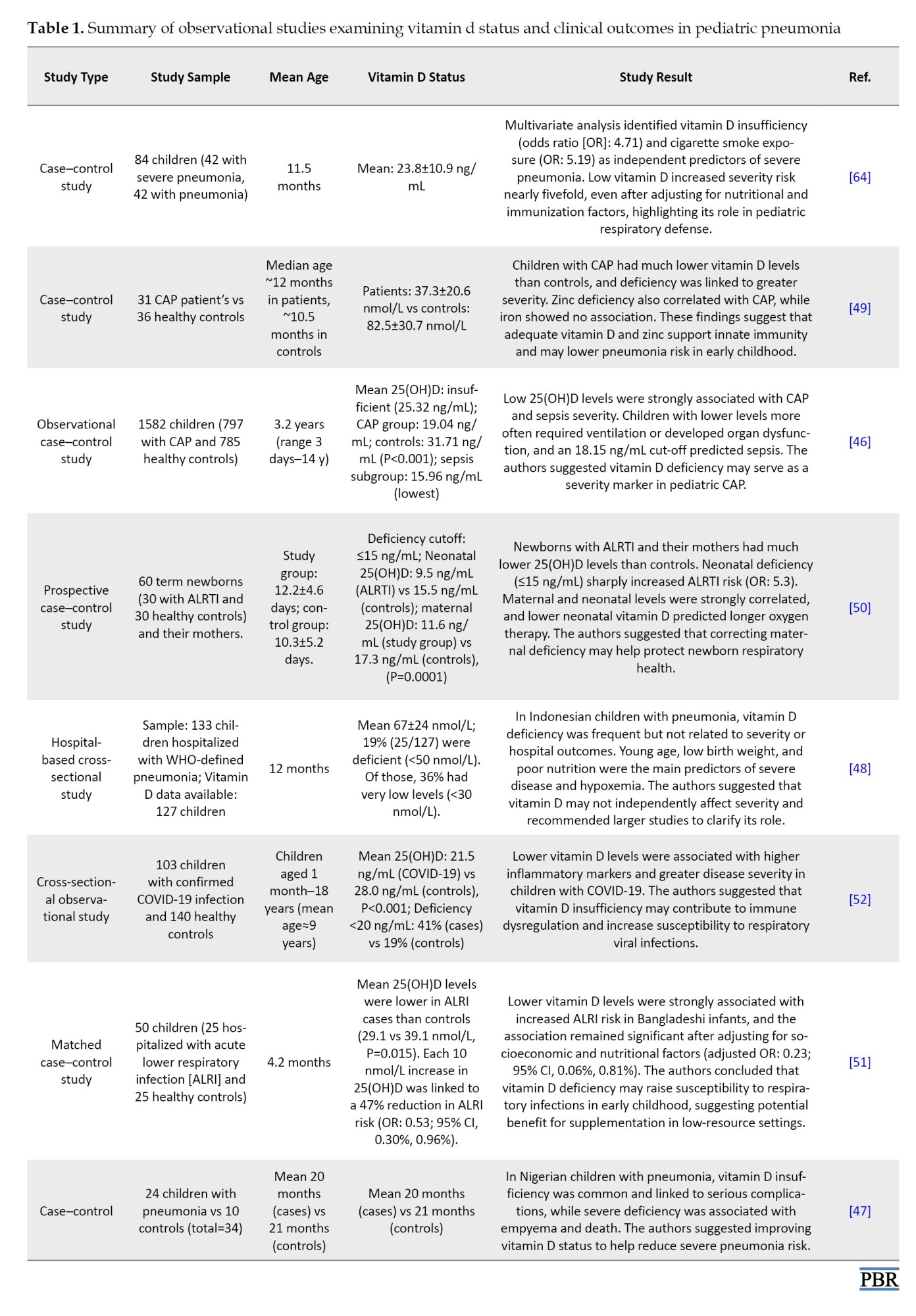
Taken together, these studies show that vitamin D’s role in pediatric pneumonia is more nuanced than a simple protective effect. It does not act as a universal shield, but rather as a biological modulator whose impact depends on context, timing, and the degree of deficiency. Across different regions, low 25(OH)D levels consistently track with poorer outcomes such as longer recovery, hypocalcemia, anemia, and higher inflammation. However, supplementation trials make it clear that correcting deficiency does not automatically prevent illness or speed recovery. This issue suggests that vitamin D works alongside other micronutrients and immune factors instead of functioning on its own. Its importance lies in maintaining immune readiness, supporting macrophage activity, shaping cytokine responses, and preventing excessive inflammation. In settings where children face both poor nutrition and low sunlight exposure, keeping vitamin D levels sufficient may lower recurrence and reduce complications, providing a low-cost addition to current pneumonia control efforts. In contrast, in populations where children already have adequate levels, supplementation seems to offer limited benefit, highlighting the need for more targeted public health approaches. Overall, the evidence positions vitamin D not as a cure or a vaccine-like tool, but as a physiological support that helps maintain immune balance and respiratory resilience in early childhood. Table 1 provides a summary of the observational studies evaluating the association between serum 25(OH)D concentration and the clinical severity, progression, and outcomes of pneumonia in children.
One major obstacle to synthesizing evidence across studies is the lack of a standardized cutoff for vitamin D deficiency in pediatric populations. Definitions vary widely: some studies use ≤15 ng/mL (37.5 nmol/L) [50], others <20 ng/mL (50 nmol/L) [52], and still others <12 ng/mL (30 nmol/L) [58] or <30 nmol/L [48]. This variation has direct consequences for observed associations. For example, studies adopting a stricter <12 ng/mL threshold tend to show stronger correlations with severe outcomes (e.g. sepsis, prolonged ventilation) because only profoundly deficient children are classified as “deficient.” Conversely, studies using a more liberal <20 ng/mL cutoff may dilute effect sizes by including children with moderate insufficiency in the deficient group. Furthermore, none of these cutoffs have been rigorously validated for respiratory outcomes in children; most are extrapolated from bone health standards in adults. This lack of pediatric-specific, outcome-based thresholds severely limits cross-study comparability and hinders the translation of research findings into clinical practice. Until consensus is reached on age-appropriate, pneumonia-relevant 25(OH)D cutoffs, the true relationship between vitamin D status and pediatric pneumonia will remain difficult to quantify.
Vitamin D supplement therapy and prevention of pneumonia.
Recent clinical research has examined the potential role of vitamin D in preventing respiratory infections in young children. Although multiple studies have investigated this association, the evidence does not currently support a clear conclusion about the preventive efficacy of supplemental vitamin D.
Evidence suggests that children with low vitamin D levels are more vulnerable to respiratory infections, and supplementation in deficient individuals can reduce the risk of recurrence. In a hospital-based case-control study, Leis et al. [54] found that children with lower weight-adjusted vitamin D intake had a substantially higher risk of ALRI. Intake below 80 IU/kg/d was associated with nearly a 5-fold increase in ALRI odds, indicating a possible protective threshold during winter months. Findings from low-income regions have reinforced this association. Jadhav et al. [55] conducted a randomized trial in 310 Indian children aged 1–5 years and found that a single 120000 IU dose of cholecalciferol accelerated recovery from acute respiratory infection and reduced recurrence over 6 months (32% to 7.7%). These findings suggest that restoring vitamin D stores, even with a single high dose, may offer prolonged immunological benefit in children who are likely deficient. In India, Singh et al. [56] conducted a trial assessing vitamin D supplementation’s effect on recurrent pneumonia in children. Ninety-one children received either 300000 IU of vitamin D every 3 months or a placebo for 1 year. The intervention group had a lower vitamin D deficiency rate (32.6%) compared to the control group (55.6%). The vitamin D group experienced a slight reduction in respiratory infections and hospital admissions, but these differences were not statistically significant, and no adverse effects were reported. The authors concluded that while quarterly vitamin D supplementation showed a modest preventive trend, it did not significantly decrease the recurrence of the condition.
In contrast, Manaseki-Holland et al. [57] conducted a randomized trial in Kabul with 453 children hospitalized for pneumonia. A single 100000 IU vitamin D₃ dose did not shorten recovery (4.7 vs 5.0 days; P=0.17) but significantly reduced 90-day recurrence (45% vs 58%; relative risk [RR]: 0.78; P=0.01) and prolonged time to recurrence, with no reported adverse effects. Also in India, Gupta et al. [58] ran a double-blind, placebo-controlled trial involving 324 children with severe pneumonia, giving either a single 100,000 IU dose of vitamin D₃ or placebo. Vitamin D supplementation shortened the time to clinical improvement slightly (30 vs 31 hours; P=0.005) but had no meaningful impact on recurrence, hospitalization duration, fever clearance, or immune markers. Although supplementation increased serum vitamin D levels, the authors concluded that it provided minimal clinical or immunologic benefit and does not support routine use in pneumonia management. Recent evidence from Romania supports the relationship found by Tanase et al. [59], who discovered that children who received regular vitamin D supplementation (more than 800 IU per week) and maintained serum 25(OH)D levels above 30 ng/mL experienced significantly fewer respiratory infections compared to their non-supplemented peers. This association remained significant even after adjusting for age and nutritional factors, highlighting the role of vitamin D as a modifiable factor in pediatric respiratory health.
Rajshekhar et al. [60] studied the effects of vitamin D supplementation on recovery from severe pneumonia in 96 Indian children aged 2 months to 5 years. Participants received either 1000 IU (under 1 year) or 2000 IU (over 1 year) of vitamin D daily, or a placebo, alongside standard treatment. The average ages were 1.94 and 2.08 years. The results revealed no significant differences in recovery time, symptom resolution, or hospitalization duration between the groups. Thus, the authors concluded that short-term, low-dose vitamin D supplementation offers no measurable benefits in treating severe pediatric pneumonia. Aglipay et al. [61] ran a multicenter, double-blind RCT in Toronto testing whether 2000 IU/d vitamin D prevents winter viral URTIs versus the recommended 400 IU/day in 703 healthy children aged 1–5 years. Parents collected nasal swabs for laboratory confirmation. Despite raising mean 25(OH)D to 48.7 ng/mL vs 36.8 ng/mL, high-dose vitamin D did not reduce total laboratory-confirmed URTIs (incidence rate ratios [IRR]: 0.97; 95% CI, 0.80%, 1.16%), nor hasten time to first infection; parent-reported illnesses were similar. A secondary finding suggested fewer influenza infections with high dose, but absolute differences were small. The authors concluded routine high-dose vitamin D for URTI prevention is not supported. The evidence suggests that vitamin D may only help prevent respiratory infections in children under specific conditions. How well it works depends on factors such as whether children are already low in vitamin D, how the vitamin is given, and the group’s risk level. Studies conducted in regions where vitamin D deficiency is prevalent among otherwise healthy children, such as India and Afghanistan [62, 63], indicate that vitamin D plays a role in preventing recurrent infections, though it does not necessarily confer protection against the initial infection. In countries where most children receive sufficient vitamin D, such as Canada, additional vitamin D doesn’t appear to offer significant benefits, except possibly in preventing the flu. How vitamin D is administered also matters: taking it daily or weekly helps maintain steady levels and supports the immune system, while taking large amounts at once can cause fluctuations that do not provide as effective protection. Furthermore, because studies employ different methods to measure results, it is challenging to compare them directly. Some studies examine recurrent or doctor-diagnosed infections, which can be influenced by nutrition, while others count only pneumonia seen on X-rays, a more specific but complex condition.
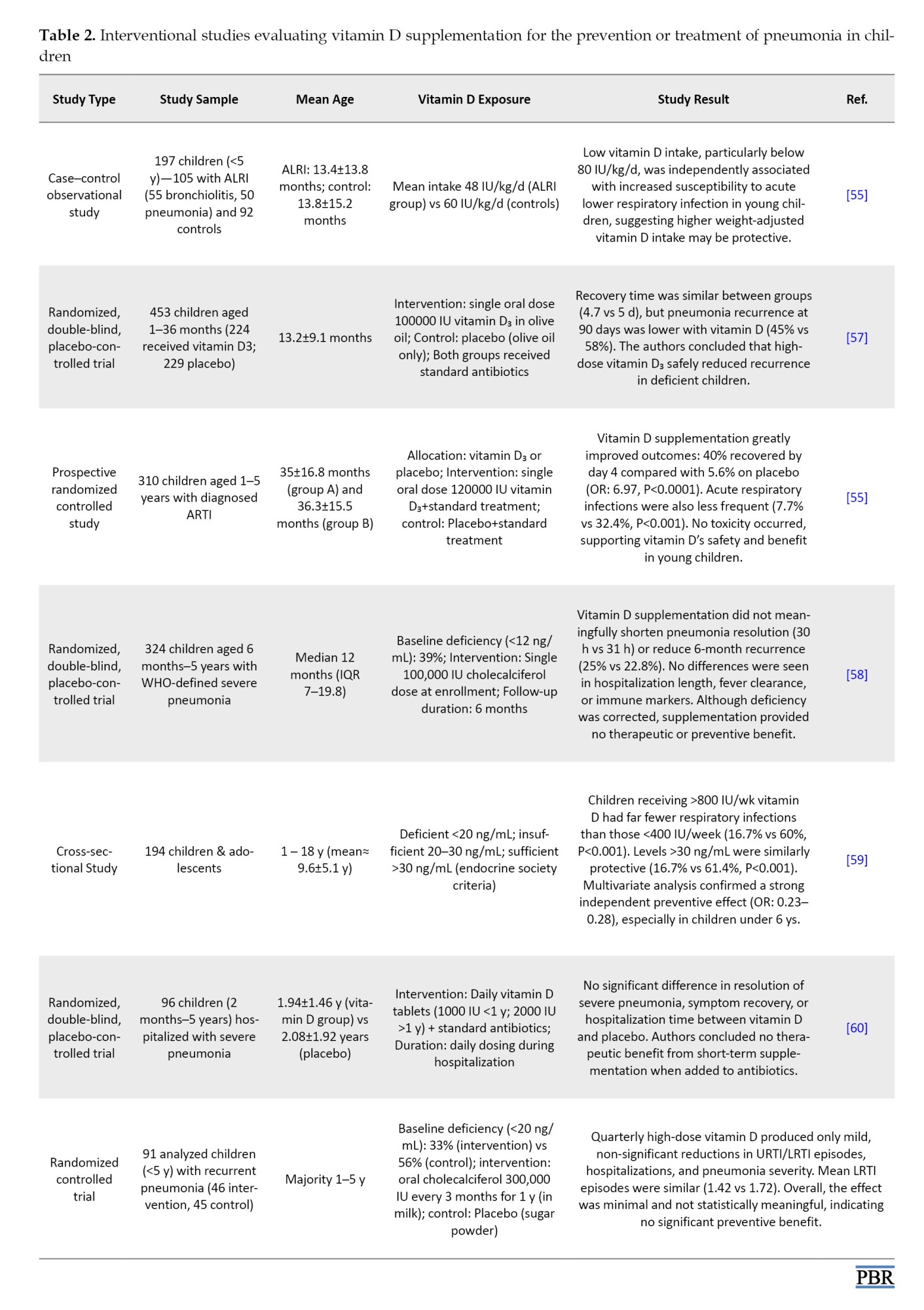
Overall, although vitamin D supplementation does not reliably prevent a child’s first episode of pneumonia, correcting a deficiency can reduce recurrent infections and lower the risk of some viral illnesses. The strongest benefits appear in children who are truly vitamin D-deficient. From a public health perspective, targeting undernourished or high-risk groups is more effective than universal high-dose supplementation. Providing regular, moderate doses to deficient children helps reduce respiratory recurrence, whereas extra supplementation offers little added value for those with adequate levels. In summary, vitamin D supports immune function and decreases respiratory infection risk in vulnerable children, but it should be considered a complementary measure rather than a substitute for vaccines. Table 2 summarized the interventional trials assessing the effect of vitamin D supplementation on clinical outcomes in children with pneumonia.
Future directions
Future research on vitamin D and childhood infections needs to focus on finer clinical details to reach reliable conclusions. Most existing studies only measure broad outcomes like infection rates or hospitalization, which cannot show how vitamin D affects the course of illness. Future studies should follow children over time and track specific indicators of recovery, such as how quickly fever resolves, how long oxygen is needed, changes in inflammatory markers like C-reactive protein and IL-6, and whether infections recur. Randomized trials should also use doses that reliably correct deficiency and recheck vitamin D levels during treatment. Including immune markers such as cathelicidin or cytokine profiles can help explain why vitamin D works in some children but not others. Only by collecting these detailed clinical and biological measures can future research determine the true benefit of vitamin D and identify which children are most likely to respond.
Conclusion
This review shows that vitamin D is important for childhood pneumonia, but its effects depend on the situation. In areas where many children do not get enough vitamin D, such as South Asia, the Middle East, and parts of Africa, children hospitalized with pneumonia often have lower vitamin D levels than healthy children. In these areas, not getting enough vitamin D makes children more likely to get sicker, stay in the hospital longer, and be at higher risk of low oxygen levels and serious infections. On the other hand, in richer countries where most children have enough vitamin D, giving extra vitamin D does not seem to help much. So, vitamin D should be seen as a risk factor that can be changed, and it matters most in places where children do not get enough vitamin D, do not have enough to eat, and do not get much sunlight, rather than as a treatment that helps everyone. Furthermore, because most studies pooled children across a wide age range (0–18 years) without age-stratified outcome reporting, it remains unclear whether the observed associations between vitamin D deficiency and pneumonia severity apply equally to infants, young children, and adolescents — whose immune systems differ substantially in maturity and function.
A critical caveat must be stated at the outset. Nearly all evidence linking low vitamin D levels to pneumonia severity comes from observational studies, which cannot distinguish whether deficiency causes worse outcomes or simply serves as a marker of poorer overall health, malnutrition, or reduced sunlight exposure. Randomized controlled trials—the gold standard for establishing causality—have produced mixed results, and even among positive trials, the clinical benefits have been modest. Therefore, while the association is consistent, a causal role for vitamin D in modifying pneumonia severity remains unproven.
In studies where children were given vitamin D, the results are clearer when looking at specific signs of improvement, such as how quickly serious pneumonia symptoms resolve, when fever returns to normal, improved oxygen levels, slower breathing, and shorter hospital stays. In some studies, vitamin D helped prevent pneumonia from coming back, but it did not often help children get better faster, and even when it did, the improvements in things like fever or oxygen needs were small. This shows that vitamin D is better at preventing future cases of pneumonia than at helping children recover quickly.
How vitamin D is given also affects the results. Review studies show that giving very large single doses (100000–300,000 IU) raises vitamin D levels quickly but may not keep the immune system strong for long. Giving smaller amounts every day or every week (1000–2000 IU per day, or more than 800 IU per week) keeps vitamin D levels steadier and is more clearly linked to fewer repeat infections and stronger lungs. Studies that kept vitamin D levels above 30 ng/mL, instead of just giving one big dose, saw the most reliable drops in breathing infections. So, giving vitamin D regularly seems better than giving it all at once, especially for young children and those at higher risk.
Social and economic issues also add to health risks. In many poorer areas, not getting enough vitamin D often happens along with poverty, mothers not getting enough to eat, babies being born small, not getting much sun because of clothing or staying indoors, and air pollution at home. All these things make children more likely to get pneumonia. In these places, giving vitamin D is not just about addressing a vitamin deficiency, but also a cheap way to help protect children’s health when it is hard to get medical care. In richer countries, where children usually have better nutrition and living conditions, giving vitamin D to everyone does not help much and may not be worth the cost.
Together, these findings support a targeted clinical strategy. Screening is most useful for infants, malnourished children, those living in areas with limited sunlight, and populations in low-resource regions where deficiency is common. Supplement children who are truly deficient, because they experience the greatest improvement in recurrence and long-term respiratory health. For vitamin D-replete children, additional supplementation offers minimal benefit and should not replace standard pneumonia prevention measures such as vaccination, nutrition, and timely care. Ultimately, vitamin D is best used as a supportive, affordable adjunct—not a stand-alone treatment—for improving respiratory resilience in vulnerable pediatric populations.
Study limitations
This narrative review is limited by substantial heterogeneity across studies, including differences in design, vitamin D cut-offs (<12 to <20 ng/mL), dosing regimens, and pneumonia definitions, which prevented formal meta-analysis. Many trials did not measure follow-up 25(OH)D levels, making it unclear whether clinical effects reflected true correction of deficiency. Key confounders (nutrition, maternal status, sunlight exposure, socioeconomic factors) were inconsistently controlled. A critical gap is the absence of pediatric-specific, outcome-validated vitamin D cutoffs. Additionally, pooling children across 0–18 years without age stratification is problematic because immune system maturity, vitamin D metabolism, and pneumonia pathophysiology differ substantially between infants and adolescents; yet few primary studies reported age-subgroup outcomes. This lack of age-stratified evidence weakens the specificity of our conclusions. Standardized prospective studies with narrow age cohorts or granular subgroup analyses are needed.
Ethical Considerations
Compliance with ethical guidelines
There were no ethical considerations to be considered in this research.
Funding
The paper was extracted from the PharmD thesis of Shahed Ahmadi, approved by the Department of Clinical Pharmacy. Faculty of Pharmacy, Shahid Beheshti University of Medical Science, Tehran, Iran.
Authors' contributions
Conceptualization and supervision: Zahra Sahraei; Investigation and data collection: Shahed Ahmadi; Methodology, data analysis, and writing: All authors.
Conflict of interest
The authors declared no conflict of interest.
Acknowledgments
The authors thank Mousa Ahmadi for his support throughout the preparation of this review.
References
Despite major advances in vaccination and antimicrobial therapy, pneumonia remains a leading cause of childhood illness and death. In the United States, the annual incidence reaches 15.7 per 10,000 children, rising to over 60 per 10,000 among those under two years of age, emphasizing its persistent clinical and public-health burden even in high-income settings [1]. Pneumonia persists due to its multifactorial etiology, involving interactions among pathogens, host immune responses, and nutritional status. In pediatric populations, deficiencies in micronutrients, such as zinc, selenium, iron, and vitamin D compromise immune function and prolong recovery. Integrating micronutrient-focused interventions into standard pneumonia care may represent a practical and cost-effective approach to reducing severity, recurrence, and post-infectious complications alongside antimicrobial and immunization efforts [2]. Among the micronutrients, zinc, selenium, iron, and vitamins A, C, E, and D work together to maintain mucosal integrity, provide antioxidant protection, and support immune function. For example, zinc deficiency can disrupt the epithelial barrier and impair the activity of neutrophils and natural killer (NK) cells [3]. In parallel, selenium supports the function of glutathione peroxidase, which is essential for maintaining redox balance [4]. Additionally, iron availability has a significant impact on both microbial virulence and the responses of host macrophages [5]. Of all the micronutrients, vitamin D stands out as the most studied and most mechanistically complex.
Vitamin D is a fat-soluble secosteroid that acts more like a hormone than a vitamin. Its two major forms, D₂ (ergocalciferol) and D₃ (cholecalciferol), are biologically inactive until hydroxylated in the liver and kidney to calcitriol, the active metabolite. It regulates calcium-phosphate balance, supports immune function, and is stored mainly in adipose and liver tissues. Evidence from various clinical contexts suggests that vitamin D deficiency is a contributing factor to immune dysregulation and an increased risk of disease. However, it is not a singular causal factor. Epidemiological and interventional studies demonstrate that sufficient vitamin D status is associated with lower incidence and severity of respiratory and gastrointestinal infections, improved immune regulation in autoimmune conditions, such as rheumatoid arthritis [6] and multiple sclerosis [7], as well as reduced inflammatory activity in disorders like inflammatory bowel disease and periodontitis [8, 9]. However, the evidence remains inconsistent, while several studies support a protective or modulatory role, others report minimal or no clinical benefit from supplementation [10]. These discrepancies likely reflect differences in baseline deficiency, population characteristics, and dosing strategies, underscoring the complexity of vitamin D’s role across inflammatory and infectious diseases.
Beyond its endocrine role in calcium-phosphate regulation, vitamin D functions as a potent immunoregulatory hormone. Its active metabolite, 1,25-dihydroxyvitamin D (calcitriol), acts via the vitamin D receptor (VDR) expressed in nearly all immune cells [11]. Within innate immunity, calcitriol promotes antimicrobial peptide production—cathelicidin and β-defensin-2—enhances macrophage chemotaxis and phagocytosis, and restricts excessive inflammation through suppression of NF-κB signaling [12-14]. In adaptive immunity, it down-modulates Th1/Th17 polarization while enhancing Th2 and regulatory T-cell responses, thus fostering a balanced immune profile that supports pathogen clearance yet prevents immunopathology [15]. These mechanisms are particularly relevant in pulmonary infections, where uncontrolled inflammation often contributes more to tissue injury than to microbial persistence.
Vitamin D is known to influence immune function, but its exact role in childhood pneumonia remains uncertain. Observational studies often report lower serum vitamin D levels in children with community-acquired pneumonia (CAP) compared with healthy peers, however the strength of this association varies by region, demographic characteristics, and study design. Intervention trials testing vitamin D supplementation during acute pneumonia have produced mixed and sometimes contradictory results. Some studies suggest modest benefits, such as slightly faster clinical improvement or reduced recurrence, while others show no significant effect on recovery. Because of these conflicts, it is still unclear to what extent vitamin D deficiency contributes to the risk or severity of pneumonia in children and whether supplements reliably improve outcomes. This uncertainty has important clinical and public-health implications. Vitamin D is inexpensive, safe, and widely accessible. If it is truly effective, it could become a simple adjunctive treatment for respiratory infections in children. However, If the deficiency is not consistently associated with severe illness, or if supplements provide only modest benefits, routine screening and treatment may be unnecessary, and this could reduce many treatment costs. By synthesizing current evidence, this narrative review seeks to clarify the true relationship between vitamin D and pediatric pneumonia and determine which children might benefit most from targeted supplementation.
Materials and Methods
Search strategy
A comprehensive literature search was conducted in PubMed, Scopus, and Google Scholar for studies published between 2000 and 2025. The search combined medical subject headings (MeSH) and free-text terms, including “vitamin D,” “25-hydroxyvitamin D,” “children,” “pediatric,” “pneumonia,” “community-acquired pneumonia,” “respiratory infection,” “acute lower respiratory infection,” “supplementation,” “immunity,” and “immune mechanisms.”
Inclusion criteria
Studies were included if they met all the following conditions: 1) population: Children aged 0–18 years; 2) study type: Observational (cross-sectional, case–control, cohort), interventional (randomized or non-randomized trials), or mechanistic studies related to respiratory immunity; 3) outcomes: Reported serum 25(OH)D levels or vitamin D supplementation effects in relation to pneumonia; 4) setting: Community-acquired or hospital acquired pneumonia; 5) publication language: English; and 6) availability of full text with extractable data.
Exclusion criteria
Studies were excluded if they 1) were case reports, editorials, letters, conference abstracts, or narrative commentaries; 2) did not include pediatric participants; 3) did not measure vitamin D status or supplementation focused on infections other than pneumonia or acute lower respiratory infection (ALRI); 4) lacked original clinical or mechanistic data; and (5) were non-English publications.
Study selection
The initial search identified 1247 records. After removing duplicates and screening titles and abstracts, 87 articles underwent full-text review. Following application of inclusion and exclusion criteria, 41 studies were included in the final synthesis, comprising 1) 17 observational studies (cross-sectional, case–control, cohort), 2) 12 randomized or quasi-experimental trials, and 3) 12 mechanistic or immunological studies. Figure 1 illustrates the study selection process, including identification, screening, eligibility assessment, and final inclusion, along with detailed reasons for excluding records at each stage.
Data extraction
Key variables extracted from each study included 1) study design and country; 2) sample size and age range; 3) definitions of vitamin D deficiency/insufficiency; 4) serum 25(OH)D levels (ng/mL or nmol/L); 5) pneumonia severity markers (hypoxemia, oxygen requirement, hospitalization duration, sepsis, mortality); 6) supplementation regimen (dose, frequency, baseline status); 7) primary outcomes: Disease severity, clinical recovery, recurrence; and 8) secondary outcomes: inflammatory markers, mechanistic endpoints.
Age stratification considerations
Although studies spanning the full 0–18 years age range were included, we did not perform a formal age-stratified subgroup analysis due to inconsistent reporting of age-specific outcome data in the original studies. Most observational studies and trials reported mean or median ages for the entire cohort without providing separate outcome data for infants (0–12 months), young children (1–5 years), and older children/adolescents (6–18 years). Where age-specific data were available in individual studies, they are noted in the results. However, the absence of systematic age stratification across the literature represents a significant gap, as immune system maturity, vitamin D metabolism, and pneumonia pathophysiology differ substantially across these developmental stages.
Vitamin D and Immune Regulation
Vitamin D metabolism
Vitamin D is synthesized in the skin upon UVB exposure and converted in the liver to 25-hydroxyvitamin D [25(OH)D], the circulating form used to assess status. Renal 1α-hydroxylation produces active 1,25-dihydroxyvitamin D (calcitriol), which binds the VDR expressed in immune cells [16-18]. Critically, immune cells such as monocytes and macrophages also express the enzymes needed for local calcitriol synthesis, enabling on-site immunomodulation independent of renal production [19-21].
Innate immune system enhancement
When respiratory pathogens trigger toll-like receptors (TLRs) on pulmonary macrophages, local calcitriol production increases, inducing antimicrobial peptides — particularly cathelicidin (LL-37) and β-defensin-2 — which disrupt bacterial and viral membranes [12, 24-26]. In human studies, children with lower vitamin D levels have reduced cathelicidin expression in respiratory epithelial cells, correlating with impaired pathogen clearance [24]. Vitamin D also enhances macrophage phagocytosis and chemotaxis [27].
A major anti-inflammatory function relevant to pneumonia is the suppression of NF-κB signaling. Excessive NF-κB activation drives potentially harmful levels of tumor necrosis factor (TNF)-α, interleukin (IL)-1β, and IL-6, which can cause pulmonary tissue injury. Calcitriol limits this response by increasing IκBα (an NF-κB inhibitor) and modulating anti-inflammatory microRNAs, such as miR-146a [28-33]. This dual action—promoting pathogen killing while restraining excessive inflammation—is particularly important in pediatric pneumonia, where immunopathology often contributes more to respiratory failure than the infection itself.
Adaptive immunity modulation
Vitamin D shapes adaptive responses by promoting a shift away from Th1/Th17 (pro-inflammatory) toward Th2 and regulatory T-cell (Treg) responses [34-38]. In the context of pneumonia, this balance may help resolve inflammation after pathogen clearance and reduce the risk of post-infectious airway hyperreactivity. However, maximum evidence for adaptive immune effects comes from autoimmune disease models (e.g. multiple sclerosis, inflammatory bowel disease); direct evidence in children with pneumonia is limited [39-41].
Autophagy regulation
Vitamin D also regulates cellular cleanup and defense through autophagy. Through the calcitriol-VDR pathway, it activates genes like Beclin-1 and Atg5 and increases the antimicrobial protein LL-37, helping autophagosomes form and destroy pathogens [42, 43]. In macrophages, this action speeds up bacterial clearance, improves antigen presentation, and reduces cell stress [44]. Vitamin D also enhances autophagy and lowers inflammation by blocking mTOR and activating AMPK [45].
Summary of clinical relevance
The mechanisms above suggest that vitamin D deficiency could plausibly increase pneumonia susceptibility and severity by 1) reducing antimicrobial peptide production in the airways, 2) impairing macrophage function, and 3) permitting unchecked NF-κB-mediated pulmonary inflammation. However, as discussed in Section 4, human trials have not consistently confirmed these mechanistic predictions, highlighting a gap between in vitro biology and clinical outcomes (Figure 2).
Vitamin D status in children with pneumonia
Clinical observations suggest that vitamin D deficiency may influence both the risk and severity of pneumonia in children. In hospitalized patients, lower serum vitamin D levels are associated with longer illness, more complications, and in some cases, increased mortality. This relationship may indicate that vitamin D serves as a marker of disease severity rather than merely reflecting nutritional status, underscoring the need to assess its impact across different populations. Early evidence for this association comes primarily from observational studies. In China, Li et al. [46] observed that children hospitalized with pulmonary infections had markedly lower serum 25(OH)D concentrations than healthy controls. Also, this deficiency correlated with disease severity after adjusting for confounding factors. The deficiency was most marked in children with sepsis, who had the highest severity scores and complication rates. By identifying a 25(OH)D threshold of 18.15 ng/mL that predicted sepsis, the study demonstrated that insufficient vitamin D aligns with both higher pneumonia risk and more severe outcomes, including longer hospitalization and organ failure. Similar associations appeared in Nigeria, where Oduwole et al. [47] showed that pneumonia cases with serum 25(OH)D below 70 nmol/L (28 ng/mL) were more likely to develop hypocalcemia, anemia, and complications, such as empyema or even death. In Indonesia, Oktaria et al. [48] found that over four-fifths of pediatric pneumonia patients were vitamin D deficient and that deficiency nearly tripled the odds of severe disease. They examined vitamin D levels in 133 Indonesian children hospitalized with pneumonia. Over 80% were vitamin D deficient, and deficiency was strongly associated with increased disease severity (odds ratio [OR]: 2.84; 95% CI, 1.11%, 7.25%). Deficient children exhibited greater respiratory distress and longer hospitalization. The study identified a high prevalence of vitamin D deficiency and established a significant association between low vitamin D status and increased pneumonia severity. These findings suggest that assessment of vitamin D status may serve as a valuable adjunct to clinical evaluation in pediatric respiratory illness, particularly when accounting for variables that may modulate disease severity. These geographically distinct studies share a common message that vitamin D deficiency is associated with poorer outcomes and longer recovery, indicating biological vulnerability, not a simple marker of malnutrition.
To expand on this view, further studies have examined the interactions between multiple micronutrients. Alsharkawy and Rezk [49] in Egypt demonstrated that deficiencies of vitamin D, zinc, and iron often coexist and jointly predict greater pneumonia severity and longer hospitalization. This perspective places vitamin D within a broader nutritional system, showing it is not acting alone but contributing to overall resilience. A similar perspective emerges from Dinlen et al. [50], who traced the chain of deficiency back to the perinatal period. In their Turkish cohort, neonates with ALRIs had significantly lower vitamin D levels than controls, a pattern that is also observed in their mothers. Maternal vitamin D insufficiency may influence an infant’s immune system and increase vulnerability even before environmental exposure begins. In a Turkish case–control study of 60 term newborns, infants with acute lower respiratory tract infection (ALRTI) and their mothers had much lower 25(OH)D levels than healthy controls. Deficiency (≤15 ng/mL) was strongly linked to a higher risk of ALRTI (OR: 5.3; 95% CI, 1.3%, 21.1%). Maternal and neonatal levels were closely correlated, and lower vitamin D levels predicted longer oxygen therapy, showing how a mother’s deficiency can shape her infant’s early immune responses.
The idea that vitamin D deficiency directly causes respiratory illness is complicated by studies that do not show a simple cause-and-effect pattern. Large trials in South Asia, for instance, have not found a clear preventive benefit. In Bangladesh, Roth et al. [51] followed over a thousand infants and found no meaningful link between baseline vitamin D levels and later ALRI, despite widespread deficiency. Another study in Bangladeshi infants aged 1–18 months reported lower 25(OH)D levels in children with ALRI and showed that each 10 nmol/L (4 ng/mL) increase was associated with a 47% drop in ALRI risk, even after adjusting for confounders. This suggests that vitamin D deficiency may still play an independent role in early childhood susceptibility.
Research emerging from recent viral outbreaks adds useful clarity to the picture. Alpcan et al. [52] found that Turkish children with COVID-19 had much lower vitamin D levels than healthy controls and showed higher inflammatory markers, suggesting that low vitamin D may increase the risk of infection or lead to a stronger inflammatory response. In a related finding, Golan-Tripto et al. [53] found that infants with acute bronchiolitis had much lower 25(OH)D levels than controls (median 11.2 ng/mL vs 20 ng/mL), with deficiency present in 73% of cases compared with 51% of controls. These infants also needed longer oxygen therapy, suggesting that low vitamin D may influence airway inflammation. Although bronchiolitis is not pneumonia, the pattern mirrors findings from bacterial infections, where deficiency seems to amplify how strongly the illness presents.
Taken together, these studies show that vitamin D’s role in pediatric pneumonia is more nuanced than a simple protective effect. It does not act as a universal shield, but rather as a biological modulator whose impact depends on context, timing, and the degree of deficiency. Across different regions, low 25(OH)D levels consistently track with poorer outcomes such as longer recovery, hypocalcemia, anemia, and higher inflammation. However, supplementation trials make it clear that correcting deficiency does not automatically prevent illness or speed recovery. This issue suggests that vitamin D works alongside other micronutrients and immune factors instead of functioning on its own. Its importance lies in maintaining immune readiness, supporting macrophage activity, shaping cytokine responses, and preventing excessive inflammation. In settings where children face both poor nutrition and low sunlight exposure, keeping vitamin D levels sufficient may lower recurrence and reduce complications, providing a low-cost addition to current pneumonia control efforts. In contrast, in populations where children already have adequate levels, supplementation seems to offer limited benefit, highlighting the need for more targeted public health approaches. Overall, the evidence positions vitamin D not as a cure or a vaccine-like tool, but as a physiological support that helps maintain immune balance and respiratory resilience in early childhood. Table 1 provides a summary of the observational studies evaluating the association between serum 25(OH)D concentration and the clinical severity, progression, and outcomes of pneumonia in children.
One major obstacle to synthesizing evidence across studies is the lack of a standardized cutoff for vitamin D deficiency in pediatric populations. Definitions vary widely: some studies use ≤15 ng/mL (37.5 nmol/L) [50], others <20 ng/mL (50 nmol/L) [52], and still others <12 ng/mL (30 nmol/L) [58] or <30 nmol/L [48]. This variation has direct consequences for observed associations. For example, studies adopting a stricter <12 ng/mL threshold tend to show stronger correlations with severe outcomes (e.g. sepsis, prolonged ventilation) because only profoundly deficient children are classified as “deficient.” Conversely, studies using a more liberal <20 ng/mL cutoff may dilute effect sizes by including children with moderate insufficiency in the deficient group. Furthermore, none of these cutoffs have been rigorously validated for respiratory outcomes in children; most are extrapolated from bone health standards in adults. This lack of pediatric-specific, outcome-based thresholds severely limits cross-study comparability and hinders the translation of research findings into clinical practice. Until consensus is reached on age-appropriate, pneumonia-relevant 25(OH)D cutoffs, the true relationship between vitamin D status and pediatric pneumonia will remain difficult to quantify.
Vitamin D supplement therapy and prevention of pneumonia.
Recent clinical research has examined the potential role of vitamin D in preventing respiratory infections in young children. Although multiple studies have investigated this association, the evidence does not currently support a clear conclusion about the preventive efficacy of supplemental vitamin D.
Evidence suggests that children with low vitamin D levels are more vulnerable to respiratory infections, and supplementation in deficient individuals can reduce the risk of recurrence. In a hospital-based case-control study, Leis et al. [54] found that children with lower weight-adjusted vitamin D intake had a substantially higher risk of ALRI. Intake below 80 IU/kg/d was associated with nearly a 5-fold increase in ALRI odds, indicating a possible protective threshold during winter months. Findings from low-income regions have reinforced this association. Jadhav et al. [55] conducted a randomized trial in 310 Indian children aged 1–5 years and found that a single 120000 IU dose of cholecalciferol accelerated recovery from acute respiratory infection and reduced recurrence over 6 months (32% to 7.7%). These findings suggest that restoring vitamin D stores, even with a single high dose, may offer prolonged immunological benefit in children who are likely deficient. In India, Singh et al. [56] conducted a trial assessing vitamin D supplementation’s effect on recurrent pneumonia in children. Ninety-one children received either 300000 IU of vitamin D every 3 months or a placebo for 1 year. The intervention group had a lower vitamin D deficiency rate (32.6%) compared to the control group (55.6%). The vitamin D group experienced a slight reduction in respiratory infections and hospital admissions, but these differences were not statistically significant, and no adverse effects were reported. The authors concluded that while quarterly vitamin D supplementation showed a modest preventive trend, it did not significantly decrease the recurrence of the condition.
In contrast, Manaseki-Holland et al. [57] conducted a randomized trial in Kabul with 453 children hospitalized for pneumonia. A single 100000 IU vitamin D₃ dose did not shorten recovery (4.7 vs 5.0 days; P=0.17) but significantly reduced 90-day recurrence (45% vs 58%; relative risk [RR]: 0.78; P=0.01) and prolonged time to recurrence, with no reported adverse effects. Also in India, Gupta et al. [58] ran a double-blind, placebo-controlled trial involving 324 children with severe pneumonia, giving either a single 100,000 IU dose of vitamin D₃ or placebo. Vitamin D supplementation shortened the time to clinical improvement slightly (30 vs 31 hours; P=0.005) but had no meaningful impact on recurrence, hospitalization duration, fever clearance, or immune markers. Although supplementation increased serum vitamin D levels, the authors concluded that it provided minimal clinical or immunologic benefit and does not support routine use in pneumonia management. Recent evidence from Romania supports the relationship found by Tanase et al. [59], who discovered that children who received regular vitamin D supplementation (more than 800 IU per week) and maintained serum 25(OH)D levels above 30 ng/mL experienced significantly fewer respiratory infections compared to their non-supplemented peers. This association remained significant even after adjusting for age and nutritional factors, highlighting the role of vitamin D as a modifiable factor in pediatric respiratory health.
Rajshekhar et al. [60] studied the effects of vitamin D supplementation on recovery from severe pneumonia in 96 Indian children aged 2 months to 5 years. Participants received either 1000 IU (under 1 year) or 2000 IU (over 1 year) of vitamin D daily, or a placebo, alongside standard treatment. The average ages were 1.94 and 2.08 years. The results revealed no significant differences in recovery time, symptom resolution, or hospitalization duration between the groups. Thus, the authors concluded that short-term, low-dose vitamin D supplementation offers no measurable benefits in treating severe pediatric pneumonia. Aglipay et al. [61] ran a multicenter, double-blind RCT in Toronto testing whether 2000 IU/d vitamin D prevents winter viral URTIs versus the recommended 400 IU/day in 703 healthy children aged 1–5 years. Parents collected nasal swabs for laboratory confirmation. Despite raising mean 25(OH)D to 48.7 ng/mL vs 36.8 ng/mL, high-dose vitamin D did not reduce total laboratory-confirmed URTIs (incidence rate ratios [IRR]: 0.97; 95% CI, 0.80%, 1.16%), nor hasten time to first infection; parent-reported illnesses were similar. A secondary finding suggested fewer influenza infections with high dose, but absolute differences were small. The authors concluded routine high-dose vitamin D for URTI prevention is not supported. The evidence suggests that vitamin D may only help prevent respiratory infections in children under specific conditions. How well it works depends on factors such as whether children are already low in vitamin D, how the vitamin is given, and the group’s risk level. Studies conducted in regions where vitamin D deficiency is prevalent among otherwise healthy children, such as India and Afghanistan [62, 63], indicate that vitamin D plays a role in preventing recurrent infections, though it does not necessarily confer protection against the initial infection. In countries where most children receive sufficient vitamin D, such as Canada, additional vitamin D doesn’t appear to offer significant benefits, except possibly in preventing the flu. How vitamin D is administered also matters: taking it daily or weekly helps maintain steady levels and supports the immune system, while taking large amounts at once can cause fluctuations that do not provide as effective protection. Furthermore, because studies employ different methods to measure results, it is challenging to compare them directly. Some studies examine recurrent or doctor-diagnosed infections, which can be influenced by nutrition, while others count only pneumonia seen on X-rays, a more specific but complex condition.
Overall, although vitamin D supplementation does not reliably prevent a child’s first episode of pneumonia, correcting a deficiency can reduce recurrent infections and lower the risk of some viral illnesses. The strongest benefits appear in children who are truly vitamin D-deficient. From a public health perspective, targeting undernourished or high-risk groups is more effective than universal high-dose supplementation. Providing regular, moderate doses to deficient children helps reduce respiratory recurrence, whereas extra supplementation offers little added value for those with adequate levels. In summary, vitamin D supports immune function and decreases respiratory infection risk in vulnerable children, but it should be considered a complementary measure rather than a substitute for vaccines. Table 2 summarized the interventional trials assessing the effect of vitamin D supplementation on clinical outcomes in children with pneumonia.
Future directions
Future research on vitamin D and childhood infections needs to focus on finer clinical details to reach reliable conclusions. Most existing studies only measure broad outcomes like infection rates or hospitalization, which cannot show how vitamin D affects the course of illness. Future studies should follow children over time and track specific indicators of recovery, such as how quickly fever resolves, how long oxygen is needed, changes in inflammatory markers like C-reactive protein and IL-6, and whether infections recur. Randomized trials should also use doses that reliably correct deficiency and recheck vitamin D levels during treatment. Including immune markers such as cathelicidin or cytokine profiles can help explain why vitamin D works in some children but not others. Only by collecting these detailed clinical and biological measures can future research determine the true benefit of vitamin D and identify which children are most likely to respond.
Conclusion
This review shows that vitamin D is important for childhood pneumonia, but its effects depend on the situation. In areas where many children do not get enough vitamin D, such as South Asia, the Middle East, and parts of Africa, children hospitalized with pneumonia often have lower vitamin D levels than healthy children. In these areas, not getting enough vitamin D makes children more likely to get sicker, stay in the hospital longer, and be at higher risk of low oxygen levels and serious infections. On the other hand, in richer countries where most children have enough vitamin D, giving extra vitamin D does not seem to help much. So, vitamin D should be seen as a risk factor that can be changed, and it matters most in places where children do not get enough vitamin D, do not have enough to eat, and do not get much sunlight, rather than as a treatment that helps everyone. Furthermore, because most studies pooled children across a wide age range (0–18 years) without age-stratified outcome reporting, it remains unclear whether the observed associations between vitamin D deficiency and pneumonia severity apply equally to infants, young children, and adolescents — whose immune systems differ substantially in maturity and function.
A critical caveat must be stated at the outset. Nearly all evidence linking low vitamin D levels to pneumonia severity comes from observational studies, which cannot distinguish whether deficiency causes worse outcomes or simply serves as a marker of poorer overall health, malnutrition, or reduced sunlight exposure. Randomized controlled trials—the gold standard for establishing causality—have produced mixed results, and even among positive trials, the clinical benefits have been modest. Therefore, while the association is consistent, a causal role for vitamin D in modifying pneumonia severity remains unproven.
In studies where children were given vitamin D, the results are clearer when looking at specific signs of improvement, such as how quickly serious pneumonia symptoms resolve, when fever returns to normal, improved oxygen levels, slower breathing, and shorter hospital stays. In some studies, vitamin D helped prevent pneumonia from coming back, but it did not often help children get better faster, and even when it did, the improvements in things like fever or oxygen needs were small. This shows that vitamin D is better at preventing future cases of pneumonia than at helping children recover quickly.
How vitamin D is given also affects the results. Review studies show that giving very large single doses (100000–300,000 IU) raises vitamin D levels quickly but may not keep the immune system strong for long. Giving smaller amounts every day or every week (1000–2000 IU per day, or more than 800 IU per week) keeps vitamin D levels steadier and is more clearly linked to fewer repeat infections and stronger lungs. Studies that kept vitamin D levels above 30 ng/mL, instead of just giving one big dose, saw the most reliable drops in breathing infections. So, giving vitamin D regularly seems better than giving it all at once, especially for young children and those at higher risk.
Social and economic issues also add to health risks. In many poorer areas, not getting enough vitamin D often happens along with poverty, mothers not getting enough to eat, babies being born small, not getting much sun because of clothing or staying indoors, and air pollution at home. All these things make children more likely to get pneumonia. In these places, giving vitamin D is not just about addressing a vitamin deficiency, but also a cheap way to help protect children’s health when it is hard to get medical care. In richer countries, where children usually have better nutrition and living conditions, giving vitamin D to everyone does not help much and may not be worth the cost.
Together, these findings support a targeted clinical strategy. Screening is most useful for infants, malnourished children, those living in areas with limited sunlight, and populations in low-resource regions where deficiency is common. Supplement children who are truly deficient, because they experience the greatest improvement in recurrence and long-term respiratory health. For vitamin D-replete children, additional supplementation offers minimal benefit and should not replace standard pneumonia prevention measures such as vaccination, nutrition, and timely care. Ultimately, vitamin D is best used as a supportive, affordable adjunct—not a stand-alone treatment—for improving respiratory resilience in vulnerable pediatric populations.
Study limitations
This narrative review is limited by substantial heterogeneity across studies, including differences in design, vitamin D cut-offs (<12 to <20 ng/mL), dosing regimens, and pneumonia definitions, which prevented formal meta-analysis. Many trials did not measure follow-up 25(OH)D levels, making it unclear whether clinical effects reflected true correction of deficiency. Key confounders (nutrition, maternal status, sunlight exposure, socioeconomic factors) were inconsistently controlled. A critical gap is the absence of pediatric-specific, outcome-validated vitamin D cutoffs. Additionally, pooling children across 0–18 years without age stratification is problematic because immune system maturity, vitamin D metabolism, and pneumonia pathophysiology differ substantially between infants and adolescents; yet few primary studies reported age-subgroup outcomes. This lack of age-stratified evidence weakens the specificity of our conclusions. Standardized prospective studies with narrow age cohorts or granular subgroup analyses are needed.
Ethical Considerations
Compliance with ethical guidelines
There were no ethical considerations to be considered in this research.
Funding
The paper was extracted from the PharmD thesis of Shahed Ahmadi, approved by the Department of Clinical Pharmacy. Faculty of Pharmacy, Shahid Beheshti University of Medical Science, Tehran, Iran.
Authors' contributions
Conceptualization and supervision: Zahra Sahraei; Investigation and data collection: Shahed Ahmadi; Methodology, data analysis, and writing: All authors.
Conflict of interest
The authors declared no conflict of interest.
Acknowledgments
The authors thank Mousa Ahmadi for his support throughout the preparation of this review.
References
- Jain S, Self WH, Wunderink RG, Fakhran S, Balk R, Bramley AM, et al. Community-acquired pneumonia requiring hospitalization among U.S. Adults. N Engl J Med. 2015; 373(5):415-27. [DOI:10.1056/NEJMoa1500245] [PMID]
- Gombart AF, Pierre A, Maggini S. A Review of micronutrients and the immune system-working in harmony to reduce the risk of infection. Nutrients. 2020; 12(1):236. [DOI:10.3390/nu12010236] [PMID]
- Amling L, Rink L, Bennstein SB. Short-term oral zinc supplementation enhances Natural Killer cell functionality and decreases circulating innate lymphoid cell counts and frequencies in healthy young adults. J Transl Med. 2025; 23(1):333. [DOI:10.1186/s12967-025-06259-y] [PMID]
- Huang Z, Rose AH, Hoffmann PR. The role of selenium in inflammation and immunity: From molecular mechanisms to therapeutic opportunities. Antioxid Redox Signal. 2012; 16(7):705-43. [DOI:10.1089/ars.2011.4145] [PMID]
- Cassat JE, Skaar EP. Iron in infection and immunity. Cell Host Microbe. 2013; 13(5):509-519. [DOI:10.1016/j.chom.2013.04.010] [PMID]
- Lin J, Liu J, Davies ML, Chen W. Serum vitamin D level and rheumatoid arthritis disease activity: Review and meta-analysis. Plos One. 2016; 11(1):e0146351. [DOI:10.1371/journal.pone.0146351] [PMID]
- Moosazadeh M, Nabinezhad-Male F, Afshari M, Nasehi MM, Shabani M, Kheradmand M, et al. Vitamin D status and disability among patients with multiple sclerosis: A systematic review and meta-analysis. AIMS Neurosci. 2021; 8(2):239-53. [DOI:10.3934/Neuroscience.2021013] [PMID]
- Vernia F, Valvano M, Longo S, Cesaro N, Viscido A, Latella G. Vitamin D in inflammatory bowel diseases. Mechanisms of action and therapeutic implications. Nutrients. 2022; 14(2):269. [DOI:10.3390/nu14020269] [PMID]
- Liang F, Zhou Y, Zhang Z, Zhang Z, Shen J. Association of vitamin D in individuals with periodontitis: An updated systematic review and meta-analysis. BMC Oral Health. 2023; 23(1):387. [DOI:10.1186/s12903-023-03120-w] [PMID]
- Chowdhury F, Shahid ASMSB, Tabassum M, Parvin I, Ghosh PK, Hossain MI, et al. Vitamin D supplementation among Bangladeshi children under-five years of age hospitalised for severe pneumonia: A randomised placebo controlled trial. Plos One. 2021; 16(2):e0246460. [DOI:10.1371/journal.pone.0246460] [PMID]
- Bikle DD. Vitamin D Regulation of immune function. Curr Osteoporos Rep. 2022; 20(3):186-93. [DOI:10.1007/s11914-022-00732-z] [PMID]
- White JH. Emerging roles of vitamin D-induced antimicrobial peptides in antiviral innate immunity. Nutrients. 2022; 14(2):284. [DOI:10.3390/nu14020284] [PMID]
- Dai Y, Zhang J, Xiang J, Li Y, Wu D, Xu J. Calcitriol inhibits ROS-NLRP3-IL-1β signaling axis via activation of Nrf2-antioxidant signaling in hyperosmotic stress stimulated human corneal epithelial cells. Redox Biol. 2019; 21:101093. [DOI:10.1016/j.redox.2018.101093] [PMID]
- Jaffey JA, Amorim J, DeClue AE. Effects of calcitriol on phagocytic function, toll-like receptor 4 expression, and cytokine production of canine leukocytes. Am J Vet Res. 2018; 79(10):1064-70. [DOI:10.2460/ajvr.79.10.1064]
- Zeitelhofer M, Adzemovic MZ, Gomez-Cabrero D, Bergman P, Hochmeister S, N'diaye M, et al. Functional genomics analysis of vitamin D effects on CD4+ T cells in vivo in experimental autoimmune encephalomyelitis. Proc Natl Acad Sci U S A. 2017; 114(9):E1678-87. [DOI:10.1073/pnas.1615783114] [PMID]
- Voiculescu VM, Nelson Twakor A, Jerpelea N, Pantea Stoian A. Vitamin D: Beyond traditional roles-insights into its biochemical pathways and physiological impacts. Nutrients. 2025; 17(5):803. [DOI:10.3390/nu17050803] [PMID]
- Bikle DD. Vitamin D metabolism, mechanism of action, and clinical applications. Chem Biol. 2014; 21(3):319-29. [DOI:10.1016/j.chembiol.2013.12.016] [PMID]
- Bouillon R, Schuit F, Antonio L, Rastinejad F. Vitamin D binding protein: A historic overview. Front Endocrinol. 2020; 10:910. [DOI:10.3389/fendo.2019.00910] [PMID]
- Pike JW, Meyer MB. The unsettled science of nonrenal calcitriol production and its clinical relevance. J Clin Invest. 2020; 130(9):4519-21. [DOI:10.1172/JCI141334] [PMID]
- Murray SL, Wolf M. Calcium and phosphate disorders: Core curriculum 2024. Am J Kidney Dis. 2024; 83(2):241-56. [DOI:10.1053/j.ajkd.2023.04.017] [PMID]
- Pike JW, Lee SM, Meyer MB. Molecular insights into mineralotropic hormone inter-regulation. Front Endocrinol. 2023; 14:1213361. [DOI:10.3389/fendo.2023.1213361] [PMID]
- Chengprapakorn W. Toll like receptor 2 and Toll like receptor 4 activation and vitamin D effects in mouse osteoblasts. Los Angeles: University of California; 2016. [Link]
- Hewison M. Vitamin D and the immune system: New perspectives on an old theme. Endocrinol Metab Clin North Am. 2010; 39(2):365-79s. [DOI:10.1016/j.ecl.2010.02.010] [PMID]
- L Bishop E, Ismailova A, Dimeloe S, Hewison M, White JH. Vitamin D and immune regulation: Antibacterial, antiviral, anti-inflammatory. JBMR Plus. 2020; 5(1):e10405. [DOI:10.1002/jbm4.10405] [PMID]
- Prietl B, Treiber G, Pieber TR, Amrein K. Vitamin D and immune function. Nutrients. 2013; 5(7):2502-21. [DOI:10.3390/nu5072502] [PMID]
- Guryanova SV, Ovchinnikova TV. Immunomodulatory and allergenic properties of antimicrobial peptides. Int J Mol Sci. 2022; 23(5):2499. [DOI:10.3390/ijms23052499] [PMID]
- Small AG, Harvey S, Kaur J, Putty T, Quach A, Munawara U, et al. Vitamin D upregulates the macrophage complement receptor immunoglobulin in innate immunity to microbial pathogens. Commun Biol. 2021; 4(1):401. [DOI:10.1038/s42003-021-01943-3] [PMID]
- Liu T, Zhang L, Joo D, Sun SC. NF-κB signaling in inflammation. Signal Transduct Target Ther. 2017; 2:17023. [DOI:10.1038/sigtrans.2017.23] [PMID]
- Goncharenko M. NF-kappa B programme of dendritic cell activation is affected by vitamin D3 [Doctoral dissertation]. Berlin: Humboldt-Universität; 1978. [Link]
- Tak PP, Firestein GS. NF-kappaB: A key role in inflammatory diseases. J Clin Invest. 2001; 107(1):7-11. [DOI:10.1172/JCI11830] [PMID]
- Singh S, Singh TG. Role of nuclear factor kappa B (NF-κB) signalling in neurodegenerative diseases: An mechanistic approach. Curr Neuropharmacol. 2020; 18(10):918-35. [DOI:10.2174/1570159X18666200207120949] [PMID]
- Karkeni E, Bonnet L, Marcotorchino J, Tourniaire F, Astier J, Ye J, et al. Vitamin D limits inflammation-linked microRNA expression in adipocytes in vitro and in vivo: A new mechanism for the regulation of inflammation by vitamin D. Epigenetics. 2018; 13(2):156-62. [DOI:10.1080/15592294.2016.1276681] [PMID]
- Payet T, Astier J, Bournot L, Sicard F, Robert S, Lacroix R, et al. Vitamin D modulates the content of inflammatory microRNAs in extracellular vesicles from human adipocyte cells in inflammatory context. Biofactors. 2025; 51(1):e70003. [DOI:10.1002/biof.70003] [PMID]
- Adorini L, Penna G, Giarratana N, Uskokovic M. Tolerogenic dendritic cells induced by vitamin D receptor ligands enhance regulatory T cells inhibiting allograft rejection and autoimmune diseases. J Cell Biochem. 2003; 88(2):227-33. [DOI:10.1002/jcb.10340] [PMID]
- Helming L, Böse J, Ehrchen J, Schiebe S, Frahm T, Geffers R, et al. 1alpha,25-Dihydroxyvitamin D3 is a potent suppressor of interferon gamma-mediated macrophage activation. Blood. 2005; 106(13):4351-8. [DOI:10.1182/blood-2005-03-1029] [PMID]
- Ferreira GB, Vanherwegen AS, Eelen G, Gutiérrez ACF, Van Lommel L, Marchal K, et al. Vitamin D3 induces tolerance in human dendritic cells by activation of intracellular metabolic pathways. Cell Rep. 2015; 10(5):711-725. [DOI:10.1016/j.celrep.2015.01.013] [PMID]
- Griffin MD, Dong X, Kumar R. Vitamin D receptor-mediated suppression of RelB in antigen presenting cells: A paradigm for ligand-augmented negative transcriptional regulation. Arch Biochem Biophys. 2007; 460(2):218-26. [DOI:10.1016/j.abb.2007.01.034] [PMID]
- Bscheider M, Butcher EC. Vitamin D immunoregulation through dendritic cells. Immunology. 2016; 148(3):227-36. [DOI:10.1111/imm.12610] [PMID]
- Bikle DD. Vitamin D and immune function: Understanding common pathways. Curr Osteoporos Rep. 2009; 7(2):58-63. [DOI:10.1007/s11914-009-0011-6] [PMID]
- Chen S, Sims GP, Chen XX, Gu YY, Chen S, Lipsky PE. Modulatory effects of 1,25-dihydroxyvitamin D3 on human B cell differentiation. J Immunol. 2007; 179(3):1634-47. [DOI:10.4049/jimmunol.179.3.1634] [PMID]
- Ghaseminejad-Raeini A, Ghaderi A, Sharafi A, Nematollahi-Sani B, Moossavi M, Derakhshani A, et al. Immunomodulatory actions of vitamin D in various immune-related disorders: A comprehensive review. Front Immunol. 2023; 14:950465. [DOI:10.3389/fimmu.2023.950465] [PMID]
- Yuk JM, Shin DM, Lee HM, Yang CS, Jin HS, Kim KK, et al. Vitamin D3 induces autophagy in human monocytes/macrophages via cathelicidin. Cell Host Microbe. 2009; 6(3):231-43. [DOI:10.1016/j.chom.2009.08.004] [PMID]
- Meca AD, stefănescu S, Bogdan M, Turcu-stiolică A, Nitu FM, Matei M, Cioboată R, Bugă AM, Pisoschi CG. Crosstalk between vitamin D axis, inflammation and host immunity mechanisms: A prospective study. Exp Ther Med. 2021; 21(6):608. [DOI:10.3892/etm.2021.10040] [PMID]
- Sartika KD, Gayatri A. Signaling pathway of vitamin D, vitamin D receptor and autophagy in infection: a systematic review. Int J Adv Med. 2022; 9(10):1046-52. [DOI:10.18203/2349-3933.ijam20222352]
- Abdelmalak MFL, Abdelrahim DS, George Michael TMA, Abdel-Maksoud OM, Labib JMW. Vitamin D and lactoferrin attenuate stress-induced colitis in Wistar rats via enhancing AMPK expression with inhibiting mTOR-STAT3 signaling and modulating autophagy. Cell Biochem Funct. 2023; 41(2):211-22. [DOI:10.1002/cbf.3774] [PMID]
- Li W, Cheng X, Guo L, Li H, Sun C, Cui X, et al. Association between serum 25-hydroxyvitamin D concentration and pulmonary infection in children. Medicine. 2018; 97(1):e9060. [DOI:10.1097/MD.0000000000009060] [PMID]
- Oduwole AO, Renner JK, Disu E, Ibitoye E, Emokpae E. Relationship between vitamin D levels and outcome of pneumonia in children. West Afr J Med. 2010; 29(6):373-8. [DOI:10.4314/wajm.v29i6.68261] [PMID]
- Oktaria V, Triasih R, Graham SM, Bines JE, Soenarto Y, Clarke MW, et al. Vitamin D deficiency and severity of pneumonia in Indonesian children. PLoS One. 2021; 16(7):e0254488. [DOI:10.1371/journal.pone.0254488] [PMID]
- Alsharkawy AAA, Rezk AR. Role of vitamin D, serum zinc, and serum iron deficiency in community-acquired pneumonia in children. Egypt Pediatr Assoc Gazette. 2021; 69(1):19. [DOI:10.1186/s43054-021-00065-z]
- Dinlen N, Zenciroglu A, Beken S, Dursun A, Dilli D, Okumus N. Association of vitamin D deficiency with acute lower respiratory tract infections in newborns. J Matern Fetal Neonatal Med. 2016; 29(6):928-32. [DOI:10.3109/14767058.2015.1023710] [PMID]
- Roth DE, Shah R, Black RE, Baqui AH. Vitamin D status and acute lower respiratory infection in early childhood in Sylhet, Bangladesh. Acta Paediatr. 2010; 99(3):389-93.[DOI:10.1111/j.1651-2227.2009.01594.x] [PMID]
- Alpcan A, Tursun S, Kandur Y. Vitamin D levels in children with COVID-19: a report from Turkey. Epidemiol Infect. 2021; 149:e180. [DOI:10.1017/S0950268821001825] [PMID]
- Golan-Tripto I, Loewenthal N, Tal A, Dizitzer Y, Baumfeld Y, Goldbart A. Vitamin D deficiency in children with acute bronchiolitis: A prospective cross-sectional case- control study. BMC Pediatr. 2021; 21(1):211. [DOI:10.1186/s12887-021-02666-4] [PMID]
- Leis KS, McNally JD, Montgomery MR, Sankaran K, Karunanayake C, Rosenberg AM. [Vitamin D intake in young children with acute lower respiratory infection (Chinese)]. Zhongguo Dang Dai Er Ke Za Zhi. 2012; 14(1):1-6. [PMID]
- Jadhav S, Khanwelkar C, Jadhav A, Seshla S. Vitamin D supplementation in the prevention of recurrent acute respiratory tract infections in children aged< 5 years. J Med Sci. 2021; 41(3):129-33. [DOI:10.4103/jmedsci.jmedsci_101_20]
- Singh N, Kamble D, Mahantshetti N. Effect of vitamin D supplementation in the prevention of recurrent pneumonia in under-five children. Ind J Pediatr. 2019; 86(12):1105-11. [DOI:10.1007/s12098-019-03025-z] [PMID]
- Manaseki‐Holland S, Qader G, Isaq Masher M, Bruce J, Zulf Mughal M, Chandramohan D, et al. Effects of vitamin D supplementation to children diagnosed with pneumonia in Kabul: A randomised controlled trial. Trop Med Int Health. 2010; 15(10):1148-55. [DOI:10.1111/j.1365-3156.2010.02578.x] [PMID]
- Gupta P, Dewan P, Shah D, Sharma N, Bedi N, Kaur IR, et al. Vitamin D supplementation for treatment and prevention of pneumonia in under-five children: A randomized double-blind placebo controlled trial. Ind Pediatr. 2016; 53(11):967-76. [DOI:10.1007/s13312-016-0970-5] [PMID]
- Tanase E, Marusca LM, Horhat FG, Susan M, Susan R, Horhat R, et al. Assessing the Impact of Vitamin D Supplementation on Respiratory Infections in Children and Adolescents: A Cross-Sectional Study. Nutrients. 2024; 16(22):3953. [DOI:10.3390/nu16223953] [PMID]
- Rajshekhar C, Vanaki R, Badakali AV, Pol RR, Yelamali B. Efficacy of vitamin D supplementation in the treatment of severe pneumonia in children aged less than five years. Int J Contemp Pediatr. 2016; 3(1):96-9. [DOI:10.18203/2349-3291.ijcp20160138]
- Aglipay M, Birken CS, Parkin PC, Loeb MB, Thorpe K, Chen Y, et al. Effect of high-dose vs standard-dose wintertime vitamin D supplementation on viral upper respiratory tract infections in young healthy children. JAMA. 2017; 318(3):245-54. [DOI:10.1001/jama.2017.8708] [PMID]
- Gupta A. Vitamin D deficiency in India: prevalence, causalities and interventions. Nutrients. 2014; 6(2):729-75. [DOI:10.3390/nu6020729] [PMID]
- Rahimi BA, Khalid AA, Usmani A, Khalid WA, Baseer AQ, Rahimi JA, Taylor WR. Prevalence and risk factors of vitamin D deficiency among Afghan primary school children. Sci Rep. 2024; 14(1):27167. [DOI:10.1038/s41598-024-77330-9] [PMID]
- Kalembang CN, Mayangsari ASM, Witarini KA, Purniti NPS, Kardana IM, Suwarba I, et al. Vitamin D insufficiency as risk factor of severe pneumonia in children. Adv Res Rev. 2021; 9:058-65. [DOI:10.30574/gscarr.2021.9.2.0271]
Type of Study: Review article |
Subject:
Clinical Pharmacy
| Rights and permissions | |
 |
This work is licensed under a Creative Commons Attribution-NonCommercial 4.0 International License. |


This is an open access article distributed under the terms of the Creative Commons Attribution License (CC-By-NC), which permits use, distribution, and reproduction in any medium, provided the original work is properly cited and is not used for commercial purposes.
Contact Information