

Volume 12, Issue 1 (2026)
Pharm Biomed Res 2026, 12(1): 61-70 |
Back to browse issues page



Download citation:
BibTeX | RIS | EndNote | Medlars | ProCite | Reference Manager | RefWorks
Send citation to:


BibTeX | RIS | EndNote | Medlars | ProCite | Reference Manager | RefWorks
Send citation to:
Zoghi E, Mohammad Soleymani S, Esmaily H. Exploring the Ethical Dimensions of Telepharmacy in Iran: A Focus Group Discussion Study. Pharm Biomed Res 2026; 12 (1) :61-70
URL: http://pbr.mazums.ac.ir/article-1-728-en.html
URL: http://pbr.mazums.ac.ir/article-1-728-en.html


1- Department of Clinical Pharmacy, School of Pharmacy, Tabriz University of Medical Sciences, Tehran, Iran.
2- Department of Clinical Pharmacy, School of Pharmacy, Shahid Beheshti University of Medical Sciences, Tehran, Iran. & Clinical Research Development Centre, Imam Hossein Educational Hospital, Shahid Beheshti University of Medical Sciences, Tehran, Iran.
3- Department of Clinical Pharmacy, School of Pharmacy, Shahid Beheshti University of Medical Sciences, Tehran, Iran.
2- Department of Clinical Pharmacy, School of Pharmacy, Shahid Beheshti University of Medical Sciences, Tehran, Iran. & Clinical Research Development Centre, Imam Hossein Educational Hospital, Shahid Beheshti University of Medical Sciences, Tehran, Iran.
3- Department of Clinical Pharmacy, School of Pharmacy, Shahid Beheshti University of Medical Sciences, Tehran, Iran.
Full-Text [PDF 660 kb]
(342 Downloads)
| Abstract (HTML) (900 Views)

Scope of telepharmacy
For clarity, in this study, telepharmacy refers to remote clinical and consultative pharmaceutical services (e.g. medication review, patient counselling, therapeutic monitoring, and remote oversight or advisory tasks). Telepharmacy is described here as complementary to, not a replacement for, essential onsite pharmacist duties that require physical presence (e.g. sterile compounding, final dispensing/labeling, and physical storage control). Where the manuscript previously listed broad pharmacy activities, those items denote possible remote advisory or supervision roles only and do not imply that telepharmacy substitutes for in-person professional responsibilities.
Transcription
First, we transcribed the recorded conversations verbatim. The conversations were in Persian; therefore, they were translated into English using a forward-and-backward translation technique to maintain concepts and validity of the results [10].
Data analysis
The recorded discussions were transcribed, and the data were analyzed using qualitative thematic content analysis. (Hadi Esmaily), one of the authors, read the transcribed content of the sessions, labeled the data, categorized it, and identified subgroups. The divergent viewpoints expressed by the participants were identified. To reduce classification bias, two researchers independently coded transcripts, reconciled differences by consensus, and mapped emergent themes to established bioethical principles during synthesis. Emergent themes were reviewed and mapped against the four core bioethical principles: Autonomy, beneficence, non-maleficence, and justice, to improve conceptual clarity and interpretive validity.
Results
Before presenting participant views, we briefly describe how findings are organized: transcripts were coded independently by two researchers, disagreements were resolved by consensus, and final codes were grouped into higher order themes through iterative review and mapping to core bioethical principles. For transparency, each theme below is introduced with a oneline description and followed by representative participant quotations (identified by focus group and participant code, e.g. FG1P3) that illustrate how specific statements were classified and which ethical challenge each quotation exemplifies.
Ethics is one of the main pillars of social communication and a guarantee of providing the best service and communication. Due to the rapid growth of telemedicine, ethics experts at the World Medical Association have developed ethical principles for its provision [11]. Unfortunately, one of the serious challenges of implementing telepharmacy is the ethical themes and rules in this field, and these rules have not been compiled by the relevant associations.
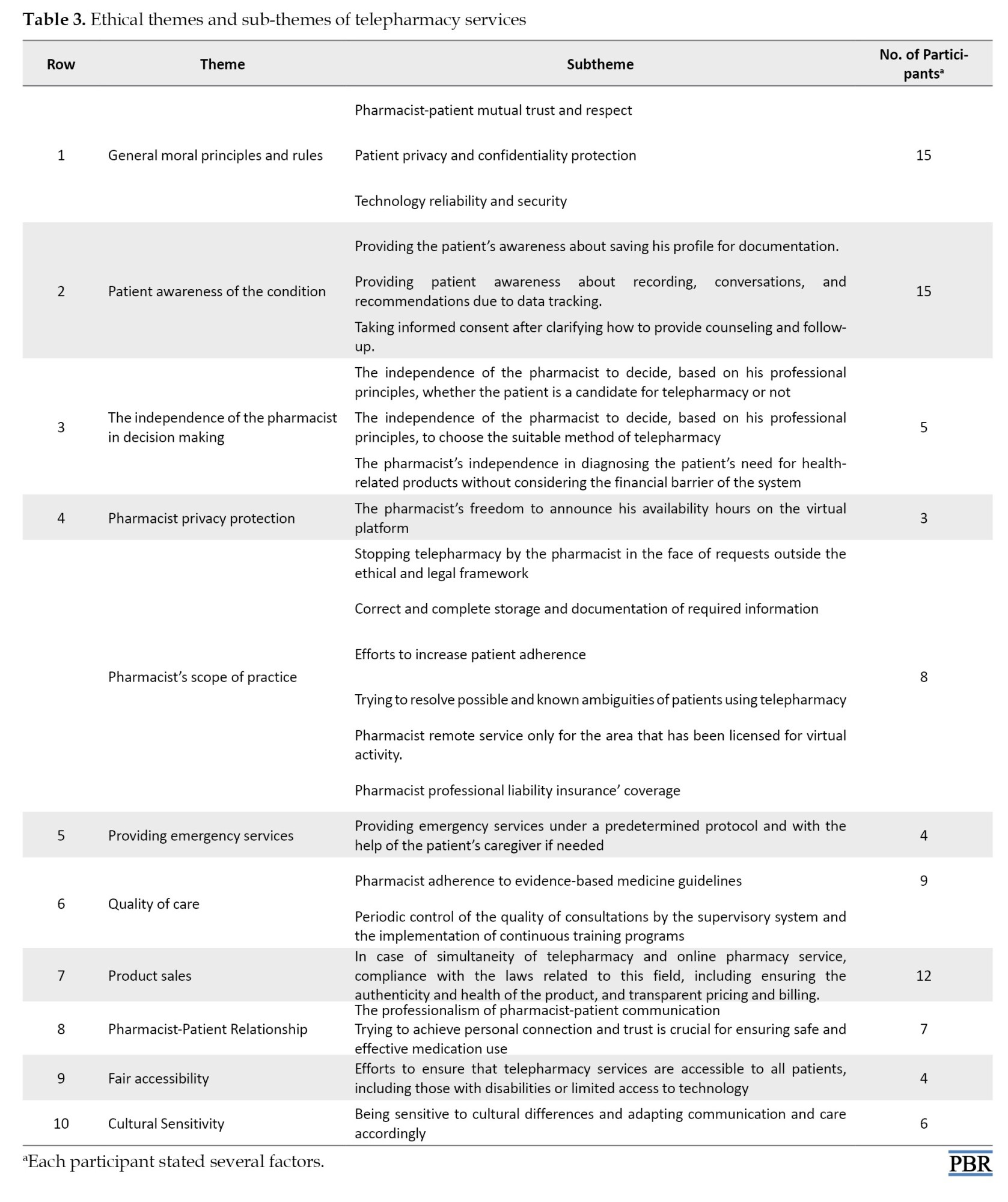
In this study, these themes were formulated and presented based on the FGD and after three FGDs with a panel of experts. Pharmacists should follow the main ethical themes when providing telepharmacy services, as listed in Table 3.
“I must emphasize that the current platforms in Iran, which are now facilitating online sales, were not designed with healthcare services in mind. They are riddled with bugs and lack guaranteed data security. Therefore, it is impractical to entrust individuals’ health records to them. The Food and Drug Administration must design a specialized platform with stringent regulations tailored for telepharmacy and the online sale of medications, as well as the provision of online medication therapy management services, to ensure data security.” (FG2, E6)
“As a clinical pharmacist during the peak of COVID-19, my phone line was constantly busy due to endless questions from colleagues at the hospital about the new medications being added to the national COVID protocol. They lacked sufficient knowledge about prescribing methods, managing interactions, and side effects. Despite being available during daytime hours and operating approximately 12 hours per day, I did not realize a significant financial gain, and I had no time to attend to my own matters. In my opinion, these consultations should be protocolized in hospitals, with a set tariff, and the availability hours of each clinical pharmacist and their scope of collaboration must be clearly defined.” (FG1, E3)
“As an experienced individual who has provided remote consultations for an extended period, I must emphasize the importance of pharmacists becoming familiar with the process of remote patient history taking before entering the field of telepharmacy. We encountered several obstacles when conducting telepharmacy consultations. For example, patients often do not understand the difference between generic and brand names, and they do not name the medicine correctly. Their inquiries should be carefully formulated; for example, a patient may call about managing dyspepsia with over-the-counter (OTC) drugs, but through a detailed medication history review, it may be discovered that the side effects and interactions of his medications pose a risk of gastric bleeding. It is this risk that must be managed, not just the patient’s symptoms of dyspepsia.” (FG3-E15)
“We are steering the country towards fully electronic services without providing the necessary infrastructure. One of the noble goals of telepharmacy is to enable access to advanced pharmaceutical services from the most remote areas. However, do all our compatriots across Iran have equal access to the internet with good bandwidth? There are times when the Internet is completely unavailable. I believe that to make this service more equitable, we should consider a greater reliance on telephone networks rather than the internet.” (FG3, E14)
Discussion
To situate our findings within established ethical frameworks, we mapped the primary themes to the four bioethical principles. Concerns about informed consent, patient autonomy, and transparent decision-making are related to autonomy. Issues of clinical quality, pharmacist competence, and promotion of patient welfare correspond to beneficence. Risks arising from miscommunication, data breaches, and medication errors are mapped to the principle of nonmaleficence. Finally, disparities in access and unequal digital infrastructure fall under justice.
Our focus groups identified ethical and governance domains central to telepharmacy: The therapeutic pharmacist–patient relationship (continuity, trust, shared decision making), risks of impersonal care and loss of nonverbal cues, information governance and privacy, professional competence and liability, equity of access, and the regulatory gap related to online drug sales [12-17].
Telepharmacy can expand access and improve several health-system outcomes, consistent with prior reports of generally favorable effects [12]. However, contradictory findings exist, such as the increased detection of out of range international normalized ratio (INR) values under remote management without concomitant severe harms. This result may reflect differences in clinical workflow and the absence of face to face assessments [5]. Our data explain these mixed signals by showing how reduced inperson contact can both enable monitoring (by making access easier) and introduce limits to clinical assessment that require compensatory safeguards. Consistent with existing literature, participants emphasized continuity and confidentiality as core challenges for telepharmacy [12]. Unlike studies focused primarily on online commerce, our participants foregrounded clinical relationships and professional liability, stressing that telepharmacy must first be framed as a clinical service rather than a retail channel [18, 19].
Ethical and governance implications
Therapeutic relationship versus impersonal care: preserving continuity, clear lines of responsibility, and shared clinical decision-making is essential to prevent depersonalization and the erosion of trust. Information governance: Secure platforms, encryption, role based access, and explicit data use and retention policies are necessary to protect confidentiality and maintain patient trust [16]. Competence and liability: Remote practice requires defined competency standards, documented training, and regulatory clarity about professional responsibilities and legal liability [14, 20]. Equity: Telepharmacy can reduce geographic barriers but also risks widening the digital divide unless policy actively mitigates access disparities [12].
The regulatory and policy recommendations of this study are as follows:
Standardize informed consent templates that clearly state data uses, retention, and third party access; require consent documentation for telepharmacy encounters. Require platform certification criteria addressing security, audit logs, encryption, and role based access controls; mandate periodic security audits. Regulatory guidance should be issued to clarify professional responsibilities, cross-jurisdictional licensing, and liability for telepharmacy services, and multidisciplinary advisory panels should be required for policy development.
Distinguish and regulate online drug retail from clinical telepharmacy: restrict prescription dispensing to licensed pharmacy branches or certified online pharmacy branches with verified pharmacist oversight to prevent illegal sales and protect patient safety [18, 19]. These measures align with participants’ emphasis that legal frameworks must be developed locally and may differ between jurisdictions [12].
DPIC centers illustrate an existing telepharmacy model in Iran and demonstrate both strengths (broad reach, high call volumes) and limits (language/culture sensitivity, variable legal status) [21, 22]. Expansion of telepharmacy in hospitals could improve access to clinical pharmacist expertise during off-hours; however, formal legal recognition, liability frameworks, and remuneration structures are required before scaling such models [20]. Eprescribing offers an implementation opportunity, but current unregulated digital marketplaces risk turning this benefit into patient safety threats unless prescription verification and pharmacy licensing are enforced [18, 19].
Future studies should purposively sample licensed virtual pharmacotherapy clinics, outpatient teleconsultation services, commercial online pharmacies, patients, and regulatory/legal experts to triangulate perspectives and test policy interventions in practice. Implementation research should evaluate the effect of the proposed governance measures on patient outcomes, confidentiality breaches, and equity of access.
The strengths of this study include purposive sampling of experienced telepharmacy practitioners and thematic analysis that distinguished ethical from regulatory constructs. Limitations include possible sample bias toward DPIC consultants (66% of the panel), which may influence an emphasis on information provision over dispensing dynamics, and the qualitative design, which prioritizes depth over generalizability.
We separated ethical issues (therapeutic relationship, informed consent, confidentiality, competence, beneficence/nonmaleficence, equity) from legal/regulatory matters (licensing, cross-jurisdictional practice, liability, product authenticity). Priority recommendations: 1) Standardized informed consent templates with clear data use notices; 2) platform certification with security, auditability, and role based access controls; 3) regulatory guidance clarifying professional responsibilities and liability and requiring multidisciplinary advisory panels.
To clarify thematic boundaries and situate our findings, we distinguished two closely related constructs in our results: the therapeutic pharmacist–patient relationship, which concerns continuity, trust, and shared clinical decision-making; and impersonal care, which refers to risks of depersonalization and reduced nonverbal cues that can diminish care quality. Information governance and privacy emerged as a distinct, underdeveloped concern; addressing them requires technical safeguards (secure platforms, encryption, access control), clear institutional policies (data retention, role based access), and strengthened informed consent procedures that specify data use and third party access. Where relevant, our findings align with prior reports that emphasize continuity and confidentiality as core telepharmacy challenges; unlike studies focused on online medicine commerce, our results foreground clinical relationship and professional liability, underscoring the need for policy measures that protect both patient data and the therapeutic encounter while avoiding conflation with purely commercial ecommerce issues.
We recommend that subsequent studies deliberately include representatives from licensed virtual pharmacotherapy clinics, outpatient teleconsultation services, commercial online pharmacies, patients, and regulatory/legal experts to triangulate findings and inform robust practice level policy recommendations.
Conclusion
The rapid expansion of health information technology, accelerated by the COVID19 pandemic and shortages of trained healthcare professionals, highlights the need for scalable telepharmacy services. This study identified and categorized the ethical challenges of clinical telepharmacy into four domains: the therapeutic pharmacist–patient relationship, data privacy and security, professional competence and liability, and equity of access. Addressing these domains is essential for policy-makers, service providers, and software developers to implement ethically robust telepharmacy and to guide future research.
Limitations
This study has limitations. The purposive sample (n=15) predominantly comprised DPIC consultants and hospital clinical pharmacists and did not include medical ethicists, legal/regulatory experts, representatives of virtual pharmacotherapy clinics, outpatient teleconsultation services, or commercial online pharmacies. Therefore, the findings represent expert perspectives from specific practice settings rather than a comprehensive mapping of all telepharmacy models. Language-related bias was mitigated by forward–backward translation of transcripts.
We acknowledge that no medical ethics specialists participated in the panels; future studies should include ethicists and legal/regulatory experts to broaden interpretive perspectives.
Ethical Considerations
Compliance with ethical guidelines
This study was approved by Ethics Committee of Shahid Beheshti University of Medical Sciences, Tehran, Iran (Code:IR.SBMU.PHARMACY.REC). All invited experts provided written informed consent after the researchers fully explained the study’s aims. They were assured that their information is protected by the authors, and the ethical issues of publishing their information and opinions are considered.
Funding
This research did not receive any grant from funding agencies in the public, commercial, or non-profit sectors.
Authors' contributions
Study design and review process: Hadi Esmailyb and Elnaz Zoghia; Data analysis: Hadi Esmaily; Writing: All authors.
Conflict of interest
The authors declared no conflict of interest.
Full-Text: (75 Views)
Introduction
In recent years, the advent of telepharmacy has transformed the landscape of healthcare delivery. This innovative approach allows pharmacists to provide pharmaceutical care services to patients through remote communication technologies. In many countries, people living in rural and remote areas do not have access to adequate, high-quality pharmaceutical services compared to those living in urban areas [1]. Pharmacists provide a variety of services in communities, big cities, villages, and remote areas. These services include preparing, overseeing the storage and distribution of drugs, providing drug information and drug education, and answering patients’ drug questions [1, 2]. In rural areas, there are many problems with recruiting, hiring, and retaining medical personnel. In one survey conducted in the United States of America, nearly 930 rural-area pharmacies were found between 2003 and 2013 [3].
Pharmacists are mainly responsible for providing pharmaceutical care, which refers to actions provided by specialists to optimize drug use and improve and promote health-related outcomes [4]. Over the last few decades, pharmacists have assumed active roles in disease management and treatment. Although pharmacists are not solely responsible for patient treatment decisions, they often participate in the treatment process as members of the treatment team. They also interact with other healthcare providers and facilitate communication among team members and between health professionals and patients [5].
The services usually provided through telepharmacy include processing and reviewing drug orders, reviewing and confirming the composition and distribution of drugs, providing drug information, evaluating and counseling patients, monitoring patients’ drug treatment, and managing drug therapy [6]. This study aimed to investigate the opportunities and challenges of telepharmacy in Iran in the framework of ethics in pharmaceutical care.
In Iran, remote pharmacies are available in two ways. First, the Poisons and Medicines Information Center, which is available during daytime hours, operates approximately 12 hours per day by phone to the general public, including patients and medical personnel [7]. Second, clinical pharmacy specialists working in hospitals who provide the necessary information to the treatment staff or patients in emergency cases [8]. A review of studies found that ethical considerations were not addressed.
By ‘ethical angles,’ we refer to the specific ethical issues examined in this study: the pharmacist–patient relationship (trust, continuity, informed consent), data governance and privacy (security, consent for data use, third party access), professional competence and liability (training, scope, responsibility for errors), and equity of access (digital divide and fair distribution).
To our knowledge, this study is among the first to examine the ethical dimensions of clinical telepharmacy in Iran using in-depth focus-group methods. Previous Iranian studies have explored telepharmacy feasibility and ethical considerations in broader or mixed-method designs (e.g. “telepharmacy in Iran from the perspective of pharmacy ethics: Feasibility, opportunities, and challenges”) [9]. Whereas prior work has assessed feasibility and policy challenges, our focus-group approach elicits detailed practitioner perspectives on priority ethical tensions and practical mitigation strategies for clinical telepharmacy services in Iran.
Telepharmacy should be distinguished from related concepts such as telemedicine and online pharmacies. In this paper, we use “telepharmacy” to refer specifically to pharmacists’ remote clinical activities (e.g. medication review, counseling, and therapy monitoring), whereas “online pharmacies” denote ecommerce platforms primarily focused on the sale and distribution of medicines. Conflating these terms obscures different ethical and regulatory challenges: telepharmacy raises concerns about the therapeutic pharmacist–patient relationship, clinical quality and professional liability, and data privacy, while online pharmacy activity primarily implicates product authenticity, supply chain regulation, and commercial compliance. Clarifying these boundaries frames our study’s focus on clinical telepharmacy ethics rather than on commercial ecommerce issues.
Materials and Methods
The ethical concerns of telepharmacy are addressed, and the ethical considerations surrounding telepharmacy, along with the need for a conscientious approach to ensure patient well-being and maintain the integrity of the pharmacy profession, are highlighted. We used a focus group discussion (FGD) to gather insights and opinions from a group of individuals regarding the ethical aspects of telepharmacy. The discussion aimed to explore different perspectives and generate a comprehensive understanding of this topic.
Consent
All invited experts provided written informed consent after the researchers explained the study aims. They were assured that their information would be protected by the authors, and the ethical issues of publishing their information and opinions would be considered.
Study design and setting
This study was conducted from October 2020 to December 2023. Data were collected through focus group sessions with 15 pharmacists on our expert panel. The discussion took place in a class in the Faculty of Pharmacy (Shahid Beheshti University of Medical Sciences, Tehran, Iran) in a relaxed atmosphere. Three in-person focus group sessions were conducted, with five participants in each session. Each session lasted approximately 60-90 minutes.
Sample size rationale and grouping
Because sampling was purposive and focused on drug and poison information centers (DPICs) and hospital pharmacists, the results reflect expert perspectives and warrant validation with larger, more heterogeneous samples, including virtual clinic staff, ethicists, legal experts, patients, and regulators.
Participants
Participants were purposively sampled to capture expert perspectives on telepharmacy rather than to provide comprehensive empirical coverage of all service models. The inclusion criteria included a licensed pharmacist, at least 2 years of direct experience providing remote pharmaceutical consultation (telephone or internet) in DPIC or hospital clinical pharmacy teleconsultation programs, and willingness to participate. The exclusion criteria included the absence of direct teleconsultation experience or exclusive work in administrative/non-consultative roles. Experienced and knowledgeable pharmacists are licensed pharmacists with at least three years’ relevant clinical practice (or equivalent), demonstrable involvement in remote pharmaceutical care (e.g. DPIC or teleconsultation), and documented competencies in medication review, patient counselling, and clinical decision-making.
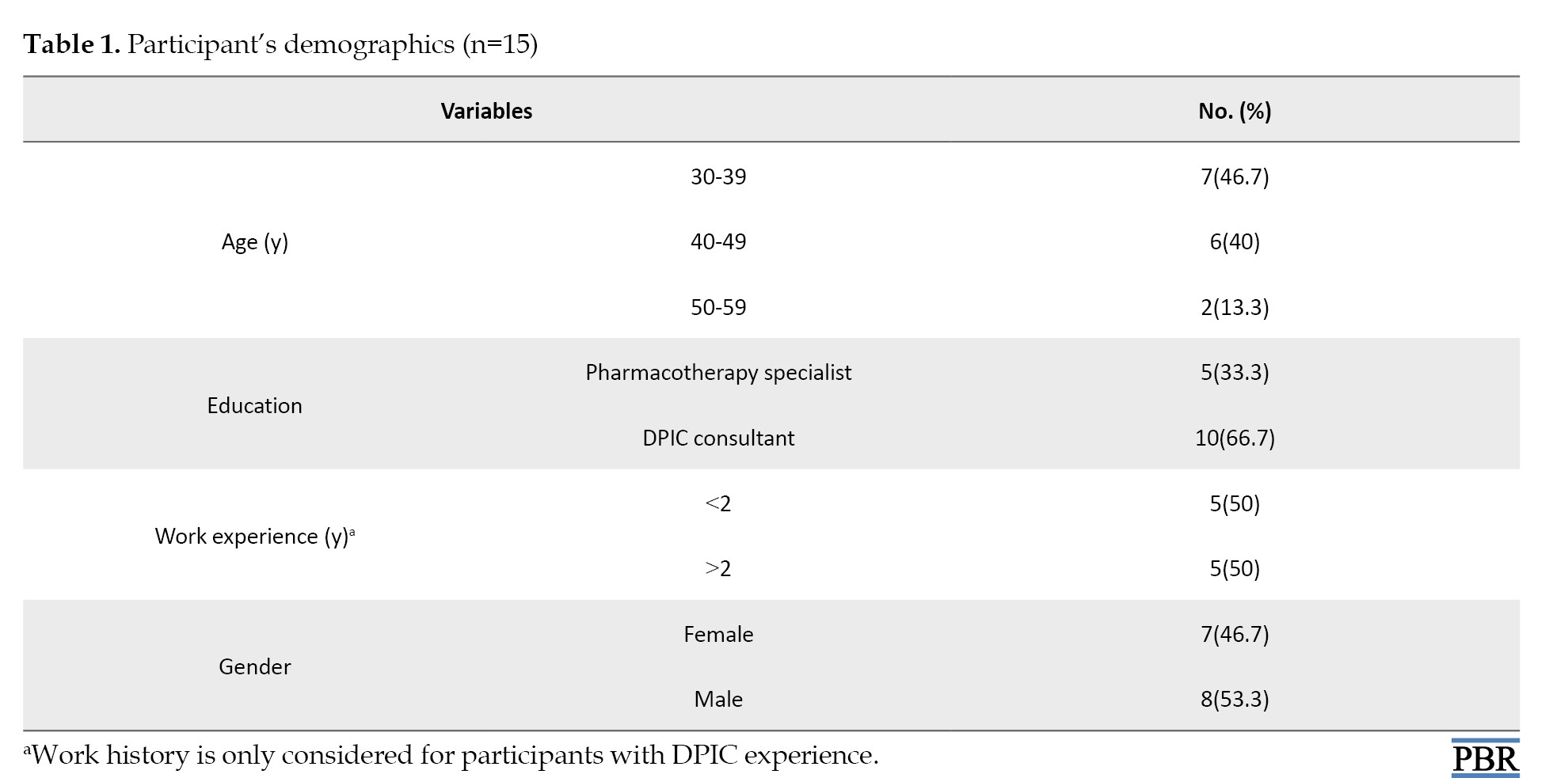
Invitations were sent to all eligible clinical pharmacists affiliated with Shahid Beheshti University of Medical Sciences teaching hospitals who were involved in their hospital’s remote pharmacy program, as well as to DPIC consultants nationwide. Fifteen pharmacists consented to participate. For in-depth discussion dynamics, participants were organized into three homogeneous focus groups of five members each: one group of clinical pharmacists and two groups of DPIC consultants stratified by consulting experience (≤2 years versus >2 years). Participants ranged in age from 30 to 55 years, and both genders were represented (see Table 1 for education, work history, and demographics).
One author (Elnaz Zoghi) moderated the sessions to ensure balanced participation, and a second author (Saeed Mohammad Soleymani) recorded the meetings and took field notes. Representatives from licensed virtual pharmacotherapy clinics, outpatient teleconsultation services, and commercial online pharmacy providers were not included; therefore, the findings reflect expert perceptions from DPIC and hospital clinical pharmacy settings.
Audio recording
A recorder was used at the beginning of the sessions. The participants were informed about the audio recording, consent was obtained, and they were assured that the information would not be used for any purpose other than research.
Focus group proceedings
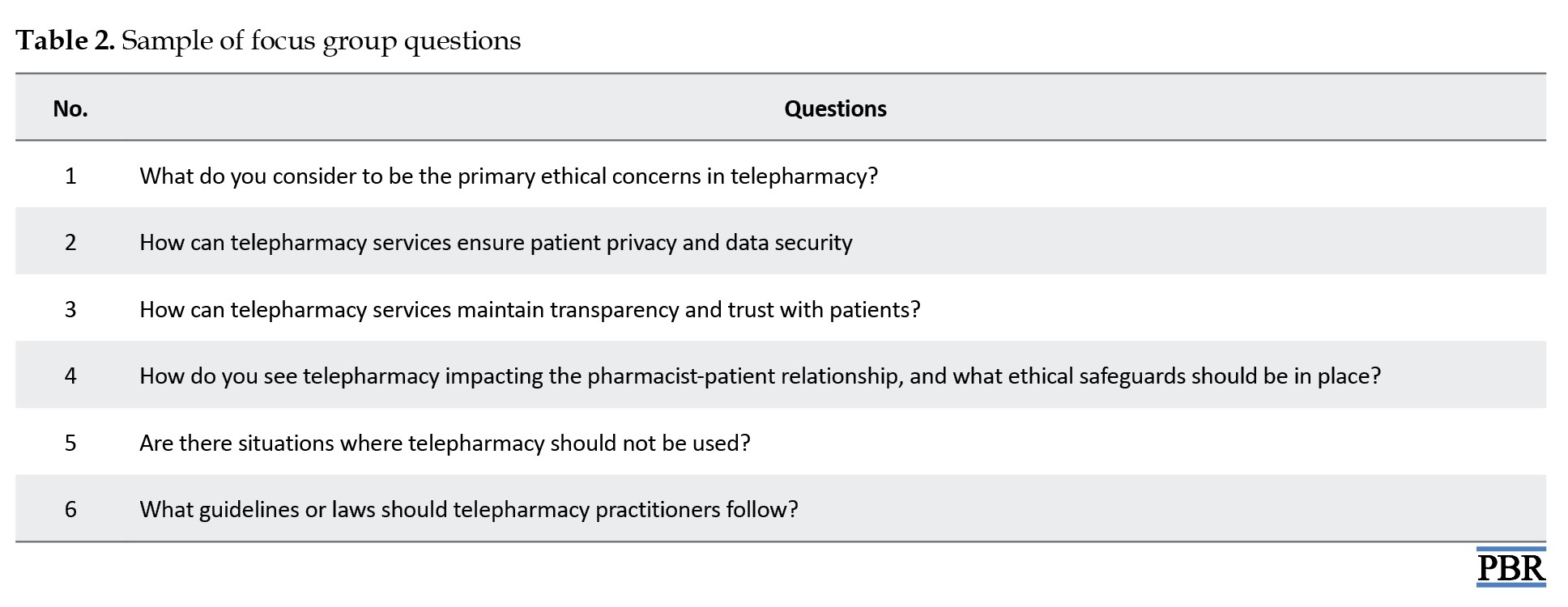
A discussion guide containing open-ended questions and prompts to stimulate conversation was created. The presenter began with an overview of telepharmacy. All participants were encouraged to share a simple experience of telepharmacy counseling on ethics to confirm that everyone knew what we were discussing. The moderator continued the discussion using discussion guides. Table 2 presents examples of focus group questions.
All participants had an equal opportunity to speak and actively participated in the discussion. Prior to each focus group, the moderator provided a brief, neutral orientation to core ethical concepts relevant to clinical telepharmacy (e.g. confidentiality, professional responsibility, and equity) to ensure a common baseline understanding among participants.
At the end of each session, the panel’s ethical issues were put to a vote to determine the most controversial. This process resulted in the selection of four key aspects at the end of all three sessions (Figure 1).
In recent years, the advent of telepharmacy has transformed the landscape of healthcare delivery. This innovative approach allows pharmacists to provide pharmaceutical care services to patients through remote communication technologies. In many countries, people living in rural and remote areas do not have access to adequate, high-quality pharmaceutical services compared to those living in urban areas [1]. Pharmacists provide a variety of services in communities, big cities, villages, and remote areas. These services include preparing, overseeing the storage and distribution of drugs, providing drug information and drug education, and answering patients’ drug questions [1, 2]. In rural areas, there are many problems with recruiting, hiring, and retaining medical personnel. In one survey conducted in the United States of America, nearly 930 rural-area pharmacies were found between 2003 and 2013 [3].
Pharmacists are mainly responsible for providing pharmaceutical care, which refers to actions provided by specialists to optimize drug use and improve and promote health-related outcomes [4]. Over the last few decades, pharmacists have assumed active roles in disease management and treatment. Although pharmacists are not solely responsible for patient treatment decisions, they often participate in the treatment process as members of the treatment team. They also interact with other healthcare providers and facilitate communication among team members and between health professionals and patients [5].
The services usually provided through telepharmacy include processing and reviewing drug orders, reviewing and confirming the composition and distribution of drugs, providing drug information, evaluating and counseling patients, monitoring patients’ drug treatment, and managing drug therapy [6]. This study aimed to investigate the opportunities and challenges of telepharmacy in Iran in the framework of ethics in pharmaceutical care.
In Iran, remote pharmacies are available in two ways. First, the Poisons and Medicines Information Center, which is available during daytime hours, operates approximately 12 hours per day by phone to the general public, including patients and medical personnel [7]. Second, clinical pharmacy specialists working in hospitals who provide the necessary information to the treatment staff or patients in emergency cases [8]. A review of studies found that ethical considerations were not addressed.
By ‘ethical angles,’ we refer to the specific ethical issues examined in this study: the pharmacist–patient relationship (trust, continuity, informed consent), data governance and privacy (security, consent for data use, third party access), professional competence and liability (training, scope, responsibility for errors), and equity of access (digital divide and fair distribution).
To our knowledge, this study is among the first to examine the ethical dimensions of clinical telepharmacy in Iran using in-depth focus-group methods. Previous Iranian studies have explored telepharmacy feasibility and ethical considerations in broader or mixed-method designs (e.g. “telepharmacy in Iran from the perspective of pharmacy ethics: Feasibility, opportunities, and challenges”) [9]. Whereas prior work has assessed feasibility and policy challenges, our focus-group approach elicits detailed practitioner perspectives on priority ethical tensions and practical mitigation strategies for clinical telepharmacy services in Iran.
Telepharmacy should be distinguished from related concepts such as telemedicine and online pharmacies. In this paper, we use “telepharmacy” to refer specifically to pharmacists’ remote clinical activities (e.g. medication review, counseling, and therapy monitoring), whereas “online pharmacies” denote ecommerce platforms primarily focused on the sale and distribution of medicines. Conflating these terms obscures different ethical and regulatory challenges: telepharmacy raises concerns about the therapeutic pharmacist–patient relationship, clinical quality and professional liability, and data privacy, while online pharmacy activity primarily implicates product authenticity, supply chain regulation, and commercial compliance. Clarifying these boundaries frames our study’s focus on clinical telepharmacy ethics rather than on commercial ecommerce issues.
Materials and Methods
The ethical concerns of telepharmacy are addressed, and the ethical considerations surrounding telepharmacy, along with the need for a conscientious approach to ensure patient well-being and maintain the integrity of the pharmacy profession, are highlighted. We used a focus group discussion (FGD) to gather insights and opinions from a group of individuals regarding the ethical aspects of telepharmacy. The discussion aimed to explore different perspectives and generate a comprehensive understanding of this topic.
Consent
All invited experts provided written informed consent after the researchers explained the study aims. They were assured that their information would be protected by the authors, and the ethical issues of publishing their information and opinions would be considered.
Study design and setting
This study was conducted from October 2020 to December 2023. Data were collected through focus group sessions with 15 pharmacists on our expert panel. The discussion took place in a class in the Faculty of Pharmacy (Shahid Beheshti University of Medical Sciences, Tehran, Iran) in a relaxed atmosphere. Three in-person focus group sessions were conducted, with five participants in each session. Each session lasted approximately 60-90 minutes.
Sample size rationale and grouping
Because sampling was purposive and focused on drug and poison information centers (DPICs) and hospital pharmacists, the results reflect expert perspectives and warrant validation with larger, more heterogeneous samples, including virtual clinic staff, ethicists, legal experts, patients, and regulators.
Participants
Participants were purposively sampled to capture expert perspectives on telepharmacy rather than to provide comprehensive empirical coverage of all service models. The inclusion criteria included a licensed pharmacist, at least 2 years of direct experience providing remote pharmaceutical consultation (telephone or internet) in DPIC or hospital clinical pharmacy teleconsultation programs, and willingness to participate. The exclusion criteria included the absence of direct teleconsultation experience or exclusive work in administrative/non-consultative roles. Experienced and knowledgeable pharmacists are licensed pharmacists with at least three years’ relevant clinical practice (or equivalent), demonstrable involvement in remote pharmaceutical care (e.g. DPIC or teleconsultation), and documented competencies in medication review, patient counselling, and clinical decision-making.
Invitations were sent to all eligible clinical pharmacists affiliated with Shahid Beheshti University of Medical Sciences teaching hospitals who were involved in their hospital’s remote pharmacy program, as well as to DPIC consultants nationwide. Fifteen pharmacists consented to participate. For in-depth discussion dynamics, participants were organized into three homogeneous focus groups of five members each: one group of clinical pharmacists and two groups of DPIC consultants stratified by consulting experience (≤2 years versus >2 years). Participants ranged in age from 30 to 55 years, and both genders were represented (see Table 1 for education, work history, and demographics).
One author (Elnaz Zoghi) moderated the sessions to ensure balanced participation, and a second author (Saeed Mohammad Soleymani) recorded the meetings and took field notes. Representatives from licensed virtual pharmacotherapy clinics, outpatient teleconsultation services, and commercial online pharmacy providers were not included; therefore, the findings reflect expert perceptions from DPIC and hospital clinical pharmacy settings.
Audio recording
A recorder was used at the beginning of the sessions. The participants were informed about the audio recording, consent was obtained, and they were assured that the information would not be used for any purpose other than research.
Focus group proceedings
A discussion guide containing open-ended questions and prompts to stimulate conversation was created. The presenter began with an overview of telepharmacy. All participants were encouraged to share a simple experience of telepharmacy counseling on ethics to confirm that everyone knew what we were discussing. The moderator continued the discussion using discussion guides. Table 2 presents examples of focus group questions.
All participants had an equal opportunity to speak and actively participated in the discussion. Prior to each focus group, the moderator provided a brief, neutral orientation to core ethical concepts relevant to clinical telepharmacy (e.g. confidentiality, professional responsibility, and equity) to ensure a common baseline understanding among participants.
At the end of each session, the panel’s ethical issues were put to a vote to determine the most controversial. This process resulted in the selection of four key aspects at the end of all three sessions (Figure 1).
Scope of telepharmacy
For clarity, in this study, telepharmacy refers to remote clinical and consultative pharmaceutical services (e.g. medication review, patient counselling, therapeutic monitoring, and remote oversight or advisory tasks). Telepharmacy is described here as complementary to, not a replacement for, essential onsite pharmacist duties that require physical presence (e.g. sterile compounding, final dispensing/labeling, and physical storage control). Where the manuscript previously listed broad pharmacy activities, those items denote possible remote advisory or supervision roles only and do not imply that telepharmacy substitutes for in-person professional responsibilities.
Transcription
First, we transcribed the recorded conversations verbatim. The conversations were in Persian; therefore, they were translated into English using a forward-and-backward translation technique to maintain concepts and validity of the results [10].
Data analysis
The recorded discussions were transcribed, and the data were analyzed using qualitative thematic content analysis. (Hadi Esmaily), one of the authors, read the transcribed content of the sessions, labeled the data, categorized it, and identified subgroups. The divergent viewpoints expressed by the participants were identified. To reduce classification bias, two researchers independently coded transcripts, reconciled differences by consensus, and mapped emergent themes to established bioethical principles during synthesis. Emergent themes were reviewed and mapped against the four core bioethical principles: Autonomy, beneficence, non-maleficence, and justice, to improve conceptual clarity and interpretive validity.
Results
Before presenting participant views, we briefly describe how findings are organized: transcripts were coded independently by two researchers, disagreements were resolved by consensus, and final codes were grouped into higher order themes through iterative review and mapping to core bioethical principles. For transparency, each theme below is introduced with a oneline description and followed by representative participant quotations (identified by focus group and participant code, e.g. FG1P3) that illustrate how specific statements were classified and which ethical challenge each quotation exemplifies.
Ethics is one of the main pillars of social communication and a guarantee of providing the best service and communication. Due to the rapid growth of telemedicine, ethics experts at the World Medical Association have developed ethical principles for its provision [11]. Unfortunately, one of the serious challenges of implementing telepharmacy is the ethical themes and rules in this field, and these rules have not been compiled by the relevant associations.
In this study, these themes were formulated and presented based on the FGD and after three FGDs with a panel of experts. Pharmacists should follow the main ethical themes when providing telepharmacy services, as listed in Table 3.
“I must emphasize that the current platforms in Iran, which are now facilitating online sales, were not designed with healthcare services in mind. They are riddled with bugs and lack guaranteed data security. Therefore, it is impractical to entrust individuals’ health records to them. The Food and Drug Administration must design a specialized platform with stringent regulations tailored for telepharmacy and the online sale of medications, as well as the provision of online medication therapy management services, to ensure data security.” (FG2, E6)
“As a clinical pharmacist during the peak of COVID-19, my phone line was constantly busy due to endless questions from colleagues at the hospital about the new medications being added to the national COVID protocol. They lacked sufficient knowledge about prescribing methods, managing interactions, and side effects. Despite being available during daytime hours and operating approximately 12 hours per day, I did not realize a significant financial gain, and I had no time to attend to my own matters. In my opinion, these consultations should be protocolized in hospitals, with a set tariff, and the availability hours of each clinical pharmacist and their scope of collaboration must be clearly defined.” (FG1, E3)
“As an experienced individual who has provided remote consultations for an extended period, I must emphasize the importance of pharmacists becoming familiar with the process of remote patient history taking before entering the field of telepharmacy. We encountered several obstacles when conducting telepharmacy consultations. For example, patients often do not understand the difference between generic and brand names, and they do not name the medicine correctly. Their inquiries should be carefully formulated; for example, a patient may call about managing dyspepsia with over-the-counter (OTC) drugs, but through a detailed medication history review, it may be discovered that the side effects and interactions of his medications pose a risk of gastric bleeding. It is this risk that must be managed, not just the patient’s symptoms of dyspepsia.” (FG3-E15)
“We are steering the country towards fully electronic services without providing the necessary infrastructure. One of the noble goals of telepharmacy is to enable access to advanced pharmaceutical services from the most remote areas. However, do all our compatriots across Iran have equal access to the internet with good bandwidth? There are times when the Internet is completely unavailable. I believe that to make this service more equitable, we should consider a greater reliance on telephone networks rather than the internet.” (FG3, E14)
Discussion
To situate our findings within established ethical frameworks, we mapped the primary themes to the four bioethical principles. Concerns about informed consent, patient autonomy, and transparent decision-making are related to autonomy. Issues of clinical quality, pharmacist competence, and promotion of patient welfare correspond to beneficence. Risks arising from miscommunication, data breaches, and medication errors are mapped to the principle of nonmaleficence. Finally, disparities in access and unequal digital infrastructure fall under justice.
Our focus groups identified ethical and governance domains central to telepharmacy: The therapeutic pharmacist–patient relationship (continuity, trust, shared decision making), risks of impersonal care and loss of nonverbal cues, information governance and privacy, professional competence and liability, equity of access, and the regulatory gap related to online drug sales [12-17].
Telepharmacy can expand access and improve several health-system outcomes, consistent with prior reports of generally favorable effects [12]. However, contradictory findings exist, such as the increased detection of out of range international normalized ratio (INR) values under remote management without concomitant severe harms. This result may reflect differences in clinical workflow and the absence of face to face assessments [5]. Our data explain these mixed signals by showing how reduced inperson contact can both enable monitoring (by making access easier) and introduce limits to clinical assessment that require compensatory safeguards. Consistent with existing literature, participants emphasized continuity and confidentiality as core challenges for telepharmacy [12]. Unlike studies focused primarily on online commerce, our participants foregrounded clinical relationships and professional liability, stressing that telepharmacy must first be framed as a clinical service rather than a retail channel [18, 19].
Ethical and governance implications
Therapeutic relationship versus impersonal care: preserving continuity, clear lines of responsibility, and shared clinical decision-making is essential to prevent depersonalization and the erosion of trust. Information governance: Secure platforms, encryption, role based access, and explicit data use and retention policies are necessary to protect confidentiality and maintain patient trust [16]. Competence and liability: Remote practice requires defined competency standards, documented training, and regulatory clarity about professional responsibilities and legal liability [14, 20]. Equity: Telepharmacy can reduce geographic barriers but also risks widening the digital divide unless policy actively mitigates access disparities [12].
The regulatory and policy recommendations of this study are as follows:
Standardize informed consent templates that clearly state data uses, retention, and third party access; require consent documentation for telepharmacy encounters. Require platform certification criteria addressing security, audit logs, encryption, and role based access controls; mandate periodic security audits. Regulatory guidance should be issued to clarify professional responsibilities, cross-jurisdictional licensing, and liability for telepharmacy services, and multidisciplinary advisory panels should be required for policy development.
Distinguish and regulate online drug retail from clinical telepharmacy: restrict prescription dispensing to licensed pharmacy branches or certified online pharmacy branches with verified pharmacist oversight to prevent illegal sales and protect patient safety [18, 19]. These measures align with participants’ emphasis that legal frameworks must be developed locally and may differ between jurisdictions [12].
DPIC centers illustrate an existing telepharmacy model in Iran and demonstrate both strengths (broad reach, high call volumes) and limits (language/culture sensitivity, variable legal status) [21, 22]. Expansion of telepharmacy in hospitals could improve access to clinical pharmacist expertise during off-hours; however, formal legal recognition, liability frameworks, and remuneration structures are required before scaling such models [20]. Eprescribing offers an implementation opportunity, but current unregulated digital marketplaces risk turning this benefit into patient safety threats unless prescription verification and pharmacy licensing are enforced [18, 19].
Future studies should purposively sample licensed virtual pharmacotherapy clinics, outpatient teleconsultation services, commercial online pharmacies, patients, and regulatory/legal experts to triangulate perspectives and test policy interventions in practice. Implementation research should evaluate the effect of the proposed governance measures on patient outcomes, confidentiality breaches, and equity of access.
The strengths of this study include purposive sampling of experienced telepharmacy practitioners and thematic analysis that distinguished ethical from regulatory constructs. Limitations include possible sample bias toward DPIC consultants (66% of the panel), which may influence an emphasis on information provision over dispensing dynamics, and the qualitative design, which prioritizes depth over generalizability.
We separated ethical issues (therapeutic relationship, informed consent, confidentiality, competence, beneficence/nonmaleficence, equity) from legal/regulatory matters (licensing, cross-jurisdictional practice, liability, product authenticity). Priority recommendations: 1) Standardized informed consent templates with clear data use notices; 2) platform certification with security, auditability, and role based access controls; 3) regulatory guidance clarifying professional responsibilities and liability and requiring multidisciplinary advisory panels.
To clarify thematic boundaries and situate our findings, we distinguished two closely related constructs in our results: the therapeutic pharmacist–patient relationship, which concerns continuity, trust, and shared clinical decision-making; and impersonal care, which refers to risks of depersonalization and reduced nonverbal cues that can diminish care quality. Information governance and privacy emerged as a distinct, underdeveloped concern; addressing them requires technical safeguards (secure platforms, encryption, access control), clear institutional policies (data retention, role based access), and strengthened informed consent procedures that specify data use and third party access. Where relevant, our findings align with prior reports that emphasize continuity and confidentiality as core telepharmacy challenges; unlike studies focused on online medicine commerce, our results foreground clinical relationship and professional liability, underscoring the need for policy measures that protect both patient data and the therapeutic encounter while avoiding conflation with purely commercial ecommerce issues.
We recommend that subsequent studies deliberately include representatives from licensed virtual pharmacotherapy clinics, outpatient teleconsultation services, commercial online pharmacies, patients, and regulatory/legal experts to triangulate findings and inform robust practice level policy recommendations.
Conclusion
The rapid expansion of health information technology, accelerated by the COVID19 pandemic and shortages of trained healthcare professionals, highlights the need for scalable telepharmacy services. This study identified and categorized the ethical challenges of clinical telepharmacy into four domains: the therapeutic pharmacist–patient relationship, data privacy and security, professional competence and liability, and equity of access. Addressing these domains is essential for policy-makers, service providers, and software developers to implement ethically robust telepharmacy and to guide future research.
Limitations
This study has limitations. The purposive sample (n=15) predominantly comprised DPIC consultants and hospital clinical pharmacists and did not include medical ethicists, legal/regulatory experts, representatives of virtual pharmacotherapy clinics, outpatient teleconsultation services, or commercial online pharmacies. Therefore, the findings represent expert perspectives from specific practice settings rather than a comprehensive mapping of all telepharmacy models. Language-related bias was mitigated by forward–backward translation of transcripts.
We acknowledge that no medical ethics specialists participated in the panels; future studies should include ethicists and legal/regulatory experts to broaden interpretive perspectives.
Ethical Considerations
Compliance with ethical guidelines
This study was approved by Ethics Committee of Shahid Beheshti University of Medical Sciences, Tehran, Iran (Code:IR.SBMU.PHARMACY.REC). All invited experts provided written informed consent after the researchers fully explained the study’s aims. They were assured that their information is protected by the authors, and the ethical issues of publishing their information and opinions are considered.
Funding
This research did not receive any grant from funding agencies in the public, commercial, or non-profit sectors.
Authors' contributions
Study design and review process: Hadi Esmailyb and Elnaz Zoghia; Data analysis: Hadi Esmaily; Writing: All authors.
Conflict of interest
The authors declared no conflict of interest.
References
- Kimber MB, Peterson GM. Telepharmacy-enabling technology to provide quality pharmacy services in rural and remote communities. J Pharm Pract Res. 2006; 36(2):128-33. [DOI:10.1002/j.2055-2335.2006.tb00588.x]
- Collins B, Borders TF, Tebrink K, Xu KT. Utilization of prescription medications and ancillary pharmacy services among rural elders in west Texas: Distance barriers and implications for telepharmacy. J Health Hum Serv Adm. 2007; 30(1):75-97. [DOI:10.1177/107937390703000101] [PMID]
- Sarkar R, Metzger BJ, Sayre HM, Slater CM, Katamneni S, Coustasse A. Telepharmacy and access to pharmaceutical services in rural areas. Pers Health Inf Manage. 2018; 1-14. [Link]
- Aitken M, Gorokhovich LJAaS. Advancing the responsible use of medicines: Applying levers for change. 2012 [Unpublished]. [DOI:10.2139/ssrn.2222541]
- Niznik JD, He H, Kane-Gill SL. Impact of clinical pharmacist services delivered via telemedicine in the outpatient or ambulatory care setting: A systematic review. Res Soc Adm Pharm. 2018; 14(8):707-17. [DOI:10.1016/j.sapharm.2017.10.011] [PMID]
- Keeys C, Kalejaiye B, Skinner M, Eimen M, Neufer J, Sidbury G, et al. Pharmacist-managed inpatient discharge medication reconciliation: A combined onsite and telepharmacy model. Am J Health Syst Pharm. 2014; 71(24):2159-66. [DOI:10.2146/ajhp130650] [PMID]
- Maruzi A, Sabbaghian-Tousi S, Karimi G, Jabbari R, Elyasi S. A ten-year report of drug and poison information center in mashhad, Iran 2007-2017. Iran J Pharm Res. 2021; 20(1):53. [DOI:10.22037/ijpr.2020.112228.13617] [PMID]
- Khoshnam-Rad N, Gholamzadeh M, Gharabaghi MA, Amini S. Rapid implementation of telepharmacy service to improve patient-centric care and multidisciplinary collaboration across hospitals in a COVID era: A cross-sectional qualitative study. Health Sci Rep. 2022; 5(6):e851. [DOI:10.1002/hsr2.851] [PMID]
- Teimoury A, Jafari M, Esmaily H. [Telepharmacy in Iran from the perspective of ethics in pharmacy: Feasibility study, opportunities and challenges (Persian)]. Med Spirit Cult. 2020; 29(2):143-56. [Link]
- Esposito N. From meaning to meaning: the influence of translation techniques on non-English focus group research. Qual Health Res. 2001; 11(4):568-79. [DOI:10.1177/104973201129119217] [PMID]
- Álvarez Díaz JA. Ethical aspects of telemedicine in the face of Covid-19 pandemic. Medicina y Ética. 2021; 32(1):249-91. [DOI:10.36105/mye.2021v32n1.07]
- Baldoni S, Amenta F, Ricci G. Telepharmacy services: Present status and future perspectives: A review. Medicina 2019; 55(7):327. [DOI:10.3390/medicina55070327] [PMID]
- Tzanetakos G, Ullrich F, Meuller K. Telepharmacy rules and statutes: A 50-state survey. Rural Policy Brief. 2017; 1(2017 4):1-4. [PMID]
- Kane-Gill SL, Niznik JD, Kellum JA, Culley CM, Boyce RD, Marcum ZA, et al. Use of telemedicine to enhance pharmacist services in the nursing facility. Consult Pharm. 2017; 32(2):93-8. [DOI:10.4140/TCP.n.2017.93] [PMID]
- Smith MG, Ferreri SP, Brown P, Wines K, Shea CM, Pfeiffenberger TM. Implementing an integrated care management program in community pharmacies: A focus on medication management services. J Am Pharm Assoc. 2017; 57(2):229-235.e1. [DOI:10.1016/j.japh.2016.12.074] [PMID]
- Muflih SM, Al-Azzam S, Abuhammad S, Jaradat SK, Karasneh R, Shawaqfeh MS. Pharmacists' experience, competence and perception of telepharmacy technology in response to COVID-19. Int J Clin Pract. 2021; 75(7):e14209. [DOI:10.1111/ijcp.14209] [PMID]
- Abood RR, Burns KA, Frankhauser F. Pharmacy practice and the law. Burlington: Jones & Bartlett Learning; 2023. [Link]
- Kwan D, Beyene J, Shah PS. Adverse consequences of internet purchase of pharmacologic agents or dietary supplements. J Pharm Technol. 2009; 25(6):355-60. [DOI:10.1177/875512250902500602]
- Fincham JE. Negative consequences of the widespread and inappropriate easy access to purchasing prescription medications on the internet. Am Health Drug Benefits. 2021; 14(1):22-8. [PMID]
- Dashti-Khavidaki S, Khalili H, Hamishekar H, Shahverdi S. Clinical pharmacy services in an Iranian teaching hospital: A descriptive study. Pharm World Sci. 2009; 31(6):696-700. [DOI:10.1007/s11096-009-9336-6] [PMID]
- Karimzadeh I, Vazin A, Talebnia N, Hatami-Mazinani N, Mahi-Birjand M. Performance of drug and poison information center within a Referral University hospital in southwest of Iran. J Pharm Care. 2017; 49-55. [Link]
- Bastani P, Marshall BDL, Rahimi-Movaghar A, Noroozi A. The risk environments of people who use drugs accessing two harm reduction centers in Tehran, Iran: A qualitative study. Int J Drug Policy. 2019; 63:90-96. [DOI:10.1016/j.drugpo.2018.11.013] [PMID]
Type of Study: Original Research |
Subject:
General
| Rights and permissions | |
 |
This work is licensed under a Creative Commons Attribution-NonCommercial 4.0 International License. |


This is an open access article distributed under the terms of the Creative Commons Attribution License (CC-By-NC), which permits use, distribution, and reproduction in any medium, provided the original work is properly cited and is not used for commercial purposes.
Contact Information