

Volume 11, Issue 4 (2025)
Pharm Biomed Res 2025, 11(4): 369-384 |
Back to browse issues page



Download citation:
BibTeX | RIS | EndNote | Medlars | ProCite | Reference Manager | RefWorks
Send citation to:


BibTeX | RIS | EndNote | Medlars | ProCite | Reference Manager | RefWorks
Send citation to:
Adeyemo A G, Hezekiah Awojide S, Ololade Tiamiyu A, Anifowose A J, Adeboye A O, Olumide Fadunmade E, et al . Effect of Storage Period on the Bioactive Composition and Therapeutic Potential of Syzygium aromaticum Essential Oil. Pharm Biomed Res 2025; 11 (4) :369-384
URL: http://pbr.mazums.ac.ir/article-1-712-en.html
URL: http://pbr.mazums.ac.ir/article-1-712-en.html
Abayomi Gideon Adeyemo *1 

 , Shola Hezekiah Awojide1 , Alilat Ololade Tiamiyu1 , Adebanjo Jacob Anifowose1 , Adedayo Olubunmi Adeboye2 , Ezekiel Olumide Fadunmade3 , Oluwatumininu Abosede Mutiu4 , Yemisi Elizabeth Asibor1
, Shola Hezekiah Awojide1 , Alilat Ololade Tiamiyu1 , Adebanjo Jacob Anifowose1 , Adedayo Olubunmi Adeboye2 , Ezekiel Olumide Fadunmade3 , Oluwatumininu Abosede Mutiu4 , Yemisi Elizabeth Asibor1
1- Department of Pure and Applied Chemistry, Faculty of Basic and Applied Sciences, Osun State University, Osogbo, Nigeria.
2- Department of Food Science and Technology, Faculty of Basic and Applied Sciences, Osun State University, Osogbo, Nigeria.
3- Learning and Development Bureau, Chatham, United Kingdom.
4- Industrial Chemistry Program, Bowen University, Iwo, Nigeria.
2- Department of Food Science and Technology, Faculty of Basic and Applied Sciences, Osun State University, Osogbo, Nigeria.
3- Learning and Development Bureau, Chatham, United Kingdom.
4- Industrial Chemistry Program, Bowen University, Iwo, Nigeria.
Keywords: Syzygium aromaticum, Essential oil, Antioxidant, Anti-inflammatory, Anti-hypertensive, Antidiabetic
Full-Text [PDF 978 kb]
(693 Downloads)
| Abstract (HTML) (900 Views)
IC50 values of the anti-inflammatory parameter
Table 7 presents the IC50 values recorded at different lengths of storage for anti-protease and albumin denaturation. The values for IC50 for anti-protease ranged from 129.65 to 233.85 µg/mL, while those of albumin denaturation ranged from 49.49 to 63.38 µg/mL, of which the storage for 4 days recorded the least IC50 in both indicators for anti-inflammatory activities.
Discussion
Yield
The yield values obtained from the extraction of S. aromaticum after 365, 183, and 4 days of storage are 13.35%, 13.27% and 13.36%, respectively. Alfikri et al. [12] reported a yield range of 14.93-16.73%. A maximum yield of 19.56% was reported by Ayub et al. [21]. The impact of grinding the seed was assessed, and a yield of 7.14% for unground seeds and 14.3% for ground seeds was reported [22]. The variation in the yield could be a result of the seeds’ method of extraction and the nature of the seed used [23]. In this study, the yields obtained were not significantly different but slightly from those obtained in other stored conditions, except that the color of the oil stored changed from pale yellow to light brown after 365 days, which could be a result of oxidation [24].
GC-MS analysis
Studies have shown that during the storage of oil, some chemical reactions, such as isomerization, oxidation, could result in changes of the chemical constituents of the oil [24]. This study showed variation in the constituents of the EOs with storage. Though the main constituent remains eugenol but the value of eugenol observed after 365 days and 183 days was higher, 93.46% and 93.15%, respectively, compared to the 73.52% observed after 4 days. This finding indicated that some chemical reaction had taken place, leading to the conversion of some component to another by aromatization [25]. The storage of EO for 4 days had eugenol (73.52%) and eugenol acetate 17.05% as the major components. According to the study of Mohammadi [26], eugenol is more stable than eugenol acetate because eugenol possesses a higher dipole moment than eugenol acetate. The none presence of eugenol acetate in 365 days and 183 days of storage and the higher presence of eugenol could be a result of the transformation of less stable eugenol acetate to eugenol. The transformation of components in the EO due to prolonged storage is evident in the work of Mu’azu et al. [24], who reported the reduction in the concentration of constituents with a lower molecular weight with prolonged storage. He claimed the change to be due to evaporation and oxidation. Eugenol and linalool were observed to increase during storage, which was in tandem with this research [27].
Antioxidant
Antioxidants are agents responsible for acting as a defense against free radicals that could be causes of diseases in the body [28]. The results obtained in this study indicated that the percentage inhibition of antioxidant parameters (DPPH, ABTS, and FRAP) reduced with the increase in days of storage. The result of inhibition concentration at 50% (IC50) showed an increase of IC50 DPPH (42.96 to 61.30 µg/mL), ABTS (34.61-35.71 µg/mL), and FRAP (122.05-264.75 µg/mL). In all of the antioxidant parameters determined, 4 days of storage recorded the least IC50 values, indicating a higher potential for 4 days as an antioxidant. This result conformed to the report of Kokina et al. [29], who indicated that the values of ABTS and DPPH free radical scavenging capacities of 4 EOs reduced after 12 months when compared to the fresh EOs. The study results also showed significant variation in the values of IC50 obtained for the different antioxidant assays, which was also in conformity with the results obtained by Kokina et al. [29]. The reason for this may be as a result of specific interaction in regards to mechanism of actions of DPPH, FRAP, and ABTS and the different constituents present [30]. The different responses of the indicators to the EOs could be a result of the different mechanisms of action, which may be brought about by different chemical components observed in the different lengths of storage of the EO [23]. Several studies have revealed that eugenol possesses several biological properties, such as antioxidant and anti-inflammation [23, 31]. Haro-González et al. [32] revealed the antioxidant activity of eugenol acetate, which is one of the major compositions of the EO stored after 4 days. The combination of the two constituents may be responsible for the higher activity shown against the different antioxidant assays. In other words, the absence of eugenol acetate, which may have been transformed into eugenol, may be responsible for the lower activities of EOs stored for 365 days and 183 days.
Anti-hypertensive
Anti-hypertensives are known as drugs that are used to treat hypertension. Anti-hypertensive therapy seeks to prevent the complications of high blood pressure, such as stroke, heart failure, and kidney failure [33]. The percentage inhibition of dopamine and BCHE was highest with a storage duration of 4 days. Elevated BCHE activity may lead to increased acetylcholine (ACH) breakdown, potentially contributing to hypertension. the inhibition of BCHE indicated that the EOs help to break down ACH, a neurotransmitter that helps to relax the blood vessels and lower blood pressure [34]. Several studies have also confirmed the use of EOs in the treatment of hypertension [35, 36]. The result obtained in this study indicated that the storage of 4 days recorded the least values of IC50 for BCHE (49.49 µg/mL) and dopamine (129.65 µg/mL). An IC50 of 48.73 µg/mL was reported for Aframomum melegueta [34]. There is no report known to us that determines the antihypertensive activities of the EO of S. aromaticum, but results indicate that the inhibition of BCHE and Dopamine may be attributed to the constituents of the EOs [37]. Eugenol has been reported as a vasorelaxant compound that helps in the reduction of blood pressure [34, 38]. This is evident in the activities observed against the two assays. The higher activity observed for the 4 days storage could be a result of the percentage of eugenol and eugenol acetate, which was reported by Radhiah et al. [39].
Anti-inflammatory
Anti-inflammation is a mechanism of defense triggered by the immune system to prevent tissue damage [40]. The EO of S. aromaticum stored at different lengths of days was subjected to 2 anti-inflammatory indicators: albumin denaturation and anti-protease. The result obtained in this study was dose-dependent, which was the same as reported by Yang et al. [40]. The high quantity of eugenol present in the EOs on different days of storage could be responsible for the anti-inflammatory action, which works by the inhibition of neutrophil chemotaxis and prostaglandins synthesis [41]. Damasceno et al. [42] revealed that eugenol acetate could act as an alternative to eugenol in the treatment of inflammatory ailments. The synergistic activity of eugenol and eugenol acetate found in the EO stored for 4 days may be responsible for the higher inhibition of albumin denaturation and anti-protease.
Anti-diabetic
α-Amylase and α-glucosidase are enzymes that hydrolyze carbohydrates, which are usually used to modulate postprandial hyperglycemia. The results obtained from this study showed the inhibition of α-amylase and α-glucosidase by the EO of S. aromaticum stored at different lengths of days, but the storage of 4 days recorded the least IC50 of 61.44 µg/mL for α-amylase and 68.77 µg/mL for α-glucosidase. The value of IC50 increased with the length of days of storage, indicating a lower activity for EO stored for a longer period. Several studies have shown the inhibition of carbohydrate-metabolizing enzymes as well as glucose produced by the liver [43]. The presence of eugenol in the EO stored for 365 and 183 days is responsible for the anti-diabetes activities recorded. Reports had also shown that eugenol acetate is the least inhibitor against enzymes responsible for type 2 diabetes [44]. Therefore, the higher activity of day 4 stored EO could be a result of the synergistic activities of eugenol and eugenol acetate.
Conclusion
The study result indicated that the color of the EO stored over time changed from light yellow (4 days and 183 days) to light brown after 365 days of storage, indicating some reactions had taken place in the course of storage. The GC-MS analysis of the EOs indicated that storage for 183 days and 365 days had higher quality of eugenol than those stored for 4 days, which could have been a result of some chemical reaction resulting in the transformation of some components in the essential oil. The EO stored for 4 days had eugenol acetate, which was missing in the storage for 183 days and 365 days, which could have contributed to the higher activity of the sample stored for 4 days. The medicinal parameters showed that the different days of storage had antioxidant, anti-inflammatory, anti-hypertensive, and anti-diabetic activities, but the activities reduced with the length of storage, indicating that EO stored for 365 days had the least activity. In conclusion, the longer the storage of the EOs, the less effective it is.
Ethical Considerations
Compliance with ethical guidelines
There were no ethical considerations to be considered in this research.
Funding
This research did not receive any grant from funding agencies in the public, commercial, or non-profit sectors.
Authors' contributions
Conceptualization, study design, and investigation, Abayomi Gideon Adeyemo, Shola Hezekiah Awojide, Alilat Ololade Tiamiyu, and Adebanjo Jacob Anifowose; Writing THE original draft: Abayomi Gideon Adeyemo, Shola Hezekiah Awojide, Alilat Ololade Tiamiyu, Adebanjo Jacob Anifowose; Data analysis: Adedayo Olubunmi Adeboye, Ezekiel Olumide Fadunmade, Oluwatumininu Abosede Mutiu, and Yemisi Elizabeth Asibor; Review and editing: Adedayo Olubunmi Adeboye, Ezekiel Olumide Fadunmade, Oluwatumininu Abosede Mutiu, and Yemisi Elizabeth Asibor; Final approval: All authors.
Conflict of interest
The authors declared no conflict of interest.
References
Full-Text: (306 Views)
Introduction
Africa is endowed with a wide variety of plant species, many of which have been utilized for medical purposes since ancient times. Recently, one of the main sources for the creation of novel drug entities has been the use of natural products and their derivatives [1]. Despite the current emphasis on synthetic drugs, medicinal plants have always been and will remain the main source of pharmaceuticals [2]. Herbal remedies are still believed to be the primary source of healthcare for at least 80% of the world’s population, which is mostly found in developing countries [3].
A biologically identified raw plant-based material can be converted into an essential oil (EO) by hydrodistillation, steam distillation, or an appropriate mechanical process [4]. EOs are odorous products that typically have complex compositions, according to the European Pharmacopeia [4]. EOs are intricate blends of aromatic plants’ secondary metabolites [5]. Most EOs, such as citronella, lime, or orange oil are lighter than water, but some are heavier than water, like allspice, cinnamon, clove, or garlic oil. EOs are soluble in organic solvents and in lipids. Some of them are colorless, while others range from light yellow to a reddish-orange [6]. In addition to their medicinal and aromatic qualities, EOs are known for their bactericidal, antiviral, and fungicidal biological activities [6]. Among their many applications, they are thought to be appropriate materials to substitute for chemical food preservation additives. Additionally, they function as local anesthetics, spasmolytic agents, antimicrobials, analgesics, sedatives, and anti-inflammatory medications [6]. Also, EOs and their constituents are utilized in the manufacturing of alternative therapies, cosmetics, perfumes, and products for agriculture, health, and dentistry [5]. According to multiple studies, the species, soil composition, plant organ (roots, blooms, or aerial parts), age, cycle stage, chosen extraction method, extraction conditions, and phases of development affect the composition and extracted yield of EOs [7].
Cloves (Syzygium aromaticum) belong to the Myrtaceae family of plants. In Nigeria, Southern China, Sri Lanka, India, Madagascar, and Indonesia, cloves are grown for economic purposes. Clove EO is frequently used as a seasoning in sauces, condiments, and pastries. Additionally, it is used in medicine, specifically for teeth and gum preparations [8]. S. aromaticum EO has long been used in food, active packaging, pharmaceutical cosmetics, biomedical, and sanitary industries because of its biological qualities due to its biological properties, including antimicrobial, insecticidal, anticarcinogenic, pesticide, analgesic, antiseptic, and antioxidant properties [9]. S. aromaticum EO is primarily composed of phenylpropanoids, such as eugenol and its derivatives, with trace amounts of chemical constituents, such as caryophyllene and humulene [10, 11]. Furthermore, clove flower buds in the flowering stage have the highest yield of eugenol content and refractive index; similarly, the oils of young and mature trees differ [12]. While the EO from young trees exhibited the most potent antioxidant activity, the highest quality clove EO was extracted from the buds of mature trees [12].
Beyond their potential for therapeutic use, some variables, most notably storage duration and conditions, can have a substantial impact on the stability and effectiveness of EOs. Over time, EOs may lose their chemical profiles due to degradation, which could jeopardize their therapeutic effectiveness [13]. It is necessary to store EOs in a dry, low-temperature atmosphere and in a room without air circulation to prevent evaporation because elements like light, heat, air, and liquid can speed up chemical reactions within EOs, resulting in the oxidation, hydrolysis, and degradation of necessary compounds [14].
One risk associated with storing plant material is the eventual loss of essential oil. The amount of EO is somewhat reduced as a result of gradual evaporation. Prior research has emphasized the significance of appropriate storage procedures in maintaining the chemical integrity and biological activity of EOs [15]. Therefore, it is imperative to comprehend how storage duration affects the quality and potency of EOs to maximize their therapeutic benefits and guarantee the efficacy of products [15]. The length of time, temperature, and relative humidity of storage all affect the composition of EO, leading to the production or deterioration of specific components [7]. Understanding the influence of storage duration on the medicinal quality of EOs holds significant implications for both scientific research and practical applications in healthcare and wellness industries. However, a comprehensive investigation into the long-term effects of storage duration on EO quality remains limited, warranting further research to fill this knowledge gap.
Materials and Methods
All chemicals used were of analytical grade and purchased from Sigma Aldrich, Germany.
Plant materials
Clove bud (S. aromaticum) was picked from an orchard at Ijebu-ode, Ogun State, Nigeria. The seed was authenticated at the Department of Plant Biology, Osun State University, Osogbo, Nigeria.
Plant pretreatment
The S. aromaticum seed was air-dried, then it was reduced to semi-powder using a pestle and a mortar. The semi-powder was kept in an airtight container until required.
Extraction of EOs
The pulverized powders of the seeds were extracted using the hydrodistillation technique. The seeds were ground into finer particles to improve the surface area and then transferred into a 500 mL round-bottom flask with the aid of a funnel, and 200 mL of distilled water was then added. The solution was then mixed using a glass stirring rod. The heating mantle was connected to a power source and powered on. Next, water flow through the condenser of the Clevenger commenced, and it was fitted into the round-bottom flask, setting on top of the heating mantle. The mixture was gradually heated while the extraction was allowed for 5 hours, after which the EO was collected.
Storage of EOs
S. aromaticum EOs were kept in dark, airtight sample containers to guard them against light, air, and temperature fluctuations, which can cause oxidation and degradation of their volatile constituents. The EOs are then placed in a cool, dry place at a temperature of 23 °C away from direct sunlight and heat sources to maintain their chemical integrity. Thereafter, the length of storage is monitored.
Gas chromatography-mass spectroscopy analysis
Agilent 6890N instrument with a flame ionization detector and capillary column of HP-5MS (30×0.25×0.25 mm) coupled with Agilent Technologies 5973N mass spectrometer. The temperature of the oven was fixed at 60 °C for 1 min and further increased at 10 °C to 170 °C for 1 min until it reached 280 °C for 15 min. The temperature of the injector was left stable at 270 °C while 1 μL of the EO was injected into it. Helium was used as the carrier gas, maintaining a flow rate of 1.0 mL/min. The majority of the constituents were identified by comparing their retention indices with those in the literature. The mass spectra were compared with those stored in NIST 05 and Wiley 275 libraries for further identification.
In vitro analysis
Anti-diabetic
Alpha-amylase inhibition assay: The α-amylase was assayed and conducted following Dej-Adisai et al. [16]. A solution made of 0.4 mL of 0.5% starch mixed with 0.5% (2 mL) of sodium acetate, which has a pH of 5.6. To the mixture, 0.3 mL of the EO was added and was left to incubate for 30 min in a water bath at 40 °C. After incubation, 1 mL of 3,5-dinitrosalicylic acid (DNSA) was added and boiled for 5 min, followed by the addition of distilled water (5 mL). Absorbance was measured at 540 nm.
Alpha-glucosidase inhibition assay: The effect of EOs on α-glucosidase activity was assessed following the method of Dej-Adisai et al. [16]. Preparation of p-nitrophenyl glucopyranoside (PNPG) was done in a phosphate buffer (20 mM) with pH 6.9. The EO was pre-incubated for ten minutes with 100 μL of α-glucosidase (0.3 U/mL). The mixture was left for 15 min at a temperature of 37 °C while 2.5 mL of 0.1 M sodium trioxocarbonate was added. Absorbance was measured at 405 nm.
Anti-oxidant analysis
2,2-Azino-bis (3-ethylbenzothiazoline-6-sulphonic acid) (ABTS) radical scavenging activity: The ABTS scavenging activity was determined by the method of Schaich et al. [17]. A 2.45 mM of K2S2O8 was reacted with ABTS solution (7 mM) and then left overnight in the dark. The solution was diluted with 50% methanol, and 300 μL of the EO was added to the solution, and the absorbance was measured at 745 nm. The percentage inhibition was calculated according to the Equation 1:
.PNG)
DPPH radical scavenging assay: The method of Worachartcheewan et al. [18] was used to determine the 2,2-diphenyl-1-picrylhydrazyl (DPPH) radical scavenging ability (RSA) of the EOs. Methanol (10 mL) was mixed with 0.1 mM DPPH, after which 1 mL of the Eos was added to 3.0 mL of the prepared DPPH solution. The solution obtained was left to stand in the dark for 30 minutes after stirring for 20 minutes. Absorbance was taken at 517 nm (Equation 2).
.PNG)
Anti-inflammatory
Inhibition of albumin denaturation: The method of Mizushima et al. [19] was used. A solution of bovine albumin fraction (1%) was mixed with 1 mL of EO, and the pH was adjusted with 1 mL of NH3Cl. The solution was heated at 51 ºC for 15 min and finally incubated at 37 ºC for 15 min. The sample’s turbidity was measured at 660 nm.
Anti-protease action: The modified methodology of Mizushima et al. [19]was used. A solution consisting of 1 mL of EO, a buffer with pH 7.4 Tris-HCl (20 mM), and trypsin of 0.0.5 mg was allowed to incubate for 5 min at 37 oC after which 0.8% casein (1 mL) was added. The obtained mixture was allowed to incubate for another 20 min, then 2.5 mL of HClO4 (70%) was introduced. The suspension was centrifuged, and the absorbance was taken at 210 nm.
Anti-hypertensive
Determination of butyrylcholinesterase activities (BCHE): The method of Ulaç et al. [20] was used to assess BCHE activities. Brain homogenate (50 μL) was combined with 50 μL of BCHE prepared by mixing 25 mL of CH3OH with 29.7 mg of 5,5′-dithiobis-(2-nitrobenzoic acid) (DTNB) and a hydrochloric acid buffer solution (pH 7.4). The solution was allowed to incubate for 20 minutes before butyrylthiocholine iodide was added. The absorbance was taken at 412 nm.
Dopamine level: After the sample (0.1 mL) was pipetted into the test tube, 0.1 mL of 5 mM ferric chloride was added to it. About 0.1 mL of 5 mM KFeCN (potassium ferricyanide) was added as well as 2.7 mL of NaH2SO4 buffer (0.1 M, pH 8.0). The solution was allowed to stand for 35 min at room temperature and was measured at 735 nm.
Statistical analysis
The mean of 3 readings was used to express the result, and a one-way ANOVA followed by a Turkey multiple comparison test was used in GraphPad Prism software, version 5. Differences will be considered significant at P<0.05.
Results
Yield
The yield values obtained from the extraction of S. aromaticum after 365, 183, and 4 days of storage were 13.35%, 13.27% and 13.36% respectively.
GC-MS analysis
Tables 1 to 3 present the GC-MS analysis of the EO of S. aromaticum stored for 365, 183, and 4 days, respectively. Fourteen compounds were observed from the EO of S. aromaticum stored for 365 days, which had 93.46% of eugenol and 1.44% of 2-Unclecenal (E) as the major components. Thirteen compounds were observed from the EO of S. aromaticum stored for 183 days, with 93.15% of Eugenol as the major component and 2.05% of β-neoclovene. Sixteen compounds were observed from the EO of S. aromaticum stored for 4 days. It had 73.52% eugenol as the major component and 17.05% eugenol acetate. The results show the GC-MS analysis of EO of S. aromaticum stored for 365, 183 and 4 days (Tables 1, 2 and 3), which has eugenol in common as the major component in varying percentages (93.46%, 93.15%, and 73.52%, respectively). It also showed that the one stored for 4 days has the least percentage of Eugenol which is 73.52%, but contained eugenol acetate of 17.05% an isomer of eugenol, which is absent in the 365 and 183 days of storage.
.PNG)
.PNG)
.PNG)
.PNG)
Antioxidant activities
DPPH
Figure 2 shows the percentage inhibitory activities of the S. aromaticum EOs and at different days of storage against DPPH. The least percentage inhibitory activity with a concentration of 100 µg/mL was observed with the S. aromaticum EO stored for 365 days. The highest inhibition of DPPH with the different concentrations was observed in the EO of S. aromaticum stored after 4 days of storage. This finding indicated that the higher the length of storage, the lower the percentage inhibition of DPPH.
.PNG)
ABTS
The ABTS radical scavenging activity of the EOs showed that S. aromaticum oil, with the storage length of 365 days, had the least percentage inhibition of ABTS at the different concentrations, while the EO storage of 4 days had the highest percentage inhibition of ABTS (Figure 3). This showed that the EO with the longest length of storage recorded the least percentage inhibition of ABTS.
.PNG)
FRAP
Figure 4 shows the percentage inhibitory activities of S. aromaticum at varying lengths of storage against ABTS radical scavenging. S. aromaticum essential oil, with the storage length of 4 days, had the highest percentage of inhibition of FRAP at all concentrations. The percentage inhibition of FRAP increased with concentration.
.PNG)
Inhibitory concentration at 50% (IC50)
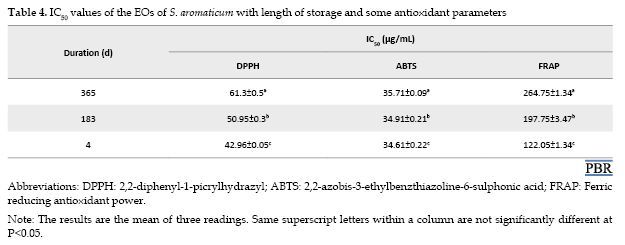
Table 4 records the IC50 values of S. aromaticum at different lengths of storage against DPPH, ABTS, and FRAP. The results indicate that the storage of 4 days recorded the least IC50 compared with other lengths of storage, and it ranged from 34.61 to 122.05 µg/mL, with the least IC50 recorded with ABTS (34.61 µg/mL).
Antidiabetic activities
α-amylase inhibition
Figure 5 shows the percentage inhibitory activities of the clove EOs at different lengths of storage against α-amylase. The least percentage inhibitory activity with a concentration of 100 µg/mL was observed with 365 days of storage, while the 4-day storage recorded the highest percentage of α-amylase inhibition.
.PNG)
α-glucosidase
Figure 6 shows the percentage inhibitory activities of the S. aromaticum EOs at different storage lengths against α-glucosidase. The percentage inhibition of α-glucosidase increased with concentration. The Figure 6 indicated that the EO of S. aromaticum, with 4 days length of storage recorded the highest inhibitory activity against α-glucosidase.
.PNG)
.PNG)
IC50 values of the antidiabetic indicators
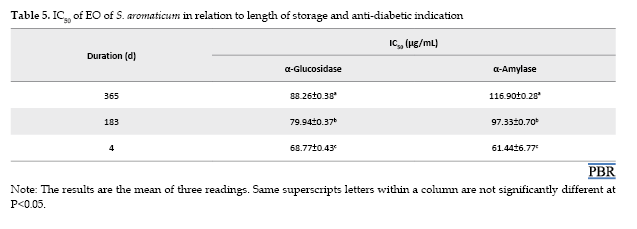
Table 5 presents the inhibitory concentration at 50% of the EO of S. aromaticum against α-glucosidase. The IC50 values for α-glucosidase ranged from 68.77 to 88.26 µg/mL, while those of α-glucosidase ranged from 61.44 to 116.90 µg/mL. The values obtained show that the 4 days length of storage had the least IC50 values for both α-glucosidase and α-amylase, indicating its better potential as an anti-diabetic agent than those of 365 and 183 days of storage.
Anti-hypertensive
BCHE
Figure 7 shows the percentage inhibitory activities of BCHE by EOs of S. aromaticum of different lengths of storage. The least percentage inhibitory activity at different concentrations was observed with the essential oil, with 365 days, while the highest inhibition of BCHE was recorded with S. aromaticum, with 365 days of storage.
.PNG)
Dopamine
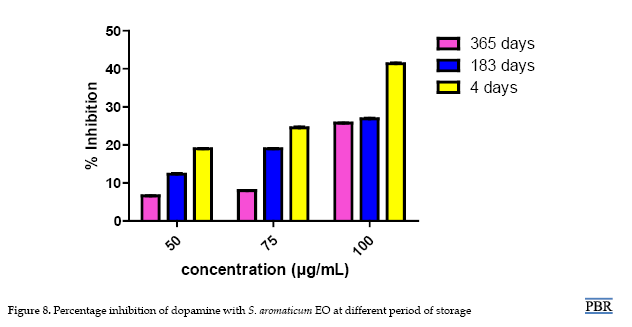
EO of S. aromaticum at different lengths of storage recorded varying percentages of inhibition. The result obtained in Figure 8 show an increase in the percentage of inhibition of dopamine with an increase in concentration; the highest percentage inhibition of dopamine was observed with the EO of S. aromaticum stored for 4 days.
IC50 value for the anti-hypertensive parameter
Table 6 presents the IC50 values of the EO of S. aromaticum at different lengths of storage for BCHE and dopamine. The lowest IC50 values for dopamine and BCHE were recorded at 4 days (129.65 µg/mL and 49.49 µg/mL), which revealed that it has better potential as an anti-hypertensive.
Anti-inflammatory
Albumin denaturation
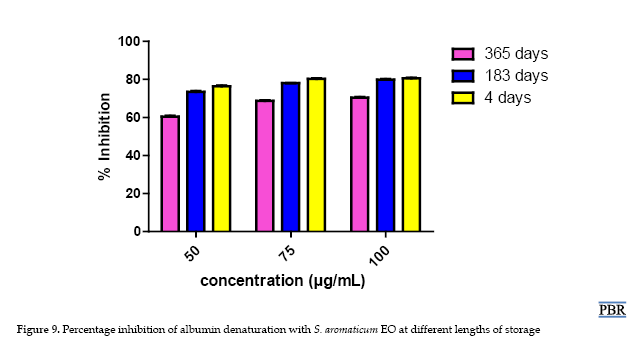
Figure 9 shows the percentage inhibitory activities of albumin denaturation by the EO of S. aromaticum stored at different periods of storage. The result indicated a decrease in the percentage of inhibition of albumin denaturation with an increase in the period of storage. The highest percentage inhibition was observed after 4 days of storage.
Anti-protease
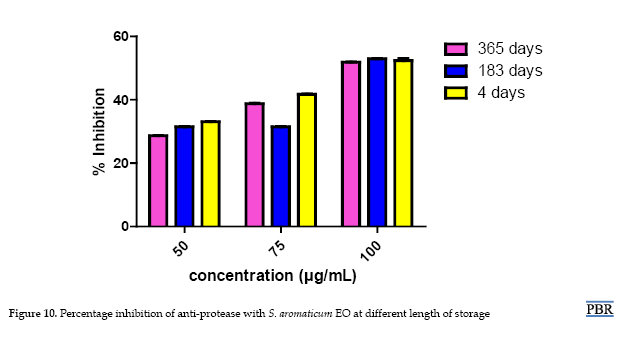
Figure 10 shows the percentage inhibitory activities of the S. aromaticum EOs stored for different lengths of days against anti-protease. The least percentage inhibitory activity of anti-protease was observed with the EO stored for 365 days, while the highest inhibition was recorded with the EO stored for 4 days. The same observation was recorded at different concentrations.
Africa is endowed with a wide variety of plant species, many of which have been utilized for medical purposes since ancient times. Recently, one of the main sources for the creation of novel drug entities has been the use of natural products and their derivatives [1]. Despite the current emphasis on synthetic drugs, medicinal plants have always been and will remain the main source of pharmaceuticals [2]. Herbal remedies are still believed to be the primary source of healthcare for at least 80% of the world’s population, which is mostly found in developing countries [3].
A biologically identified raw plant-based material can be converted into an essential oil (EO) by hydrodistillation, steam distillation, or an appropriate mechanical process [4]. EOs are odorous products that typically have complex compositions, according to the European Pharmacopeia [4]. EOs are intricate blends of aromatic plants’ secondary metabolites [5]. Most EOs, such as citronella, lime, or orange oil are lighter than water, but some are heavier than water, like allspice, cinnamon, clove, or garlic oil. EOs are soluble in organic solvents and in lipids. Some of them are colorless, while others range from light yellow to a reddish-orange [6]. In addition to their medicinal and aromatic qualities, EOs are known for their bactericidal, antiviral, and fungicidal biological activities [6]. Among their many applications, they are thought to be appropriate materials to substitute for chemical food preservation additives. Additionally, they function as local anesthetics, spasmolytic agents, antimicrobials, analgesics, sedatives, and anti-inflammatory medications [6]. Also, EOs and their constituents are utilized in the manufacturing of alternative therapies, cosmetics, perfumes, and products for agriculture, health, and dentistry [5]. According to multiple studies, the species, soil composition, plant organ (roots, blooms, or aerial parts), age, cycle stage, chosen extraction method, extraction conditions, and phases of development affect the composition and extracted yield of EOs [7].
Cloves (Syzygium aromaticum) belong to the Myrtaceae family of plants. In Nigeria, Southern China, Sri Lanka, India, Madagascar, and Indonesia, cloves are grown for economic purposes. Clove EO is frequently used as a seasoning in sauces, condiments, and pastries. Additionally, it is used in medicine, specifically for teeth and gum preparations [8]. S. aromaticum EO has long been used in food, active packaging, pharmaceutical cosmetics, biomedical, and sanitary industries because of its biological qualities due to its biological properties, including antimicrobial, insecticidal, anticarcinogenic, pesticide, analgesic, antiseptic, and antioxidant properties [9]. S. aromaticum EO is primarily composed of phenylpropanoids, such as eugenol and its derivatives, with trace amounts of chemical constituents, such as caryophyllene and humulene [10, 11]. Furthermore, clove flower buds in the flowering stage have the highest yield of eugenol content and refractive index; similarly, the oils of young and mature trees differ [12]. While the EO from young trees exhibited the most potent antioxidant activity, the highest quality clove EO was extracted from the buds of mature trees [12].
Beyond their potential for therapeutic use, some variables, most notably storage duration and conditions, can have a substantial impact on the stability and effectiveness of EOs. Over time, EOs may lose their chemical profiles due to degradation, which could jeopardize their therapeutic effectiveness [13]. It is necessary to store EOs in a dry, low-temperature atmosphere and in a room without air circulation to prevent evaporation because elements like light, heat, air, and liquid can speed up chemical reactions within EOs, resulting in the oxidation, hydrolysis, and degradation of necessary compounds [14].
One risk associated with storing plant material is the eventual loss of essential oil. The amount of EO is somewhat reduced as a result of gradual evaporation. Prior research has emphasized the significance of appropriate storage procedures in maintaining the chemical integrity and biological activity of EOs [15]. Therefore, it is imperative to comprehend how storage duration affects the quality and potency of EOs to maximize their therapeutic benefits and guarantee the efficacy of products [15]. The length of time, temperature, and relative humidity of storage all affect the composition of EO, leading to the production or deterioration of specific components [7]. Understanding the influence of storage duration on the medicinal quality of EOs holds significant implications for both scientific research and practical applications in healthcare and wellness industries. However, a comprehensive investigation into the long-term effects of storage duration on EO quality remains limited, warranting further research to fill this knowledge gap.
Materials and Methods
All chemicals used were of analytical grade and purchased from Sigma Aldrich, Germany.
Plant materials
Clove bud (S. aromaticum) was picked from an orchard at Ijebu-ode, Ogun State, Nigeria. The seed was authenticated at the Department of Plant Biology, Osun State University, Osogbo, Nigeria.
Plant pretreatment
The S. aromaticum seed was air-dried, then it was reduced to semi-powder using a pestle and a mortar. The semi-powder was kept in an airtight container until required.
Extraction of EOs
The pulverized powders of the seeds were extracted using the hydrodistillation technique. The seeds were ground into finer particles to improve the surface area and then transferred into a 500 mL round-bottom flask with the aid of a funnel, and 200 mL of distilled water was then added. The solution was then mixed using a glass stirring rod. The heating mantle was connected to a power source and powered on. Next, water flow through the condenser of the Clevenger commenced, and it was fitted into the round-bottom flask, setting on top of the heating mantle. The mixture was gradually heated while the extraction was allowed for 5 hours, after which the EO was collected.
Storage of EOs
S. aromaticum EOs were kept in dark, airtight sample containers to guard them against light, air, and temperature fluctuations, which can cause oxidation and degradation of their volatile constituents. The EOs are then placed in a cool, dry place at a temperature of 23 °C away from direct sunlight and heat sources to maintain their chemical integrity. Thereafter, the length of storage is monitored.
Gas chromatography-mass spectroscopy analysis
Agilent 6890N instrument with a flame ionization detector and capillary column of HP-5MS (30×0.25×0.25 mm) coupled with Agilent Technologies 5973N mass spectrometer. The temperature of the oven was fixed at 60 °C for 1 min and further increased at 10 °C to 170 °C for 1 min until it reached 280 °C for 15 min. The temperature of the injector was left stable at 270 °C while 1 μL of the EO was injected into it. Helium was used as the carrier gas, maintaining a flow rate of 1.0 mL/min. The majority of the constituents were identified by comparing their retention indices with those in the literature. The mass spectra were compared with those stored in NIST 05 and Wiley 275 libraries for further identification.
In vitro analysis
Anti-diabetic
Alpha-amylase inhibition assay: The α-amylase was assayed and conducted following Dej-Adisai et al. [16]. A solution made of 0.4 mL of 0.5% starch mixed with 0.5% (2 mL) of sodium acetate, which has a pH of 5.6. To the mixture, 0.3 mL of the EO was added and was left to incubate for 30 min in a water bath at 40 °C. After incubation, 1 mL of 3,5-dinitrosalicylic acid (DNSA) was added and boiled for 5 min, followed by the addition of distilled water (5 mL). Absorbance was measured at 540 nm.
Alpha-glucosidase inhibition assay: The effect of EOs on α-glucosidase activity was assessed following the method of Dej-Adisai et al. [16]. Preparation of p-nitrophenyl glucopyranoside (PNPG) was done in a phosphate buffer (20 mM) with pH 6.9. The EO was pre-incubated for ten minutes with 100 μL of α-glucosidase (0.3 U/mL). The mixture was left for 15 min at a temperature of 37 °C while 2.5 mL of 0.1 M sodium trioxocarbonate was added. Absorbance was measured at 405 nm.
Anti-oxidant analysis
2,2-Azino-bis (3-ethylbenzothiazoline-6-sulphonic acid) (ABTS) radical scavenging activity: The ABTS scavenging activity was determined by the method of Schaich et al. [17]. A 2.45 mM of K2S2O8 was reacted with ABTS solution (7 mM) and then left overnight in the dark. The solution was diluted with 50% methanol, and 300 μL of the EO was added to the solution, and the absorbance was measured at 745 nm. The percentage inhibition was calculated according to the Equation 1:
DPPH radical scavenging assay: The method of Worachartcheewan et al. [18] was used to determine the 2,2-diphenyl-1-picrylhydrazyl (DPPH) radical scavenging ability (RSA) of the EOs. Methanol (10 mL) was mixed with 0.1 mM DPPH, after which 1 mL of the Eos was added to 3.0 mL of the prepared DPPH solution. The solution obtained was left to stand in the dark for 30 minutes after stirring for 20 minutes. Absorbance was taken at 517 nm (Equation 2).
Anti-inflammatory
Inhibition of albumin denaturation: The method of Mizushima et al. [19] was used. A solution of bovine albumin fraction (1%) was mixed with 1 mL of EO, and the pH was adjusted with 1 mL of NH3Cl. The solution was heated at 51 ºC for 15 min and finally incubated at 37 ºC for 15 min. The sample’s turbidity was measured at 660 nm.
Anti-protease action: The modified methodology of Mizushima et al. [19]was used. A solution consisting of 1 mL of EO, a buffer with pH 7.4 Tris-HCl (20 mM), and trypsin of 0.0.5 mg was allowed to incubate for 5 min at 37 oC after which 0.8% casein (1 mL) was added. The obtained mixture was allowed to incubate for another 20 min, then 2.5 mL of HClO4 (70%) was introduced. The suspension was centrifuged, and the absorbance was taken at 210 nm.
Anti-hypertensive
Determination of butyrylcholinesterase activities (BCHE): The method of Ulaç et al. [20] was used to assess BCHE activities. Brain homogenate (50 μL) was combined with 50 μL of BCHE prepared by mixing 25 mL of CH3OH with 29.7 mg of 5,5′-dithiobis-(2-nitrobenzoic acid) (DTNB) and a hydrochloric acid buffer solution (pH 7.4). The solution was allowed to incubate for 20 minutes before butyrylthiocholine iodide was added. The absorbance was taken at 412 nm.
Dopamine level: After the sample (0.1 mL) was pipetted into the test tube, 0.1 mL of 5 mM ferric chloride was added to it. About 0.1 mL of 5 mM KFeCN (potassium ferricyanide) was added as well as 2.7 mL of NaH2SO4 buffer (0.1 M, pH 8.0). The solution was allowed to stand for 35 min at room temperature and was measured at 735 nm.
Statistical analysis
The mean of 3 readings was used to express the result, and a one-way ANOVA followed by a Turkey multiple comparison test was used in GraphPad Prism software, version 5. Differences will be considered significant at P<0.05.
Results
Yield
The yield values obtained from the extraction of S. aromaticum after 365, 183, and 4 days of storage were 13.35%, 13.27% and 13.36% respectively.
GC-MS analysis
Tables 1 to 3 present the GC-MS analysis of the EO of S. aromaticum stored for 365, 183, and 4 days, respectively. Fourteen compounds were observed from the EO of S. aromaticum stored for 365 days, which had 93.46% of eugenol and 1.44% of 2-Unclecenal (E) as the major components. Thirteen compounds were observed from the EO of S. aromaticum stored for 183 days, with 93.15% of Eugenol as the major component and 2.05% of β-neoclovene. Sixteen compounds were observed from the EO of S. aromaticum stored for 4 days. It had 73.52% eugenol as the major component and 17.05% eugenol acetate. The results show the GC-MS analysis of EO of S. aromaticum stored for 365, 183 and 4 days (Tables 1, 2 and 3), which has eugenol in common as the major component in varying percentages (93.46%, 93.15%, and 73.52%, respectively). It also showed that the one stored for 4 days has the least percentage of Eugenol which is 73.52%, but contained eugenol acetate of 17.05% an isomer of eugenol, which is absent in the 365 and 183 days of storage.
Antioxidant activities
DPPH
Figure 2 shows the percentage inhibitory activities of the S. aromaticum EOs and at different days of storage against DPPH. The least percentage inhibitory activity with a concentration of 100 µg/mL was observed with the S. aromaticum EO stored for 365 days. The highest inhibition of DPPH with the different concentrations was observed in the EO of S. aromaticum stored after 4 days of storage. This finding indicated that the higher the length of storage, the lower the percentage inhibition of DPPH.
ABTS
The ABTS radical scavenging activity of the EOs showed that S. aromaticum oil, with the storage length of 365 days, had the least percentage inhibition of ABTS at the different concentrations, while the EO storage of 4 days had the highest percentage inhibition of ABTS (Figure 3). This showed that the EO with the longest length of storage recorded the least percentage inhibition of ABTS.
FRAP
Figure 4 shows the percentage inhibitory activities of S. aromaticum at varying lengths of storage against ABTS radical scavenging. S. aromaticum essential oil, with the storage length of 4 days, had the highest percentage of inhibition of FRAP at all concentrations. The percentage inhibition of FRAP increased with concentration.
Inhibitory concentration at 50% (IC50)
Table 4 records the IC50 values of S. aromaticum at different lengths of storage against DPPH, ABTS, and FRAP. The results indicate that the storage of 4 days recorded the least IC50 compared with other lengths of storage, and it ranged from 34.61 to 122.05 µg/mL, with the least IC50 recorded with ABTS (34.61 µg/mL).
Antidiabetic activities
α-amylase inhibition
Figure 5 shows the percentage inhibitory activities of the clove EOs at different lengths of storage against α-amylase. The least percentage inhibitory activity with a concentration of 100 µg/mL was observed with 365 days of storage, while the 4-day storage recorded the highest percentage of α-amylase inhibition.
α-glucosidase
Figure 6 shows the percentage inhibitory activities of the S. aromaticum EOs at different storage lengths against α-glucosidase. The percentage inhibition of α-glucosidase increased with concentration. The Figure 6 indicated that the EO of S. aromaticum, with 4 days length of storage recorded the highest inhibitory activity against α-glucosidase.
IC50 values of the antidiabetic indicators
Table 5 presents the inhibitory concentration at 50% of the EO of S. aromaticum against α-glucosidase. The IC50 values for α-glucosidase ranged from 68.77 to 88.26 µg/mL, while those of α-glucosidase ranged from 61.44 to 116.90 µg/mL. The values obtained show that the 4 days length of storage had the least IC50 values for both α-glucosidase and α-amylase, indicating its better potential as an anti-diabetic agent than those of 365 and 183 days of storage.
Anti-hypertensive
BCHE
Figure 7 shows the percentage inhibitory activities of BCHE by EOs of S. aromaticum of different lengths of storage. The least percentage inhibitory activity at different concentrations was observed with the essential oil, with 365 days, while the highest inhibition of BCHE was recorded with S. aromaticum, with 365 days of storage.
Dopamine
EO of S. aromaticum at different lengths of storage recorded varying percentages of inhibition. The result obtained in Figure 8 show an increase in the percentage of inhibition of dopamine with an increase in concentration; the highest percentage inhibition of dopamine was observed with the EO of S. aromaticum stored for 4 days.
IC50 value for the anti-hypertensive parameter
Table 6 presents the IC50 values of the EO of S. aromaticum at different lengths of storage for BCHE and dopamine. The lowest IC50 values for dopamine and BCHE were recorded at 4 days (129.65 µg/mL and 49.49 µg/mL), which revealed that it has better potential as an anti-hypertensive.
Anti-inflammatory
Albumin denaturation
Figure 9 shows the percentage inhibitory activities of albumin denaturation by the EO of S. aromaticum stored at different periods of storage. The result indicated a decrease in the percentage of inhibition of albumin denaturation with an increase in the period of storage. The highest percentage inhibition was observed after 4 days of storage.
Anti-protease
Figure 10 shows the percentage inhibitory activities of the S. aromaticum EOs stored for different lengths of days against anti-protease. The least percentage inhibitory activity of anti-protease was observed with the EO stored for 365 days, while the highest inhibition was recorded with the EO stored for 4 days. The same observation was recorded at different concentrations.
IC50 values of the anti-inflammatory parameter
Table 7 presents the IC50 values recorded at different lengths of storage for anti-protease and albumin denaturation. The values for IC50 for anti-protease ranged from 129.65 to 233.85 µg/mL, while those of albumin denaturation ranged from 49.49 to 63.38 µg/mL, of which the storage for 4 days recorded the least IC50 in both indicators for anti-inflammatory activities.
Discussion
Yield
The yield values obtained from the extraction of S. aromaticum after 365, 183, and 4 days of storage are 13.35%, 13.27% and 13.36%, respectively. Alfikri et al. [12] reported a yield range of 14.93-16.73%. A maximum yield of 19.56% was reported by Ayub et al. [21]. The impact of grinding the seed was assessed, and a yield of 7.14% for unground seeds and 14.3% for ground seeds was reported [22]. The variation in the yield could be a result of the seeds’ method of extraction and the nature of the seed used [23]. In this study, the yields obtained were not significantly different but slightly from those obtained in other stored conditions, except that the color of the oil stored changed from pale yellow to light brown after 365 days, which could be a result of oxidation [24].
GC-MS analysis
Studies have shown that during the storage of oil, some chemical reactions, such as isomerization, oxidation, could result in changes of the chemical constituents of the oil [24]. This study showed variation in the constituents of the EOs with storage. Though the main constituent remains eugenol but the value of eugenol observed after 365 days and 183 days was higher, 93.46% and 93.15%, respectively, compared to the 73.52% observed after 4 days. This finding indicated that some chemical reaction had taken place, leading to the conversion of some component to another by aromatization [25]. The storage of EO for 4 days had eugenol (73.52%) and eugenol acetate 17.05% as the major components. According to the study of Mohammadi [26], eugenol is more stable than eugenol acetate because eugenol possesses a higher dipole moment than eugenol acetate. The none presence of eugenol acetate in 365 days and 183 days of storage and the higher presence of eugenol could be a result of the transformation of less stable eugenol acetate to eugenol. The transformation of components in the EO due to prolonged storage is evident in the work of Mu’azu et al. [24], who reported the reduction in the concentration of constituents with a lower molecular weight with prolonged storage. He claimed the change to be due to evaporation and oxidation. Eugenol and linalool were observed to increase during storage, which was in tandem with this research [27].
Antioxidant
Antioxidants are agents responsible for acting as a defense against free radicals that could be causes of diseases in the body [28]. The results obtained in this study indicated that the percentage inhibition of antioxidant parameters (DPPH, ABTS, and FRAP) reduced with the increase in days of storage. The result of inhibition concentration at 50% (IC50) showed an increase of IC50 DPPH (42.96 to 61.30 µg/mL), ABTS (34.61-35.71 µg/mL), and FRAP (122.05-264.75 µg/mL). In all of the antioxidant parameters determined, 4 days of storage recorded the least IC50 values, indicating a higher potential for 4 days as an antioxidant. This result conformed to the report of Kokina et al. [29], who indicated that the values of ABTS and DPPH free radical scavenging capacities of 4 EOs reduced after 12 months when compared to the fresh EOs. The study results also showed significant variation in the values of IC50 obtained for the different antioxidant assays, which was also in conformity with the results obtained by Kokina et al. [29]. The reason for this may be as a result of specific interaction in regards to mechanism of actions of DPPH, FRAP, and ABTS and the different constituents present [30]. The different responses of the indicators to the EOs could be a result of the different mechanisms of action, which may be brought about by different chemical components observed in the different lengths of storage of the EO [23]. Several studies have revealed that eugenol possesses several biological properties, such as antioxidant and anti-inflammation [23, 31]. Haro-González et al. [32] revealed the antioxidant activity of eugenol acetate, which is one of the major compositions of the EO stored after 4 days. The combination of the two constituents may be responsible for the higher activity shown against the different antioxidant assays. In other words, the absence of eugenol acetate, which may have been transformed into eugenol, may be responsible for the lower activities of EOs stored for 365 days and 183 days.
Anti-hypertensive
Anti-hypertensives are known as drugs that are used to treat hypertension. Anti-hypertensive therapy seeks to prevent the complications of high blood pressure, such as stroke, heart failure, and kidney failure [33]. The percentage inhibition of dopamine and BCHE was highest with a storage duration of 4 days. Elevated BCHE activity may lead to increased acetylcholine (ACH) breakdown, potentially contributing to hypertension. the inhibition of BCHE indicated that the EOs help to break down ACH, a neurotransmitter that helps to relax the blood vessels and lower blood pressure [34]. Several studies have also confirmed the use of EOs in the treatment of hypertension [35, 36]. The result obtained in this study indicated that the storage of 4 days recorded the least values of IC50 for BCHE (49.49 µg/mL) and dopamine (129.65 µg/mL). An IC50 of 48.73 µg/mL was reported for Aframomum melegueta [34]. There is no report known to us that determines the antihypertensive activities of the EO of S. aromaticum, but results indicate that the inhibition of BCHE and Dopamine may be attributed to the constituents of the EOs [37]. Eugenol has been reported as a vasorelaxant compound that helps in the reduction of blood pressure [34, 38]. This is evident in the activities observed against the two assays. The higher activity observed for the 4 days storage could be a result of the percentage of eugenol and eugenol acetate, which was reported by Radhiah et al. [39].
Anti-inflammatory
Anti-inflammation is a mechanism of defense triggered by the immune system to prevent tissue damage [40]. The EO of S. aromaticum stored at different lengths of days was subjected to 2 anti-inflammatory indicators: albumin denaturation and anti-protease. The result obtained in this study was dose-dependent, which was the same as reported by Yang et al. [40]. The high quantity of eugenol present in the EOs on different days of storage could be responsible for the anti-inflammatory action, which works by the inhibition of neutrophil chemotaxis and prostaglandins synthesis [41]. Damasceno et al. [42] revealed that eugenol acetate could act as an alternative to eugenol in the treatment of inflammatory ailments. The synergistic activity of eugenol and eugenol acetate found in the EO stored for 4 days may be responsible for the higher inhibition of albumin denaturation and anti-protease.
Anti-diabetic
α-Amylase and α-glucosidase are enzymes that hydrolyze carbohydrates, which are usually used to modulate postprandial hyperglycemia. The results obtained from this study showed the inhibition of α-amylase and α-glucosidase by the EO of S. aromaticum stored at different lengths of days, but the storage of 4 days recorded the least IC50 of 61.44 µg/mL for α-amylase and 68.77 µg/mL for α-glucosidase. The value of IC50 increased with the length of days of storage, indicating a lower activity for EO stored for a longer period. Several studies have shown the inhibition of carbohydrate-metabolizing enzymes as well as glucose produced by the liver [43]. The presence of eugenol in the EO stored for 365 and 183 days is responsible for the anti-diabetes activities recorded. Reports had also shown that eugenol acetate is the least inhibitor against enzymes responsible for type 2 diabetes [44]. Therefore, the higher activity of day 4 stored EO could be a result of the synergistic activities of eugenol and eugenol acetate.
Conclusion
The study result indicated that the color of the EO stored over time changed from light yellow (4 days and 183 days) to light brown after 365 days of storage, indicating some reactions had taken place in the course of storage. The GC-MS analysis of the EOs indicated that storage for 183 days and 365 days had higher quality of eugenol than those stored for 4 days, which could have been a result of some chemical reaction resulting in the transformation of some components in the essential oil. The EO stored for 4 days had eugenol acetate, which was missing in the storage for 183 days and 365 days, which could have contributed to the higher activity of the sample stored for 4 days. The medicinal parameters showed that the different days of storage had antioxidant, anti-inflammatory, anti-hypertensive, and anti-diabetic activities, but the activities reduced with the length of storage, indicating that EO stored for 365 days had the least activity. In conclusion, the longer the storage of the EOs, the less effective it is.
Ethical Considerations
Compliance with ethical guidelines
There were no ethical considerations to be considered in this research.
Funding
This research did not receive any grant from funding agencies in the public, commercial, or non-profit sectors.
Authors' contributions
Conceptualization, study design, and investigation, Abayomi Gideon Adeyemo, Shola Hezekiah Awojide, Alilat Ololade Tiamiyu, and Adebanjo Jacob Anifowose; Writing THE original draft: Abayomi Gideon Adeyemo, Shola Hezekiah Awojide, Alilat Ololade Tiamiyu, Adebanjo Jacob Anifowose; Data analysis: Adedayo Olubunmi Adeboye, Ezekiel Olumide Fadunmade, Oluwatumininu Abosede Mutiu, and Yemisi Elizabeth Asibor; Review and editing: Adedayo Olubunmi Adeboye, Ezekiel Olumide Fadunmade, Oluwatumininu Abosede Mutiu, and Yemisi Elizabeth Asibor; Final approval: All authors.
Conflict of interest
The authors declared no conflict of interest.
References
- Awojide SH, Adegbite AO, Oyewole AK, Adeyemo GA, Fadunmade EO, Anifowose AJ. The effect of fractionation of essential oil from Pinus sylvestri on the synergistic and antagonistic medicinal activities. Kabale Uni Interdiscip Res J. 2023; 2(1):141–54. [Link]
- Amal AE, Rita RH, Amani SA, Randa MZ. An overview on natural product drug formulations from conventional medicines to nanomedicines: Past, present and future. J Drug Deliv Sci Technol. 2021; 63:102459. [DOI:10.1016/j.jddst.2021.102459]
- Msomi NZ, Simelane MBC. Olea Europaea Subsp. Africana (Oleaceae). In: El-Shemy HA, editod. Acti Ingredi Aromat Med Plants. London: IntechOpen; 2017. [Link]
- European Pharmacopoeia. European directorate for the quality of medicines & healthcare of the council of Europe. Strasbourg: Council of Europe; 2019. [Link]
- Bakry AM, Abbas S, Ali B, Majeed H, Abouelwafa MY, Mousa A, et al. Microencapsulation of oils: A comprehensive review of benefits, techniques, and applications. Compr Rev Food Sci Food Saf. 2016; 15(1):143-82. [DOI:10.1111/1541-4337.12179] [PMID]
- Batiha GE, Alkazmi LM, Wasef LG, Beshbishy AM, Nadwa EH, Rashwan EK. Syzygium aromaticum L. (Myrtaceae): Traditional uses, bioactive chemical constituents, pharmacological and toxicological activities. Biomolecules. 2020; 10(2):202. [DOI:10.3390/biom10020202] [PMID]
- Hu Y, Zhang Z, Hua B, Tao L, Chen W, Gao Y, et al. The interaction of temperature and relative humidity affects the main aromatic components in postharvest Torreya grandis nuts. Food Chem. 2022; 368:130836. [DOI:10.1016/j.foodchem.2021.130836] [PMID]
- Gioffrè G, Ursino D, Labate ML, Giuffrè AM. The peel essential oil composition of bergamot fruit (Citrus bergamia, Risso) of Reggio Calabria (Italy): A review. Emir J Food Agric. 2020; 32(11):835–45. [DOI:10.9755/ejfa.2020.v32.i11.2197]
- Hadidi M, Pouramin S, Adinepour F, Haghani S, Jafari SM. Chitosan nanoparticles loaded with clove essential oil: Characterization, antioxidant and antibacterial activities. Carbohydr Polym. 2020; 236:116075. [DOI:10.1016/j.carbpol.2020.116075] [PMID]
- Mohamed Y, Mohamed I, Elsadek M, Ali M, Ghatas Y. Improving growth, productivity, and chemical composition of Trachyspermum ammi L. by using organic and chemical fertilization in the presence of boron. Ind Crop Prod. 2021; 169: 113637. [DOI:10.1016/j.indcrop.2021.113637]
- El Asbahani A, Miladi K, Badri W, Sala M, Addi EH, Casabianca H, et al. Essential oils: From extraction to encapsulation. Int J Pharm. 2015; 483(1-2):220–43. [DOI:10.1016/j.ijpharm.2014.12.069] [PMID]
- Alfikri FN, Pujiarti R, Wibisono MG, Hardiyanto EB. Yield, Quality, and antioxidant activity of clove (Syzygium aromaticum L.) bud oil at the different phenological stages in young and mature trees. Scientifica. 2020; 2020:9701701. [DOI:10.1155/2020/9701701] [PMID]
- Sharifi-Rad J, Sureda A, Tenore GC, Daglia M, Sharifi-Rad M, Valussi M, et al. Biological activities of essential oils: from plant chemoecology to traditional healing systems. Molecules (Basel, Switzerland). 2017; 22(1):70. [DOI:10.3390/molecules22010070] [PMID]
- Dajic Stevanovic Z, Sieniawska E, Glowniak K, Obradovic N, Pajic-Lijakovic I. Natural macromolecules as carriers for essential oils: from extraction to biomedical application. Front Bioeng Biotechnol. 2020; 8:563. [DOI:10.3389/fbioe.2020.00563] [PMID]
- Razzouk S, Mazri MA, Jeldi L, Mnasri B, Ouahmane L, Alfeddy MN. Chemical composition and antimicrobial activity of essential oils from three Mediterranean plants against eighteen pathogenic bacteria and fungi. Pharmaceutics. 2022; 14(8):1608. [DOI:10.3390/pharmaceutics14081608] [PMID]
- Dej-Adisai S, Rais IR, Wattanapiromsakul C, Pitakbut T. Alpha-Glucosidase inhibitory assay-screened isolation and molecular docking model from bauhinia pulla active compounds. Molecules. 2021; 26(19):5970. [DOI:10.3390/molecules26195970] [PMID]
- Schaich KM, Tian X, Xie J. Reprint of “Hurdles and pitfalls in measuring antioxidant efficacy: A critical evaluation of ABTS, DPPH, and ORAC assays”. J Funct Foods. 2015; 18:782-96. [DOI:10.1016/j.jff.2015.05.024]
- Worachartcheewan A, Pingaew R, Prachayasittikul V, Apiraksattayakul S, Prachayasittikul S, Ruchirawat S, et al. Synthesis, biological investigation, and in silico studies of 2-aminothiazole sulfonamide derivatives as potential antioxidants. EXCLI J. 2025; 24:60-81. [DOI:10.17179/excli2024-7855] [PMID]
- Mizushima M, Sugihara T, Matsui T, Urata Y, Tohma S, Kawahata K. Comparison between rheumatoid arthritis with malignant lymphoma and other malignancies: Analysis of a National Database of Rheumatic Disease in Japan. Semin Arthritis Rheum. 2023; 63:152301. [DOI:10.1016/j.semarthrit.2023.152301] [PMID]
- Ulaç E, Yılmaz P, Kolak U. Evaluation of antioxidant and cholinesterase inhibitory activities of some medicinal plants. Food Health. 2019; 5(1):39-47. [DOI:10.3153/FH19005]
- Ayub MA, Goksen G, Fatima A, Zubair M, Abid MA, Starowicz M. Comparison of conventional extraction techniques with superheated steam distillation on chemical characterization and biological activities of syzygium aromaticum L. Essential Oil. Separations. 2023; 10(1):27. [DOI:10.3390/separations10010027]
- Ben Hassine D, Kammoun El Euch S, Rahmani R, Ghazouani N, Kane R, Abderrabba M, et al. Clove Buds Essential Oil: The Impact of Grinding on the Chemical Composition and Its Biological Activities Involved in Consumer's Health Security. Biomed Res Int. 2021; 2021:9940591. [DOI:10.1155/2021/9940591] [PMID]
- Awojide SH, Fadunmade EO, Adegboye AA, Oyewole KA, Adedotun IS, Adeyemo AG, et al. A comparative study on the synergistic activities of fractions and crude essential oil of Syzygium aromaticum. Bull Natl Res Cent. 2024; 48(1):47. [DOI:10.1155/2021/9940591]
- Mu’azu K, Ganiyu A, Alkali AS, Ahmed AU, Jibia SM, Shehu M et al. Effect of period and storage conditions on essential oil yield and composition of Eucalyptus citriodora leaves. Arid Zone J Eng Technol Environ. 2019; 15(4):889-97. [Link]
- Montoya SN, de Klerk A. Autoxidation of aromatics. Appl Petrochem Res. 2018; 8:55–78. [DOI:10.1007/s13203-018-0199-4]
- Mohammadi NS, Özgüneş H, Başaran N. Pharmacological and toxicological properties of Eugenol. Turk J Pharm Sci. 2017; 14(2):201-6. [DOI:10.4274/tjps.62207] [PMID]
- Jesus ASD, Blank AF, Alves MF, Arrigoni-Blank M, Lima RN, Alves PB. Influence of storage time and temperature on the chemical composition of the essential oil of hyptis pectinata l. poit. Rev Bras Plantas Med. 2016; 18(1):336-40.[DOI:10.1590/1983-084X/15_177]
- Awojide SH, Akinlade B, Oyewole KA, Adeyemo AG, Adeniyi EO, Fadunmade OE, et al. Synergistic and antagonistic medicinal activities of essential oil of Monodora myristica. CTU J Innov Sustain Dev. 2023; 15(3):1-11. [DOI:10.22144/ctujoisd.2023.046]
- Kokina M, Salević A, Kalušević A, Lević S, Pantić M, Pljevljakušić D, et al. Characterization, antioxidant and antibacterial activity of essential oils and their encapsulation into biodegradable material followed by freeze drying. Food Technol Biotechnol. 2019; 57(2):282-9. [DOI:10.17113/ftb.57.02.19.5957] [PMID]
- Baliyan S, Mukherjee R, Priyadarshini A, Vibhuti A, Gupta A, Pandey RP, et al. Determination of Antioxidants by DPPH radical scavenging activity and quantitative phytochemical analysis of Ficus religiosa. Molecules. 2022; 27(4):1326. [DOI:10.3390/molecules27041326] [PMID]
- Nisar MF, Khadim M, Rafiq M, Chen J, Yang Y, Wan CC. Pharmacological properties and health benefits of eugenol: A comprehensive review. Oxid Med Cell Longev. 2021; 2021:2497354. [DOI:10.1155/2021/2497354] [PMID]
- Haro-González JN, Castillo-Herrera GA, Martínez-Velázquez M, Espinosa-Andrews H. Clove essential oil (Syzygium aromaticum L. Myrtaceae): Extraction, chemical composition, food applications, and essential bioactivity for human health. Molecules (Basel, Switzerland). 2021; 26(21):6387. [DOI:10.3390/molecules26216387] [PMID]
- Selles SM, Kouidri M, Belhamiti BT, Ait Amrane A. Chemical composition, in-vitro antibacterial and antioxidant activities of Syzygium aromaticum essential oil. Food Measure. 2020; 14(4):2352–8. [DOI:10.1007/s11694-020-00482-5]
- Adefegha SA, Olasehinde TA, Oboh G. Essential oil composition, antioxidant, antidiabetic and antihypertensive properties of two afromomum species. J Oleo Sci. 2017; 66(1):51-63. [DOI:10.5650/jos.ess16029] [PMID]
- Kim IH, Kim C, Seong K, Hur MH, Lim HM, Lee MS. Essential oil inhalation on blood pressure and salivary cortisol levels in prehypertensive and hypertensive subjects. Evid Based Complement Alternat Med. 2012; 2012(1):984203. [Link]
- Alves-Silva JM, Zuzarte M, Girão H, Salgueiro L. The role of essential oils and their main compounds in the management of cardiovascular disease risk factors. Molecules. 2021; 26(12):3506. [DOI:10.3390/molecules26123506] [PMID]
- Mohamed BM, Rafik B, Lotfi R, Ali B, Mokhtar G. Chemical composition, angiotensin I-converting enzyme (ACE) inhibitory, antioxidant and antimicrobial activities of the essential oil from south Tunisian Ajuga pseudoiva Rob. Lamiaceae, Process Biochem. 2013; 48(4):723-9. [DOI:10.1016/j.procbio.2013.02.022]
- Lahlou S, Interaminense LF, Magalhães PJ, Leal-Cardoso JH, Duarte GP. Cardiovascular effects of eugenol, a phenolic compound present in many plant essential oils, in normotensive rats. J Cardiovasc Pharmacol. 2004; 43(2):250-7. [DOI:10.1097/00005344-200402000-00013] [PMID]
- Radhiah Shukri RS, Suhaila Mohamed SM, Noordin Mohamed Mustapha NM. Cloves protect the heart, liver and lens of diabetic rats. Food Chem. 2010; 122(4):1116-21. [Link]
- Yang J, Lee SY, Jang SK, Kim KJ, Park MJ. Anti-inflammatory effects of essential oils from the peels of Citrus cultivars. Pharmaceutics. 2023; 15(6):1595. [DOI:10.3390/pharmaceutics15061595] [PMID]
- Batiha GE, Alkazmi LM, Wasef LG, Beshbishy AM, Nadwa EH, Rashwan EK. Syzygium aromaticum L. (Myrtaceae): Traditional uses, bioactive chemical constituents, pharmacological and toxicological activities. Biomolecules. 2020; 10(2):202. [PMID]
- Damasceno ROS, Pinheiro JLS, Rodrigues LHM, Gomes RC, Duarte ABS, Emídio JJ, et al. Anti-inflammatory and antioxidant activities of eugenol: An update. Pharmaceuticals (Basel). 2024; 17(11):1505. [DOI:10.3390/ph17111505] [PMID]
- Carvalho RPR, Lima GDA, Machado-Neves M. Effect of eugenol treatment in hyperglycemic murine models: A meta-analysis. Pharmacol Res. 2021; 165:105315. [DOI:10.1016/j.phrs.2020.105315] [PMID]
- Bouchentouf S, Ghalem S, Missoum N, Allali H, Bouchentouf AA. A note study on antidiabetic effect of main molecules contained in clove using molecular modeling interactions with DPP-4 enzyme. Int J Comput Theor Chem. 2017; 5(1):9-13. [DOI:10.11648/j.ijctc.20170501.12]
Type of Study: Original Research |
Subject:
Natural products
| Rights and permissions | |
 |
This work is licensed under a Creative Commons Attribution-NonCommercial 4.0 International License. |


This is an open access article distributed under the terms of the Creative Commons Attribution License (CC-By-NC), which permits use, distribution, and reproduction in any medium, provided the original work is properly cited and is not used for commercial purposes.
Contact Information